
Looking to entice more hummingbirds into your desert garden? Turn your yard into a “hummer haven” by planting flowering shrubs, perennials, vines, trees, and succulents that our beloved feathered friends can’t resist.
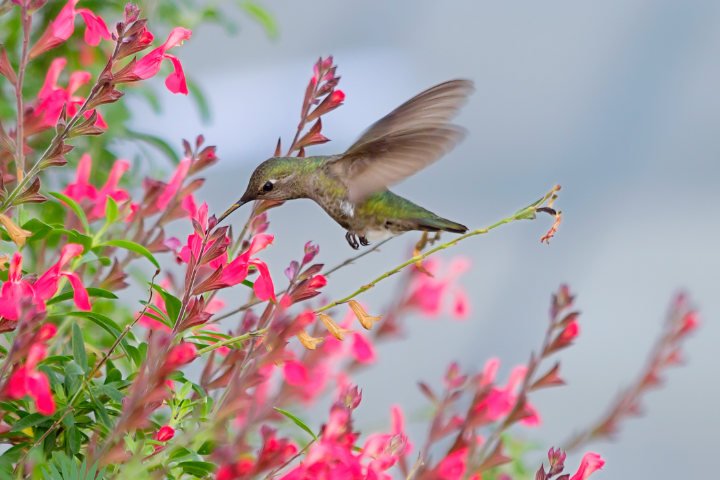
There are many reasons I love living in Tucson, and one of them is the presence of year-round hummingbirds. What a treat! These flying jewels never fail to delight.
Some live here all year, but most, like broad-billed hummingbirds, are migratory and only passing through. The number of hummingbird species known to visit southern Arizona varies depending on the source, but according to the Arizona-Sonora Desert Museum, it’s at least a dozen.
Here’s a look at an assortment of plants that are hummingbird favorites, with an emphasis on those that have a long bloom period or that bloom when flowers are in short supply.
To learn more about any of these plants,
click on the link to find a comprehensive “Growing Guide”.
Aloes
Aloe is a genus of succulents that originates in the eastern hemisphere. Every winter, they send up flower stalks with yellow, orange, coral, or red flowers, depending on the species. Hummingbirds find their tubular flowers irresistible. Even though aloes aren’t native, aloe flowers are particularly important since they bloom in the winter, when hummingbirds’ choices are limited. Here are two of my favorite aloes for hummingbirds.
Blue elf aloe (Aloe x ‘Blue Elf’) is one of the best hybrids for long-lasting winter flowers. (I was surprised to see ‘Blue elf’ aloes still in bloom in a Tucson parking lot in May!) Its showy 2-foot flower stalks are covered with bright orange-red flowers that last several months, and contrast beautifully with the plant’s silver-blue leaves.
Cape aloe (Aloe forex) is a huge aloe that can ultimately reach 6 to 10 feet tall. Every winter, it sends up a candelabra-like inflorescence that usually has 4 to 8 flower stalks, but can have even more. And more flowers means more food for hummingbirds.
Bloom Season: Winter
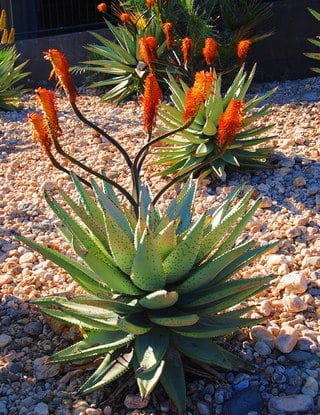
Don’t confuse aloes with agaves.
Aloes bloom every year.
Agaves bloom once and then die.
Baja Fairy Duster
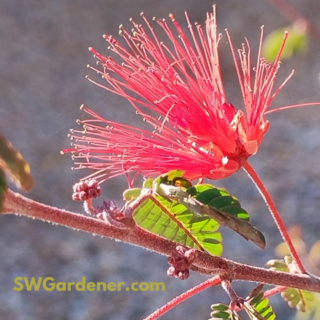
Baja fairy duster (Calliandra californica) is a lacy evergreen shrub that’s adorned with charming red flowers that look like tiny feather dusters. While the flowers might not look like it, they are heavy nectar producers that hummingbirds (and bees) love.
It’s one of the few shrubs that blooms in all four seasons in desert gardens, making it an important year-round food source for hummingbirds. My Baja fairy dusters reliably bloom all year.
Bloom Seasons: Winter, Spring, Summer, Fall
Cape Honeysuckle
Cape honeysuckle (Tecoma capensis) is a versatile plant that can be grown as a vine, shrub, or ground cover, depending on how it’s trained and pruned. Its showy clusters of red-orange flowers and contrasting glossy dark green leaves give this plant a tropical vibe.
In mild winters, cape honeysuckle is evergreen and can bloom literally all year round, providing much-needed nectar during the winter months. Hummingbirds find the brilliant tubular flowers particularly appealing. Flowers also attract bees, butterflies, and other pollinators.
Bloom Seasons: Winter, Spring, Summer, Fall

Chuparosa (*Top Pick*)
If you can only plant one plant to support hummingbirds, make it a chuparosa.
Chuparosa (Justicia californica) is a Sonoran Desert native that blooms on and off throughout the year. Its name means “hummingbird” in Spanish. If you want to entice hummingbirds into your yard, chuparosa is a “must have” shrub.
Amazingly, these plants are so important to rufous hummingbirds when migrating from Mexico to Alaska that they follow the chuparosa’s bloom path as they travel through the desert Southwest. Plant a chuparosa and help them out.
Bloom Seasons: Winter, Spring, Summer, Fall
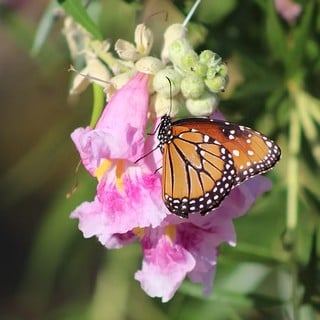
Desert Willow
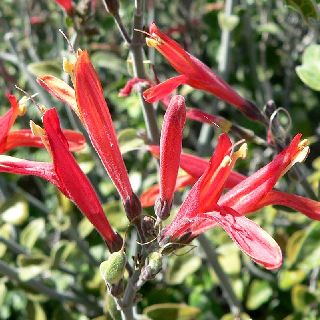
Desert willow (Chilopsis linearis) is a medium size, deciduous ornamental tree with willow-like leaves. But unlike true “thirsty” willows, desert willow is a Sonoran Desert native that thrives in desert aridity. And unlike many native trees (i.e., mesquites and acacias), desert willows have no thorns, making this a garden-friendly tree.
Spring through fall, desert willows are covered with fragrant, orchid-like flowers that hummingbirds, bees, and butterflies adore. Flower colors range from light pink to burgundy, depending on the cultivar.
Bloom Seasons: Spring, Summer, Fall
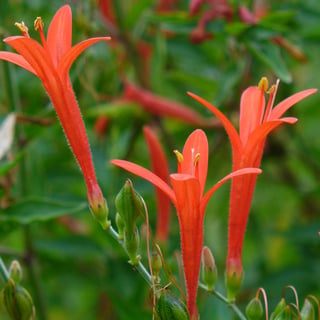
Flame Acanthus
Flame acanthus (Anisacanthus quadrifidus) is a medium size, deciduous shrub that has an upright, airy form. Spring through fall, its red-orange tubular flowers are so vivid they seem to glow against the backdrop of bright green leaves.
Hummingbirds are so attracted to this plant’s red-hot flowers that one of its other common names is hummingbird bush.
As a native of the Chihuahuan Desert, it’s well-equipped to handle desert temperature extremes and drought.
Bloom Seasons: Spring, Summer, Fall
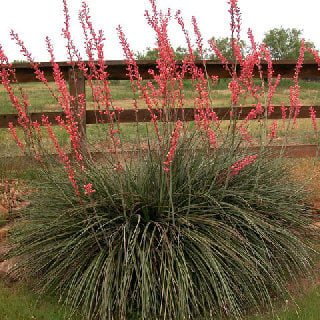
Hesperaloe
Hesperaloe (Hesperaloe parviflora) is a grass-like succulent that’s native to the Chihuahuan Desert. It’s a popular, extremely low maintenance accent plant that can be found thriving in the most inhospitable environments — shopping centers and median strips.
In the landscape, it’s prized not just for its evergreen, leathery, grass-like foliage, but for its showy plumes of tubular coral flowers that shoot up to 4 to 6 feet in the spring. This plant’s flowers are so inviting to hummingbirds that one of its common names is hummingbird yucca.
Hesperaloe typically blooms in the spring, but you can extend the bloom season by growing one of its cultivars.
Hesperaloe parviflora ‘Brakelights’ is a compact selection with rose-red flowers that reliably bloom from spring through summer, but I’ve seen it bloom all year in Tucson.
Hesperaloe parviflora ‘Little Miss Sunshine’ is an unusual hesperaloe — it has butter yellow flowers and blooms spring through summer.
Bloom Season: Spring, summer
Lady Slipper
Lady slipper (Euphorbia lomelii) is one of the most interesting succulents you can grow in your desert garden. It has mostly upright stems that sometimes bend and twist into curlicues. Hummingbirds will find the perfect stem to perch on.
In late spring, the tip of each lady slipper stem will produce red-orange flowers that are charmingly shaped like slippers or Barbie doll shoes. The flowers are pollinated by hummingbirds but not insects, which can’t reach the nectar due to the flower’s unusual shape. This makes lady slipper an ideal choice if you want hummingbirds, but not bees, such as near a pool or place where children play.
Bloom Seasons: Spring, Summer

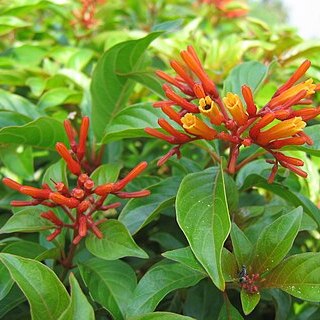
Mexican Honeysuckle
Despite its name, Mexican honeysuckle (Justicia spicigera) is not a vine, nor is it related to honeysuckles. It’s a medium size evergreen shrub with velvety green leaves and vivid orange flowers.
These plants usually bloom all year and their tubular flowers are hummingbird magnets. They are also larval hosts for several butterfly species.
Bloom Seasons: Winter, Spring, Summer, Fall

Mexican Honeysuckle Alternative
I like to call Mexican honeysuckle my “Goldilocks plant” since it needs just the right amount of water and sun — not too much but not too little — to look its best. If you find this plant finicky in your garden, consider firecracker bush (Hamelia patens) instead.
It looks much like Mexican honeysuckle and is also a hummingbird magnet, but it isn’t quite as fussy.
Parry’s Penstemon
Parry’s penstemon (Penstemon parryi) is a native desert wildflower that’s a beloved harbinger of spring. When grown in the landscape, it needs virtually no care and often reseeds, sometimes prolifically.
From late February to April, plants send up 3 to 5-foot flower stalks that are lined with rows of bright pink tubular flowers. They provide a striking contrast to the abundance of yellow flowers that bloom in the desert spring. Flowers support hummingbirds and numerous pollinators including butterflies, moths, and bees.
Bloom Season: Spring
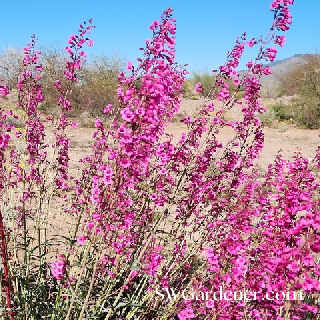
While Parry’s penstemon is one of the most recognizable spring wildflowers, most penstemons will draw hummingbirds. Two honorable mentions for desert gardens include firecracker penstemon and Palmer’s penstemon.
Add an assortment of hummingbird plants to your garden
with Native Seeds/SEARCH’s “Happy Hummingbirds” seed mix.
Red Justicia
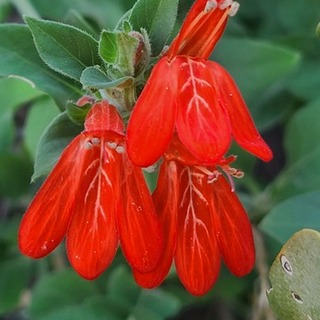
Red justicia (Dianthera candicans) is a medium size shrub with bright green leaves and red-orange tubular flowers that nearly glow.
In many ways, this plant is an unusual Arizona native. It prefers part shade to sun and its leaves are soft and fuzzy — no prickers, thorns, or irritating hairs. It needs a moderate (rather than low) amount of water. This makes it an ideal plant to grow in the dappled shade under a tree or near other moderate water use plants.
Red justicia blooms on and off much of the year, providing nectar for hummingbirds when there isn’t much else available. It is also a larval host for several butterfly species.
Bloom Seasons: Winter, Spring, Summer, Fall
Salvias
A lot of plants have the word “sage” in their name, but only those that are members of the Salvia genus are true sages. Many Salvias are irresistible to hummers. Here are two of my favorites.
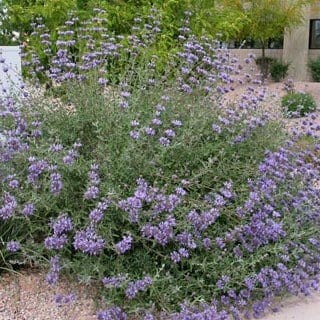
Cleveland sage (Salvia clevelandii) is a medium size, evergreen shrub with aromatic, fuzzy gray-green leaves. Spring through summer, flower stalks are covered with whorls of tubular flowers that range from lavender to blue or purple. The overall effect is wispy, making it look more like a perennial than a shrub.
Its nectar-rich flowers are highly desirable to hummingbirds, butterflies, bees, moths, and other pollinators. And their cool purple flowers make a refreshing change from all those hot orange and red hummingbird flowers!
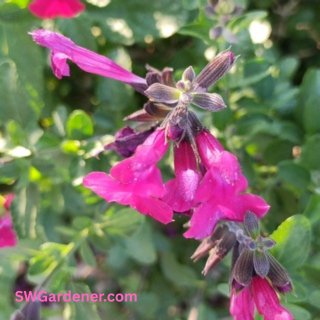
Autumn sage (Salvia greggii) is a small shrub with glossy leaves and dainty flower stalks that would not look out of place in a typical cottage garden. But in fact, it’s a resilient native of the Chihuahuan Desert.
Its small but brilliant tubular flowers attract hummingbirds, butterflies, and bees. It is also an important host plant for many native moths.
Bloom Seasons: Spring, Summer, Fall
Tangerine Crossvine
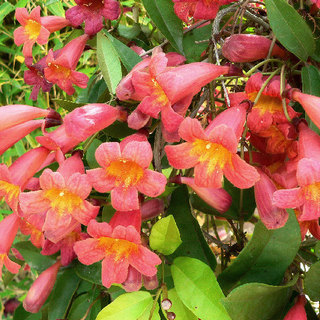
Tangerine crossvine (Bignonia capreolata ‘Tangerine Beauty’) is a woody vine with glossy, leathery, dark green leaves. For a plant that originates in southeastern forests, it grows surprisingly well in the desert. It thrives in full sun and almost any soil, and needs little water once established.
It blooms from spring through summer, luring hummingbirds, bees, and butterflies with showy clusters of trumpet-shaped coral-orange blossoms.
Bloom Seasons: Spring, Summer
Should You Add Hummingbird Feeders?
With all of these magnetic choices, you might be wondering whether it’s necessary to put up feeders, too. I say “yes” since even the best-planned hummingbird garden will occasionally have “nectar gaps” when not much, if anything, is in bloom.
I always have hummingbird feeders up and filled, so that no hummingbird leaves my yard hungry. 😢
After years of experimenting with different types of feeders, this saucer-style feeder has worked best for me.
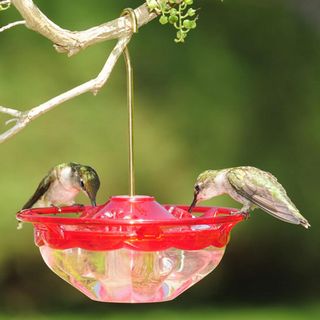
It’s small (4 oz), but that’s the point. Since I clean and refill mine daily or every other day (per the recommendations below), I don’t waste nectar. And because it’s small, my nemesis (a persistent Gila woodpecker) struggles to use it.
According to Southern Arizona Hummingbird Rescue,
feeders should be cleaned & refilled to this schedule:
Above 90℉ — daily
80 to 90℉ — every 2 days
Below 80℉ — every 3 days
As an Amazon Associate, Southwest Gardener earns from qualifying purchases, at no cost to you.
See our Terms of Use for details.
Did you enjoy this article?
Sign up for our weekly newsletter
where you’ll find more great info on creating &
maintaining a beautiful, carefree desert landscape.
Author Bio
Deane Alban is the creator of Southwest Gardener. She studied journalism and received a bachelor’s degree in botany from the University of South Florida. Gardening is her lifelong passion. She’s been gardening in Tucson for over 16 years.

Photo Credits
Falcodigiada, CC BY-SA 4.0, via Wikimedia Commons cape aloe
Vengolis, CC BY-SA 4.0, Wikimedia Commons
Stan Shebs, CC BY-SA 3.0, via Wikimedia Commons
Scott, CC BY 2.0, via Wikimedia Commons
Dallas County Master Gardener Association
The University of Arizona Campus Arboretum
Vinayaraj, CC BY-SA 3.0, via Wikimedia Commons
Pat Treece, CC BY-SA 4.0, iNaturalist
Arizona State University’s Virtual Library of Phoenix Landscape Plants
Stan Shebs, CC BY-SA 3.0, via Wikimedia Commons