
If you like flowers that are bold and colorful, torch cactus is a “must have” addition to your desert garden. When in bloom, the flowers warrant the use of superlatives such as “spectacular” and “magnificent”. Here’s everything you need to know about growing these incomparable hybrids of cactus native to Argentina.
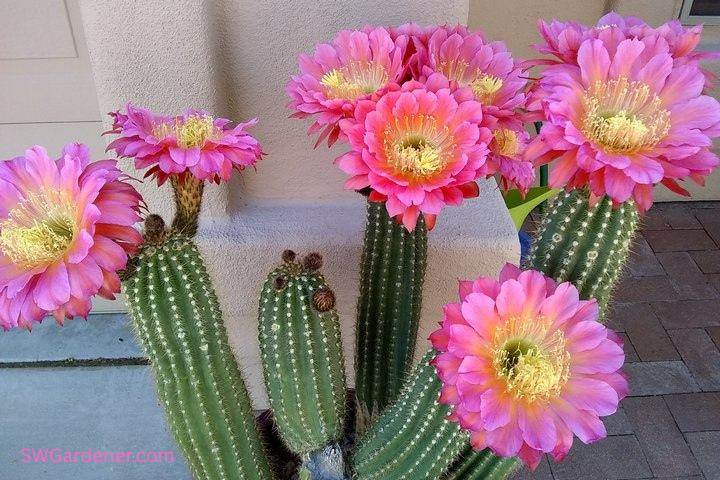
Torch cactus (Echinopsis spp.) is an informal group of cactus that consists mostly of hybrids of the Echinopsis genus. When in bloom, they are literally traffic-stoppers. Grow these, and your neighbors will stop to take pictures — I’ve had this happen!
Flowers the size of a small plate come in a mouth-watering array of colors that range from delicate (white, pale pink) to electric (orange, gold, magenta, red). Mature specimens can have as many as 50 flowers at a time!
There are hundreds of hybrids and cultivars available with names ranging from romantic (‘Romance’, ‘Embraceable You’) to suggestive (‘Temptress’, ‘Foxy Lady’, ‘Sex on the Beach’). Who comes up with these? 😆
I’ve found torch cactus super-easy to grow. I house-sat for a home that had several potted specimens. The owner’s instructions of “water once per month, and fertilize in the spring” resulted in these show-stopping beauties.
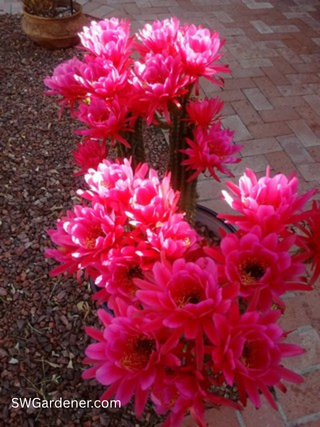
Besides attracting human attention, torch cactus flowers attract bees like crazy. During their short life, the flowers vibrate with bee activity.
Why I Like This Plant
- Traffic-stopping flowers
- Attractive cactus even when not in bloom
- Fast growing
- Extremely low maintenance
- Supports bees
Things to Watch Out For
Each flower only lasts one day. Flowers open at night and close with the sun, so it’s easy to miss all the action.
Javelinas generally leave them alone when not in bloom. But when in bloom, javies go mad for them! It’s not unusual for them to eat the flowers, break off a few stems, or drag them out of containers. (You can learn how to protect your plants from javelinas here.)
Torch cactus can develop root rot if overwatered. So don’t grow them next to plants on irrigation.
Optimal Growing Conditions
If you’re thinking of adding a torch cactus to your garden, you need to find a suitable place that will keep your plant healthy and looking good… while minimizing maintenance for you.
Here are the key factors to keep in mind.
Temperature
Torch cactus should be grown in USDA Hardiness Zones 9 to 11. They don’t mind the heat and survive Tucson winters, where our lows are usually in the mid-twenties. However, depending on the cultivar, some may be more or less cold hardy.
They usually bloom in the spring, but can bloom intermittently when daytime temperatures stay above 70℉.
Sun Exposure
Torch cactus are tolerant of either full sun or part shade. They need 4 to 5 hours of full sun to flower, but appreciate some afternoon shade, such as the dappled shade provided by a tree.
Size and Growth Rate
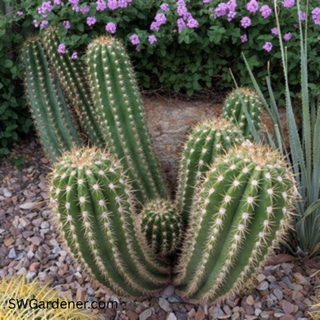
While most are approximately 2 feet tall and wide, the mature size depends on the hybrid, some of which are considerably smaller or larger. Most grow relatively fast.
Soil
Torch cactus are not particular about soil and grow well in any native desert soil, provided it’s well-draining.
They perform better in the ground, but are often grown in containers. Make sure your pot has good drainage and use specifically formulated cactus soil.
Torch Cactus:
The Essentials
| Common Name | Torch cactus |
| Scientific Name | Echinopsis spp. |
| Origin | Argentina |
| USDA Zones | Zones 9 – 11 |
| Cold Hardiness | To 25℉ |
| Flower Color | Various |
| Flower Season | Spring, intermittent |
| Mature Size | 2’ tall & wide |
| Growth Rate | Slow |
| Sun Tolerance | Full, part sun |
| Water Needs | Low |
| Pests & Diseases | Root rot |
| Cautions | Spines |
| Wildlife | Supports bees |
How to Plant
To plant a torch cactus, dig a hole the same depth as the root system and twice as wide. Carefully remove the plant from the container, place it in the hole, and press the soil to remove any air pockets.
It’s generally recommended to skip adding amendments and backfill with just native soil.
However, good drainage is critical. If you know your soil is slow-draining, amend with coarse sand or small gravel until you have a loose, well-drained mix.
Plant your cactus facing in the same direction that it was in the nursery. Better nurseries will mark the pot so you know which direction your cactus has been facing. Surprisingly, cactus can get sunburned, but planting them in the same direction can minimize this.
When to Plant
The best time to plant cactus is in the spring or early summer when warm soil temperatures encourage root development.
For time-lapse videos of flowers blooming,
check out Echinopsis Freak.
You won’t be disappointed!
How to Care for Torch Cactus
Whether you’ve recently planted a torch cactus or have an existing one in your yard, here’s how to take care of it to keep it healthy and looking its best.
How to Water
You’re probably used to giving a plant a good soaking immediately after transplanting, but that isn’t the best practice with cactus. It’s generally advised not to water for one to two weeks after planting.
Torch cactus prefer a little more water than natives. The Arizona-Sonora Desert Museum recommends watering them once per week from April to October, and every two weeks during the winter.
Should You Fertilize?
Since they are not native and put a lot of energy into producing flowers, fertilize two or three times a year from spring through fall.
Pruning & Propagation
Torch cactus doesn’t need pruning unless one of the stems has been damaged. This can occur from weather, animals, or some human folly.
Remove any wayward stems to control shape or size, always cutting at the base.
You can use any cuttings to grow new plants by simply setting them aside for a few weeks to let them form a callus. Then stick the hardened ends into the soil. That’s all there is to it!
Plant Lover Facts
Torch cactus belong to the genus Echinopsis, but they are still often referred to as Trichocereus, a genus that has been folded into Echinopsis.
These cactus also goes by the common names Easter lily cactus (because they often bloom around Easter) and hedgehog or sea urchin cactus (due to their spiny nature).
The genus name comes from the Greek words “ekihnos” (meaning sea urchin) and “opsis” (meaning appearance).
Echinopsis are native to Central and South America, but the parent plants of the flowering hybrids are usually from Argentina.
Did you enjoy this article?
Sign up for our weekly newsletter
where you’ll find more great info on creating &
maintaining a beautiful, carefree desert landscape.
Author Bio
Deane Alban is the creator of Southwest Gardener. She is a science writer with a bachelor’s degree in botany from the University of South Florida. Gardening is her lifelong passion. She’s been gardening in Tucson for over 16 years.
