
Javelinas’ favorite food is prickly pear cactus, which they consume thorns and all! But they also enjoy a wide variety of landscape and garden plants. Here’s how to stop them from eating yours.


Javelinas are common visitors to southwest homes, even those in the city or the suburbs. They’re considered “opportunist omnivores,” meaning they’ll eat just about anything, but eat mostly plants. Astoundingly, the mainstay of their diet is prickly pear cactus — including thorns and glochids! 😮
Besides cactus, they also eat flowers, fruits, nuts, berries, bulbs, seeds, and beans, as well as other succulents. They occasionally eat eggs, snakes, fish, frogs, and dead birds and rodents.
Javelinas live and travel in a group called a squadron. A squadron usually has six to nine members, but can have many more — even up to 50!
They feel at home in the burbs and wander around neighborhoods looking for garbage cans, potted plants, and bird feeders to raid. They are not shy about walking right up to your front door. My neighbor has a Ring recording of javelinas tearing into Amazon packages, devouring the package contents… along with the cardboard packaging.
They are messy eaters and leave a trail of destruction. Frustratingly, it’s not unusual for them to knock over pots or dig up plants that they don’t eat. And when they get into a trash can, they demolish the contents, leaving an indescribable mess.
If javelinas frequent your yard, they’re looking for food, water, or shelter. Fortunately, there are steps you can take to make your yard less attractive and keep them from being such a nuisance.
Don’t Feed the Javelinas
First and foremost, do not feed the javelinas either on purpose or unintentionally.
Don’t tempt them with bird feeders, bird baths, or pet bowls.
Don’t leave your trash cans where they can get to them. They often raid trash cans overnight, so putting your trash cans out the night before your trash pickup is an invitation for a nocturnal raid.
If it’s not convenient for you to put your trash out in the morning, your trash collection service may provide trash cans with locking lids. If you live in the city of Tucson, you can request a trash can with a locking lid at no extra charge at EShelp@tucsonaz.gov or 520-791-3171.
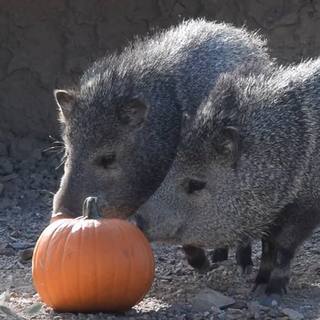
Javelinas love pumpkins. So avoid putting pumpkins on your front porch as a Halloween decoration. Javelinas seem to think you’ve put them out for their enjoyment.
What About Water?
Javelinas will dig up plants that they don’t eat because they’re looking for water from juicy roots or grubs. They will also chew on hoses or irrigation lines to get at water.
Some people find that leaving out water for them water prevents damage since the javies no longer have to destroy your garden to find water. But others find that leaving out water attracts them to their yard.
You may have to experiment with this.
If javelinas ruin your hoses, you can switch stainless steel hoses. Besides being critter-proof, there are several other benefits of stainless steel hoses.
Ways to Protect Your Garden
Even if you haven’t lured javelinas into your yard with food, trash, or water, they still may discover something that sparks their interest. Here are some ways to keep a boundary between them and your plants.
Walls or Fencing
The most effective way to keep javelinas out of your plants is with a wall or fence. Unlike bobcats and coyotes, which can jump over tall obstacles, javelinas are not jumpers or climbers — that would be a sight to see! So a 3 to 4 foot fence or wall will be enough keep them out of your yard.
Electric Wire
When putting up a wall or fence isn’t feasible, the Arizona Game & Fish Department suggests stringing a single electric wire around the area you want to protect. It only has to be 8 to 10 inches off the ground to be effective.
Wire Cages
If you plant something new that you suspect they might find delicious, surround it with a wire cage temporarily until it has a chance to get established. For example, javelinas will eat newly planted hesperaloes but usually leave mature plants alone.
You can prevent javelinas from digging up a plant by placing poultry wire under your gravel or just below the soil surface.
Chili Oil
An Arizona golf course found that spraying chili oil stopped javelinas from tearing up the turf, but ultimately decided it was not a practical solution for such large expanses of grass. But it might work in your yard.
Hanging Baskets
Smaller plants like flowering annuals or potted succulents can be suspended in hanging planters or otherwise kept out of reach.
Plant Javelina Proof Plants
If you have an unprotected area that javelinas frequent, you can deter them by planting javelina-resistant plants.
Javelinas will eat almost any plant if they are hungry (or thirsty) enough. And while there are no plants that are completely javelina proof, there are many plants considered “javelina resistant”. These plants are not javelinas’ favorites, and they generally leave them alone unless desperate.
You’ll find a comprehensive list of javelina-resistant plants here.
As an Amazon Associate, Southwest Gardener earns from qualifying purchases, at no cost to you.
See our Terms of Use for details.
Did you enjoy this article?
Sign up for our weekly newsletter
where you’ll find more great info on creating &
maintaining a beautiful, carefree desert landscape.
Author Bio
Deane Alban is the creator of Southwest Gardener. She is a science writer with a bachelor’s degree in botany from the University of South Florida. Gardening is her lifelong passion. She’s been gardening in Tucson for over 16 years.
