
If you are looking for an unusual potted plant that’s a conversation starter, consider popcorn cassia. While it’s not ideally suited to grow as a desert landscape plant, it makes an excellent and intriguing container plant. Here’s everything you need to know about growing this tropical African native both in the ground and in a container.

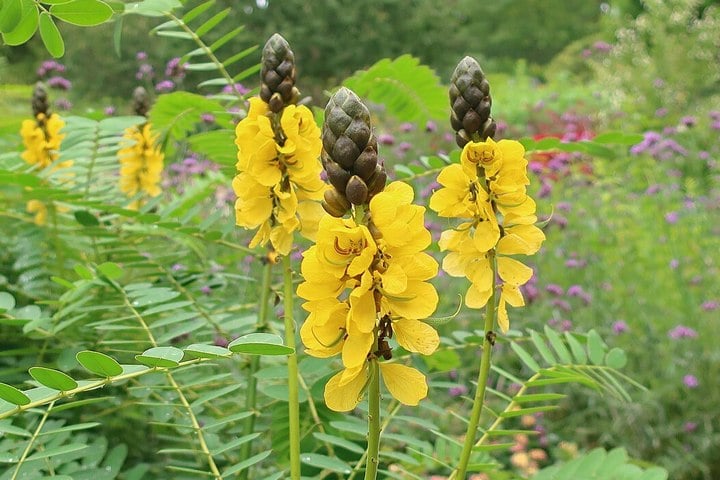
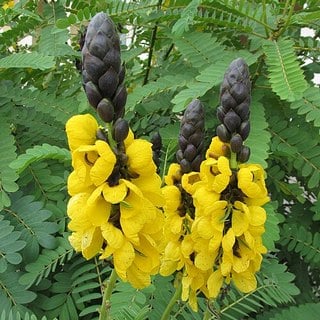
The first time I saw a popcorn cassia (Senna didymobotrya), I did a double take. I’d never seen anything quite like it! Tall, showy flower stalks lined with golden yellow flowers and topped with conspicuous unopened buds the color of dark chocolate caught my eye.
Upon close inspection, this plant got even more interesting. It smelled like buttered popcorn! I was surprised to discover that the leaves, not the flowers, were emitting this familiar scent.
It’s grown around the world as a seasonal annual. Here in the desert Southwest, with a little care, it can be overwintered and grown as a shrubby perennial. It makes a great patio plant and performs best during the monsoon since it loves heat and humidity.
When in bloom, its flowers attract bees, butterflies, and other nectar-seeking insects. Deer and rabbits usually leave this plant alone.
Why I Like This Plant
- Tropical-looking foliage
- Striking flower stalks spring through fall
- Smells like popcorn!
- Eye-catching container plant
- Flowers support insect pollinators
Things to Watch Out For
It’s native to the tropics and consequently prefers high humidity and rich, moist soil, and does not survive freezing. This makes it a viable patio plant if you can protect it from cold, but challenging to grow as a landscape plant.
Not everyone loves the scent. While it’s usually described as popcorn or peanut butter, some people think it smells like “wet dog”.
All parts of popcorn cassia are toxic.
It’s not easy to find, but is sometimes sold at Home Depot. Oddly, this African native is sold under the Australian Outback Plantation label. 🤔
Optimal Growing Conditions
If you’re thinking of growing a popcorn cassia, here are the key factors to keep in mind.
Temperature
Popcorn cassia should be grown in USDA Hardiness Zones 9 to 11. It tolerates extreme heat and blooms most profusely during the monsoon.
Cold hardiness is generally listed as 30℉ to 40℉. It usually survives light frost, but to ensure its survival, protect it during cold snaps.
Sun Exposure
Popcorn cassia should be grown in full sun. However, it appreciates relief from afternoon sun during the summer, especially in the low desert.
Size and Growth Rate
Popcorn cassia grows moderately fast and generally reaches a size of 6 to 8 feet tall and wide or smaller if grown in a container. In its native habitat, it grows as a tree and can get much taller, up to 25 feet.
Soil
Popcorn cassia prefers rich, well-draining soil high in organic matter.
Other Location Considerations
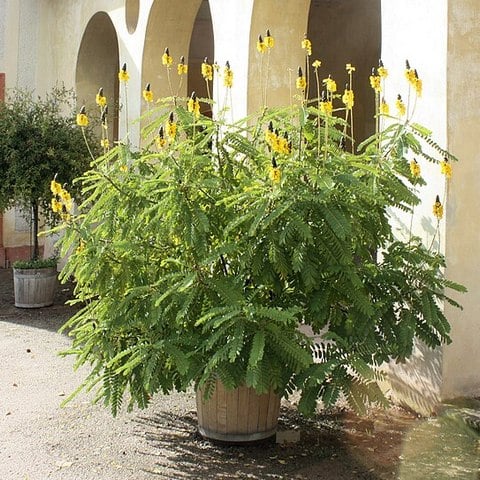
Popcorn cassia makes an excellent patio plant. Growing it in a container makes it easy to give it the conditions it prefers — moderate water, rich soil, and protection from cold.
Popcorn Cassia:
The Essentials
| Common Name | Popcorn cassia |
| Scientific Name | Senna didymobotrya |
| Origin | East & Central Africa |
| Plant Type | Semi-evergreen shrub |
| USDA Zones | Zones 9 – 11 |
| Cold Hardiness | To 30℉ |
| Flower Color | Yellow |
| Flower Season | Spring, summer, fall |
| Mature Size | 6-8′ tall & wide |
| Growth Rate | Moderate |
| Sun Tolerance | Full sun |
| Water Needs | Moderate |
| Pests & Diseases | None |
| Toxicity | All parts toxic |
| Wildlife | Supports insect pollinators Deer, rabbit resistant |
How to Plant
If you grow popcorn cassia in a container, be sure it has good drainage and use potting mix, not native soil. This plant gets big, so put it in the largest container you have.
If you’re planting one in the ground, dig a hole three times as wide as the root ball but no deeper. Amend your hole with compost or a commercial soil mix. Topdress with organic mulch to retain moisture, increase soil fertility, and protect roots from temperature extremes.
How to Care for Popcorn Cassia
Whether you’ve recently planted a popcorn cassia or have an existing plant, here’s how to take care of it to keep it healthy and looking its best.
How to Water New Plants
If you’re growing popcorn cassia in a container, use this watering schedule as a guide.
| Spring & Fall | Every 2-5 days |
| Summer | Every 1-3 days |
| Winter | Every 5-7 days |
If yours is in the ground, water at least this frequently. Keep the soil moist and don’t let it completely dry out. If the leaves close up during the day, that’s a sign it needs more water.
During the hot, dry foresummer of May and June, give it a shower with the mist setting of your hose nozzle to give it a temporary boost in humidity.
Should You Fertilize?
Popcorn cassia is a heavy feeder and should be fertilized once a month when grown in a container.
When grown in the ground, fertilize it once in the spring and once or twice in the summer with a low nitrogen fertilizer. Since it’s a member of the legume family (Fabaceae), it doesn’t need added nitrogen. Its roots contain bacteria that “fix” nitrogen, turning nitrogen in the air into a form plants can use. And occasionally, topdress with fresh organic mulch or compost to boost soil fertility.
How to Prune
Popcorn cassia doesn’t need much pruning. Trim any errant or damaged branches to keep your plant bushy. Deadhead spent flowers to encourage flowering.
Propagating
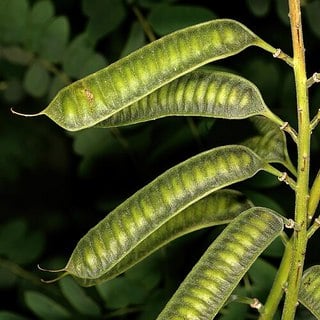
In the fall, you can collect seeds. Each seed pod contains a dozen or more seeds. Saving seeds is a good backup plan in case your plant doesn’t survive the winter.
Scarify seeds by either nicking them with a file or soaking them overnight. This greatly improves germination rates. (You can learn the various ways to scarify seeds here.) Sow seeds directly into a permanent container or in the ground after the risk of frost has passed.
Plant Lover Facts
Popcorn cassia (Senna didymobotrya) goes by several other common names, including popcorn plant, peanut butter cassia, peanut butter senna, candelabra tree, or African senna.
It’s native to tropical regions of Central and Eastern Africa, but has naturalized around the world. In the US, it has escaped cultivation in Southern California, Southwestern Arizona, and neighboring Western Mexico.
Since it’s a nitrogen-fixing legume, it’s sometimes grown as a cover crop, especially in its native regions of Africa.
Did you enjoy this article?
Sign up for our weekly newsletter
where you’ll find more great info on creating &
maintaining a beautiful, carefree desert landscape.
Author Bio
Deane Alban is the creator of Southwest Gardener. She is a science writer with a bachelor’s degree in botany from the University of South Florida. Gardening is her lifelong passion. She’s been gardening in Tucson for over 16 years.

Photo Credits
Cultivar 413, CC BY 2.0, Wikimedia Commons
Geo Pixel, CC BY 3.0, Wikimedia Commons
Dguendel, CC BY 4.0, Wikimedia Commons
SAplants, CC BY 4.0, Wikimedia Commons