
Hot, dry, windy conditions make for dusty desert landscape plants. And dusty plants are not happy plants. Learn the ways desert dust contributes to plant problems and how simply hosing down your plants can help.

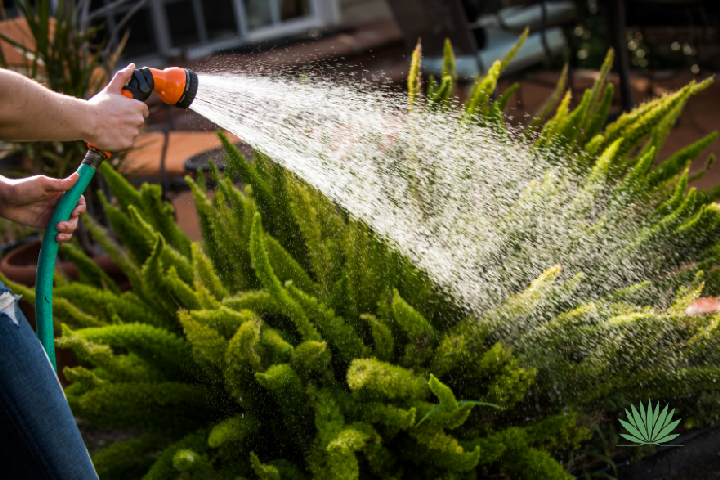
There’s a reason a lot of cowboys in the movies were called “Dusty.” It’s dry, windy, and dusty in the desert. It’s not unusual to go months without rain, so everything gets covered with a layer of dust — including plants (and cowboys).
Just run your finger over your car or patio furniture, and you might be surprised at how dusty they are.
Well, your plants are equally dusty, and they don’t like it!
There are two important reasons to hose down your potted plants and landscape plants every week or two during dry, windy weather, even if they are watered by irrigation.
#1 Dust Clogs Plant Pores
Just as your skin has pores, plants have pores called stomata. Stomata regulate gas exchange. Plants “breathe” through their stomata — carbon dioxide moves in and oxygen is released.
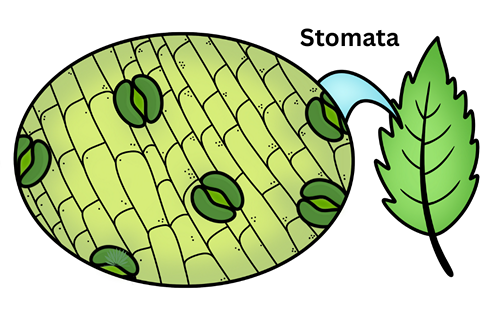
Stomata open and close to release water vapor as part of a process called transpiration. Transpiration, among other things, helps to keep plants cool during hot weather.
It’s pretty obvious that clogged stomata are not conducive to the health of your plants. Cleaning the dust away with an occasional shower is an easy way to help your plants function their best.
#2 Spider Mites Thrive in Dust
While many insect pests are commonly associated with water and humidity, spider mites thrive when it’s hot and dry, and plants are dusty.
Signs of spider mites on your plants are:
- tiny black specks that look like pepper
- white webbing
- white or yellow speckled leaves
- overall dull appearance.

Spider mites are like tiny plant vampires. They puncture your plant with their piercing mouthparts and then suck out the sap.
Spraying your plants with water can prevent infestation by removing dust and raising humidity.
If your plants get spider mites, a strong jet of water can knock them off your plants. Don’t be afraid of using the jet spray setting. It may knock off dead leaves or flowers, but it won’t harm your plants in any way.
When it’s hot, spider mites reproduce fast, going from egg to mature adult in less than two weeks. So you need to keep on top of it and spray frequently, focusing on the undersides of leaves (they like to hide from the sun, too).
Some desert landscape plants that are susceptible to spider mites include lantana, roses, palm trees, rosemary, myoporum, and lilac vine.
If you grow summer vegetables, you may find them on your tomatoes, peppers, beans, peas, melons, or cucumbers.
They also attack potted flowering annuals such as vinca, geraniums, and petunias. They can be a real nuisance if they infect your houseplants. If they do, take them outside and hose them off frequently or spray with insecticidal soap.
What About Other Insects?
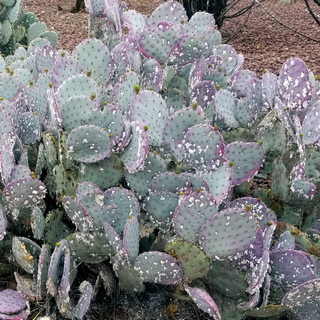
Note that a spray of water will also knock off other insects, especially aphids, white flies, and cochineal, which mainly affects prickly pear cactus.
When Hose Water is Hot
Common sense dictates that you should not hose down your plants when the water coming out of the spigot is hot, as happens in the summer here. This means that during hot weather, you should hose down your plants in the morning when the water is coolest.
In a pinch, you can use the “mist” setting of your hose nozzle. The fine water droplets will cool down before hitting your plants.

There’s a garden myth that water droplets in the sun act as tiny magnifying glasses and can scorch plant leaves, but there’s no merit to this. Horticulturalist Linda Chalker-Scott, PhD, is one of my favorite gardening myth-busters. She states in this paper,
“There are many causes of leaf scorch, but irrigation with fresh water is certainly not one of them. Hundreds of scientific publications on crop plants, turf, woody shrubs and trees have examined foliar scorch, and not one of them has implicated midday irrigation as a causal agent.”
Learn more about “watering right” for healthy,
resilient plants & lower water bills.
Check out our Desert Watering Resources.
Final Thoughts
So now you know a few good reasons to hose down your plants. A final reason is that you may enjoy it. I actually love hosing down my plants. I find it relaxing, and it gives me a chance to spend one-on-one time with my plants and assess how they’re doing. And if it’s hot outside, I don’t mind a little overspray. 😉
Did you enjoy this article?
Sign up for our weekly newsletter
where you’ll find more great info on creating &
maintaining a beautiful, carefree desert landscape.
Author Bio
Deane Alban is the creator of Southwest Gardener. She is a science writer with a bachelor’s degree in botany from the University of South Florida. Gardening is her lifelong passion. She’s been gardening in Tucson for over 16 years.

Photo Credits
Mokkie, CC BY-SA 3.0, via Wikimedia Commons
Arizona State University’s Virtual Library of Phoenix Landscape Plants