
Ornamental purslane is an eye-popping annual that’s available in a rainbow of colors. These selections don’t exist in nature but are cultivars of common purslane. Here’s how to grow this heat-loving annual in the desert.

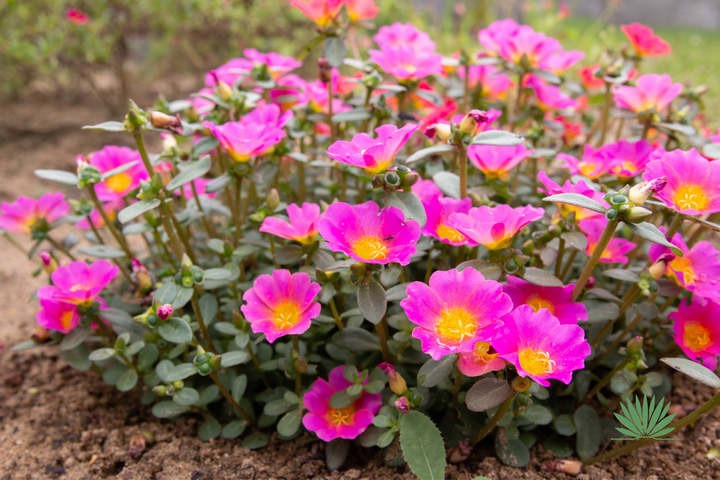
If you’d love a continuous display of bright, cheerful flowers spring through fall, look no further than ornamental purslane (Portulaca oleracea cvs).
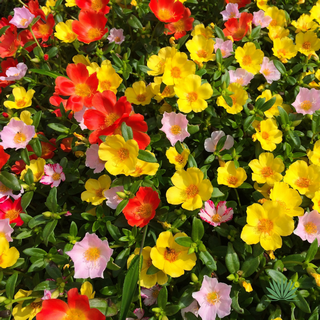
This heat and sun lover puts on a show of hi-viz, buttercup-like flowers that come in pink, orange, red, yellow, and white. Each glowing flower only lives for a day, opening and closing with the sun. But these plants flower so prolifically, you can expect non-stop blooms.
Purslane is usually grown in a planter or hanging basket, but it can also be grown in the ground as a border plant or ground cover.
Depending on your hardiness zone, it may grow as either a frost-tender annual (Zones 2 to 9) or a short-lived perennial in Zones 10 and 11.
Why I Like This Plant
- Non-stop flowers spring through fall
- Vivid colors — few flowers are brighter!
- Glossy, succulent leaves
- Thrives in summer heat
- Low maintenance, low-litter
Things to Watch Out For
Ornamental purslanes are cultivars of common purslane which is edible. However, these gorgeous plants have been bred for their beauty, not for their flavor or nutritional content. Get the species, not an ornamental cultivar, if you are growing it to eat.
Rabbits and sometimes birds like to make a meal of the succulent, fleshy leaves. However, it is toxic to dogs, cats, and horses due to the presence of calcium oxalates.
Ornamental purslane is not cold-hardy and dies with the first winter frost.
Optimal Growing Conditions
If you’re thinking of growing purslane in your garden, here are the key factors to keep in mind.
Temperature
Purslane can be grown as an annual just about anywhere — in USDA Hardiness Zones 2 to 11. It is extremely heat tolerant and can handle the heat of Phoenix, but is not cold-hardy and dies with the first frost.
When grown in Zone 9, it can survive the winter if it’s protected during freezes.
Sun Exposure
For maximum blooms, purslane should receive at least 6 hours of full sun. Plants tolerate some afternoon shade or dappled shade, but flowers more with intense, full sun.
Size and Growth Rate
This fast growing annual reaches a size of 8 to 16 inches tall by 1 to 1½ feet wide, depending on the cultivar.
Soil
Whether planted in a container or in the ground, purslane needs well-draining soil to avoid root rot. If you’re growing yours in a planter, make sure it has good drainage and use a light potting soil mix such as a specifically formulated cactus soil, which assures excellent drainage.
Ornamental Purslane:
The Essentials
| Common Names | Ornamental purslane, purslane, portulaca |
| Scientific Name | Portulaca oleracea cvs* |
| Origin | Europe, Africa, Middle East |
| Plant Type | Annual/perennial |
| USDA Zones | Zones 9 – 11 |
| Cold Hardiness | To 32℉ |
| Flower Colors | Multi |
| Flower Season | Spring, summer, fall |
| Mature Size | 8-16″ tall x 1-1½’ wide |
| Growth Rate | Fast |
| Sun Tolerance | Full, part sun |
| Water Needs | Low to moderate |
| Pests & Diseases | Root rot if overwatered |
| Toxicity | Toxic to dogs, cats, horses |
| Wildlife | Attracts bees |
* cvs denotes unspecified cultivars
How to Care for Purslane
Whether you’ve recently planted purslane or have existing plants in your yard, here’s how to take care of them to keep them healthy and looking their best.
When to Plant
While nurseries are well-stocked with many other summer annuals early in spring, purslane is rarely available until later — late April through May, which is also the ideal time to plant it.
You can also grow ornamental purslane from seed. Seeds should be sown 1 to 2 weeks after your average last frost date. Ideal soil temperature for germination is 70° to 85°F.
Seeds for ornamental purslane are not common, but you can find seeds in various colors from Outsidepride on Amazon.
How to Water
Purslane is somewhat drought tolerant and should be allowed to completely dry out between waterings to prevent root rot.
A general guideline is to water purslane twice a week in spring and fall, and every other day in the summer.
Should You Fertilize?
Since purslane is not native and flowers profusely, it benefits from fertilizer. To ensure maximum blooms, fertilize lightly every other week spring through fall.
How to Trim
Purslane doesn’t need to be trimmed or deadheaded, but you may want to. You can trim anytime to shape, control size, or remove damaged stems. Trimming encourages bushiness and more flowers.
Don’t Confuse Ornamental Purslane with…
Ornamental purslanes are often confused with two other plants — common purslane and moss roses. This is understandable since all three of these plants are referred to as purslane or portulaca. It’s a nomenclature mess!
Common Purslane
Nearly all ornamental purslanes (Portulaca oleracea cvs) are cultivars of common purslane (Portulaca oleracea), which paradoxically, can be both a noxious, invasive weed and an edible crop. Unlike the cultivars, the species has small yellow flowers that are not showy.
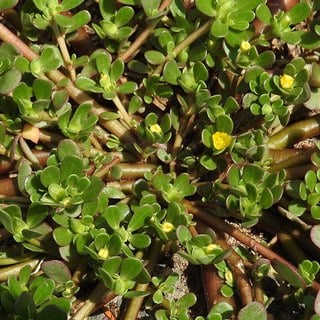
The exception? A few ornamental purslanes, such as Proven Winners Mojave® series, are cultivars of a different species — Portulaca umbraticola.
Moss Rose
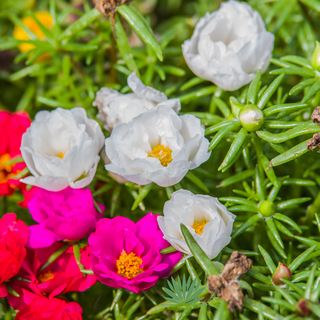
Ornamental purslane is also confused with moss rose (Portulaca grandiflora), another popular container plant in the same genus. Like purslane, moss roses are sun lovers with small, bright flowers. However, their succulent leaves are fine and needle-like.
Recommended Reading:
Purslane, Portulaca, & Moss Rose: What’s the Difference?
As an Amazon Associate, Southwest Gardener earns from qualifying purchases, at no cost to you.
See our Terms of Use for details.
Did you enjoy this article?
Sign up for our weekly newsletter
where you’ll find more great info on creating &
maintaining a beautiful, carefree desert landscape.
Author Bio
Deane Alban is the creator of Southwest Gardener. She is a science writer with a bachelor’s degree in botany from the University of South Florida. Gardening is her lifelong passion. She’s been gardening in Tucson for over 16 years.

Photo Credit
Robert Flogaus-Faust, CC BY-SA 4.0, via Wikimedia Commons