
Organ pipe cactus is an impressive columnar cactus that grows in large clusters and can make a real statement in the right spot. But due to its large ultimate size and slow growth rate, it’s not suitable for every garden. Here’s everything you need to know about growing this Sonoran Desert native as a landscape plant.

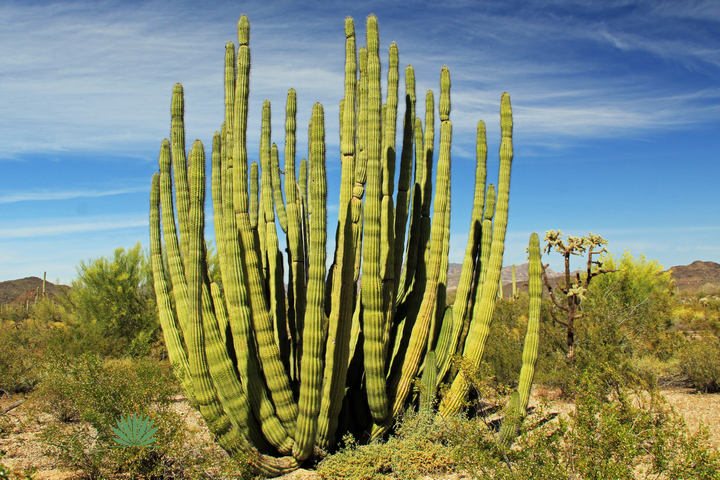
Organ pipe cactus (Stenocereus thurberi) is a huge cactus that grows not just tall but also wide by sending up new columns from its base. These wide clusters ultimately grow too large for many typical urban and suburban yards. But in the right location, this cactus makes a stunning focal point.
Once it matures, it produces large creamy white flowers tinged with pink from spring through summer. The flowers bloom at night and are pollinated by bats and moths.
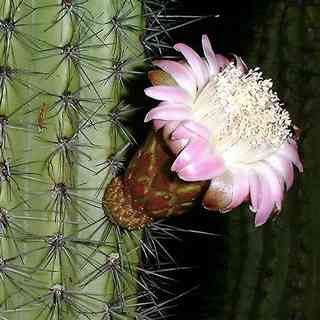
Flowers are followed by fleshy, red fruit that’s enjoyed by bats, birds, and mammals… including people. It’s said to taste like watermelon, only better, and is considered one of the most delicious cactus fruits.
Organ pipe cactus is an extremely undemanding plant. It thrives in intense desert heat and rarely needs irrigation. It requires no pruning and produces no litter.
But what this desert native does require from those who grow it is patience. It takes its time. It’s slow growing, slow to produce flowers and fruit, and slow to propagate.
Why I Like This Plant
- Stunning specimen plant
- Delicious edible fruit
- Beautiful flowers
- As maintenance-free as a plant can be
- Supports birds, bats, moths
Things to Watch Out For
The biggest concern about growing organ pipe as a landscape cactus is that it’s not terribly cold-tolerant. When the temperature drops below 25℉, the tips of columns can suffer cold damage. So you may need to protect your plant from cold, depending on its microclimate. This gets difficult as plants mature.
It has clusters of 2 inch, needle-like spines, so don’t plant this near sidewalks, driveways, or where children or pets play. (Spines can be various shades of gray, brown, or black.)
Organ pipe cactus can develop root rot, even if you aren’t intentionally watering it. Since most of its root system goes only 4 inches deep, even lightly sprinkling nearby plants can cause it to soak up too much water.

Don’t plant it for the tasty fruit unless you expect to stay in your house for a very long time. It can take 35 years to start flowering and producing fruit!
Optimal Growing Conditions
If you’re thinking of adding an organ pipe cactus to your garden, you need to find a suitable place that will keep your plant healthy and looking good… while minimizing maintenance for you.
Here are the key factors to keep in mind.
Temperature
Organ pipe cactus should be grown in USDA Hardiness Zones 9 to 11. As a Sonoran Desert native, it tolerates desert heat, but cold is its main limiting factor. When the temperature drops below 25℉, plants can experience cold damage, especially young plants or new columns.
It’s not unusual to see column tips of these and other cold-sensitive columnar cactus protected with paper bags, styrofoam cups, knit caps, or even Santa Claus hats in the winter here in Tucson.
Sun Exposure
Organ pipe cactus prefers full sun and doesn’t mind the reflected heat of a hot garden wall or building. In their native habitat, seedlings typically grow under a nurse plant, similarly to saguaros. So you might want to provide yours with some protective shade while young. Surprisingly, they grow in tropical deciduous forests in Mexico where even large specimens are shaded by trees.
Size and Growth Rate
Organ pipe cactus grows slowly. It takes about 150 years to reach maturity.
When grown as a landscape plant, it typically reaches a size of 10 feet tall and wide, but it can grow much larger — up to 20 feet tall by 15 feet wide — so plan ahead and give it plenty of room. Each column is 6 to 8 inches in diameter.
Soil
Organ pipe cactus should be grown in sandy or rocky, well-draining soil. Root rot can occur in poorly draining soil.
Organ Pipe Cactus:
The Essentials
| Common Name | Organ pipe cactus |
| Scientific Name | Stenocereus thurberi |
| Origin | Sonoran Desert |
| Plant Type | Columnar cactus |
| USDA Zones | Zones 9 – 11 |
| Cold Hardiness | To 25℉ |
| Flower Color | White |
| Flower Season | Spring, summer |
| Mature Size | 10-20′ tall x 10-15’ wide |
| Growth Rate | Slow |
| Sun Tolerance | Full, part, reflected sun |
| Water Needs | Low |
| Pests & Diseases | Root rot |
| Cautions | Spines |
| Wildlife | Supports bats, moths, birds |
How to Plant
To plant an organ pipe cactus, dig a hole the same depth as the root system and twice as wide.
Amending the soil with compost or soil mix is not recommended. However, good drainage is critical. If you know your soil is slow-draining, amend it with coarse sand or small gravel until you have a loose, well-draining mix.
Carefully remove the plant from the container, place it in the hole, and press the soil to remove any air pockets.
Plant facing in the same direction that it was in the nursery. Surprisingly, cactus can get sunburned! Better nurseries will mark the pot so you know which direction your cactus has been facing.
If you’re planting an organ pipe of a substantial size, helpful tools include carpet remnants or old towels. Wear long sleeves, eye protection, and sturdy, protective gloves. Most garden gloves are no match for our desert plants. I use a thick pair of nitrile chemical-resistant gloves when handling cactus.
When to Plant
The best time to plant organ pipe cactus is in April or May when warm soil temperatures encourage root development.
How to Care for Organ Pipe Cactus
Whether you’ve recently planted an organ pipe cactus or have an existing plant in your yard, here’s how to take care of it to keep it healthy and looking its best.
How to Water
You’re probably used to giving plants a good soaking immediately after transplanting, but that isn’t the best practice with cactus. The Arizona-Sonora Desert Museum advises not to water succulents for one to two weeks after planting.
When your cactus is young, water it once per month during the hot spring and summer, unless you’ve had rains of ½ inch or more. It should not need any irrigation during the winter. Cold, wet roots will cause this cactus to rot.
Once it’s established, it should not need any water, unless there is severe drought. Then you can water it once or twice during the summer.
Should You Fertilize?
There is no need to fertilize organ pipe cactus, it gets all the nutrients it needs from desert soil.
How to Prune
Organ pipe cactus doesn’t need pruning unless one of the columns has experienced damage. This can occur from cold, an animal taking a bite, or some human folly.
If you need to remove a column, you can use it to grow a new plant provided it’s healthy. Simply set your cutting aside for about one week to let it form a callus. Then stick the hardened end into the soil. Be patient, it can take several months for a cutting to develop roots.
Plant Lover Facts
Organ pipe cactus (Stenocereus thurberi) can also be spelled organpipe cactus or organ-pipe cactus, but doesn’t have any other common names in English. In Mexico, it is called pitayo dulce, meaning “sweet cactus” in referring to its fruit. The fruits are commercially harvested there on a small scale and sold in markets.
Its native range is mainly in Mexico, but its northernmost range reaches into Southern Arizona, especially in the area designated as Organ Pipe National Monument.
Native Americans traditionally put this plant to good use. They ate the fruit fresh or dried, and used it to make preserves, syrup, candy, juice, and wine. They dried the seeds to make flour and meal cakes. Ribs were used to make tools and in construction.
Did you enjoy this article?
Sign up for our weekly newsletter
where you’ll find more great info on creating &
maintaining a beautiful, carefree desert landscape.
Author Bio
Deane Alban is the creator of Southwest Gardener. She is a science writer with a bachelor’s degree in botany from the University of South Florida. Gardening is her lifelong passion. She’s been gardening in Tucson for over 16 years.
