
Little leaf ash is a small, airy tree or shrub that provides a pop of green to desert gardens. It’s also appreciated for being low litter. Here’s how to plant and care for this Chihuahuan native.

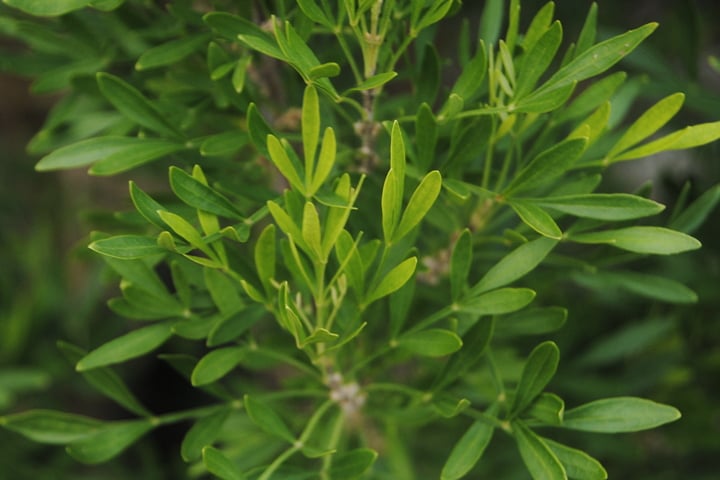
Little leaf ash’s (Fraxinus greggii) most notable feature is its year long bright green color. This plant’s other features are subtle. It has small leaves, inconspicuous flowers, and small winged fruit.
It makes a lovely, low maintenance addition to desert gardens. It needs minimal pruning and is drought-tolerant once established.
While ashes are normally thought of as trees, this species can be grown as either a small tree or a shrub, depending on how it’s pruned.
Its flowers, while not showy, attract bees and butterflies. It’s a larval host plant for a few species of butterflies, and birds enjoy the seeds.
Rabbits and deer generally leave the small but leathery foliage alone.
Why I Like This Plant
- Evergreen, bright green foliage
- Resilient, low maintenance
- No thorns, low litter, non-toxic
- Supports bees, butterflies, birds
Things to Watch Out For
While little leaf ash is considered a very “clean” tree and never goes completely bare, it does shed leaves briefly in the spring before new growth appears. So keep that in mind when planting near a pool or anywhere else you don’t want litter.
In its native habitat, it grows in seasonally wet riparian canyons and washes. Consequently, needs a moderate (rather than low) amount of water, especially during the first few years.
Optimal Growing Conditions
If you’re thinking of adding a little leaf ash to your garden, you need to find a suitable place that will keep your plant healthy and looking good… while minimizing maintenance for you.
Here are the key factors to keep in mind.
Temperature
Little leaf ash should be grown in USDA Hardiness Zones 7 to 10. It tolerates desert heat… up to a point. It struggles when the temperature exceeds 115℉. It survives cold down to 10℉.
Sun Exposure
Little leaf ash can be grown in full or part sun. It prefers northern and eastern exposures and appreciates some relief from afternoon sun during the summer.
Size and Growth Rate
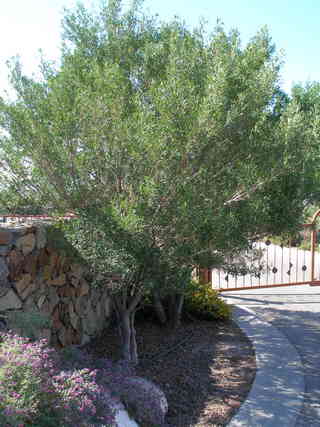
Little leaf ash is a slow to moderate grower depending on how much water it receives. It reaches a mature size of 15 to 20 feet tall by 10 to15 feet wide.
Soil
Little leaf ash grows well in any desert soil — rocky, sandy, clay, and even caliche — provided it’s well-draining.
Other Location Considerations
Little leaf ash makes an excellent urban tree or patio tree. It can also be grown in large containers or planters.
Little Leaf Ash:
The Essentials
| Common Name | Little leaf ash |
| Scientific Name | Fraxinus greggii |
| Origin | Texas, Mexico |
| Plant Type | Evergreen shrub/tree |
| USDA Zones | Zones 7 – 10 |
| Cold Hardiness | To 10℉ |
| Flowers | Inconspicuous |
| Flower Season | Spring |
| Mature Size | 15-20’ tall x 10-15’ wide |
| Growth Rate | Slow to moderate |
| Sun Tolerance | Full, part sun |
| Water Needs | Low to moderate |
| Garden Friendly | No thorns, non-toxic, low litter |
| Wildlife | Attracts bees, birds, butterflies |
How to Plant
The rule of thumb when planting any shrub or tree in the desert is to dig a hole three times as wide as the root ball but no deeper.
Amending the soil is not recommended. Counterintuitively, backfilling with only native soil helps your plant develop a better root system.
When to Plant
The best time to plant little leaf ash is in the fall. This gives it three seasons to grow roots and get established before the following summer.
The second best time is in spring, the earlier the better. This still gives it time to get established before the intense heat of June arrives.
Recommended Reading:
Low Litter Trees for Desert Gardens
How to Care for Little Leaf Ash
Whether you’ve recently planted a new little leaf ash or have an existing one in your yard, here’s how to take care of it to keep it healthy and looking its best.
How to Water New Plants
Once you’ve got your little leaf ash in the ground, watering is your most immediate concern. Here is the recommended watering schedule for new trees and shrubs planted in the spring or fall.
| Weeks 1 & 2 | Every 3 – 4 days |
| Weeks 3 & 4 | Every 6 – 7 days |
| Weeks 5 & 6 | Every 7 – 10 days |
| Weeks 7 & 8 | Every 10 – 14 days |
After week 8, gradually revise your watering schedule, depending on the season.
How to Water
There are two factors to consider when watering any desert tree.
- First is how often to water. This will vary with the seasons.
- Second is how much water to give your plant with each watering. This depends on its current size.
To determine the ideal watering schedule for any desert shrub, you’ll find everything you need to know, including easy-to-use charts, at How to Water Desert Trees: How Often? How Much?
Since little leaf ash is a moderate rather than low water use plant, use the “High Water Use” schedule for the first year or so. However, once it’s established and becomes more drought tolerant, it can be watered on the “Low Water Use” schedule.
Should You Fertilize?
You don’t need to fertilize little leaf ash, which evolved to grow in poor desert soil, but you can. The Arizona-Sonora Desert Museum recommends feeding in the winter.
Occasionally, this tree may develop iron chlorosis which is characterized by yellow leaves with green veins. You can learn how to identify and treat iron chlorosis here.
How to Prune
Little leaf ash needs little pruning when grown as a shrub. If you do need to shape it or want to encourage bushiness, prune lightly, not aggressively. It should be pruned in winter before new spring growth appears.
If you choose to shape it as a tree, I urge you to hire a certified arborist (NOT a so-called landscaper) to prune it, unless you are experienced at shaping desert trees. Correctly shaping a new tree is a special skill — it’s easy to go wrong and ruin its shape.
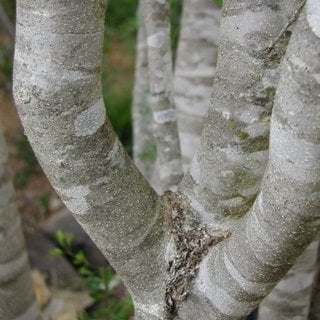
Growing it as a tree allows its attractive gray bark to show.
Plant Lover Facts
Little leaf ash (Fraxinus greggii) also goes by the common name Gregg’s ash.
The species name greggii is in honor of Josiah Gregg, an American naturalist and plant collector. A few other desert landscape plants named after him include autumn sage (Salvia greggii) and Gregg’s mist.
Little leaf ash is native to the washes, canyons, and rocky slopes of Texas and Mexico. A few sources list it as also being native to Arizona and New Mexico, but most of my “go to” sources, iNaturalist, Kew Royal Botanic Gardens, and the Arizona Native Plant Society, do not support this.
Did you enjoy this article?
Sign up for our weekly newsletter
where you’ll find more great info on creating &
maintaining a beautiful, carefree desert landscape.
Author Bio
Deane Alban is the creator of Southwest Gardener. She is a science writer with a bachelor’s degree in botany from the University of South Florida. Gardening is her lifelong passion. She’s been gardening in Tucson for over 16 years.
