
Lantana gall mites are a microscopic pest found exclusively on lantanas. They cause growths that look like mutant broccoli. Learn what to do (and not do) if your lantanas are infected, and how to prevent future infestations.

Lantana is a favorite of Southwest gardeners because it flowers profusely most of the year, comes in a rainbow assortment of colors, and tolerates the desert’s harshest conditions. Lantanas generally aren’t bothered by pests and diseases, but they are susceptible to a pest called lantana gall mite.
Let’s take a look at the signs of lantana gall mites, what you should do (and should not do) if your plants are infected, and how to prevent future infestations.
Signs of Lantana Gall Mites
Lantana gall mites (Aceria lantanae) occur only on lantana of the Lantana camara species. (Which includes virtually all lantanas sold in nurseries and grown by gardeners, with one exception that I’ll discuss later.)
Mites are arachnids that are more closely related to spiders than to insects. Lantana gall mites are microscopic, so you won’t see them on your plants, but you will see the damage they incur.
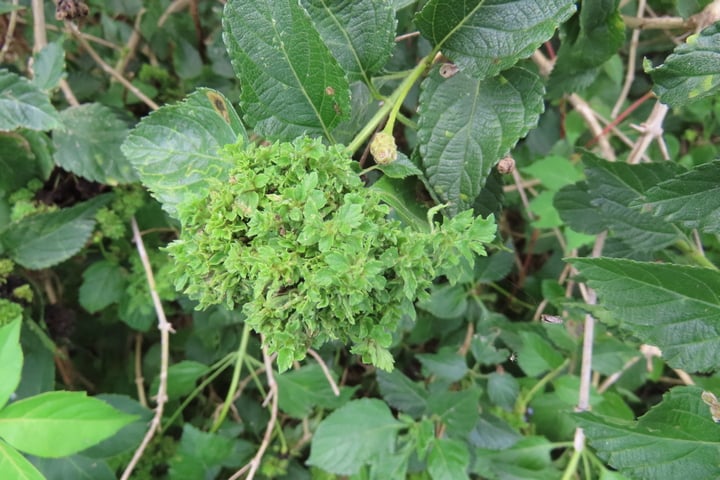
When a lantana gall mite feeds on a plant, it injects a chemical that causes plant tissues to grow abnormally, causing a gall that forms a protective bubble where the mites can live and lay their eggs undisturbed.
The telltale sign of an infestation is the appearance of broccoli-like abnormalities on flowers or leaves. Each gall is comprised of hundreds of tiny leaves.

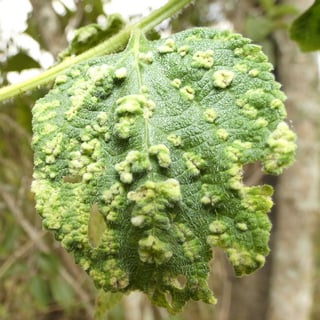
Lantana gall mites can also cause wart-like bumps on leaves.
How Do Lantana Gall Mites Spread?
You might be wondering how your lantana got gall mites. The mites don’t fly, but are so light they are carried by the wind. They can also hitch a ride on visiting insects.
Frustratingly, they’re often spread by infected garden tools — either your own or your landscaper’s. Careless landscapers not only spread mites from plant to plant, but from garden to garden.
How to Treat Lantanas for Mites
If you see galls or malformed leaves or flowers on a lantana, it’s probably infected with lantana gall mites (or possibly herbicide damage, which I’ll discuss shortly). Either way, here’s what you can do.
Prune Away “The Weird”
As soon as you notice any weird or irregular growths, cut away the disfigured vegetation to prevent the infestation from getting worse or spreading to other plants. Then keep an eye on your plant and continue to remove any new abnormal growth as it appears.
If a lantana is heavily infested, you may want to consider removing it, especially if you have other healthy lantanas nearby that you want to protect.
Should You Spray?
I understand the urge to “do something” when a plant is struggling, but there are some good reasons to forgo spraying for lantana gall mites
For many pests, a jet spray from your hose is the first place to start, but this may spread lantana gall mites to nearby unaffected lantanas (yours or your neighbors’).
In spite of their hardiness, lantana should not be sprayed insecticidal soap. Oddly, some plants, including lantana, are sensitive to soap and can be harmed by its use. This includes any DIY spray made from dish detergent, which is significantly harsher than soap.
You can try a product that acts as a miticide, such as neem oil. While it may reduce the adult population, it won’t penetrate the protective galls and won’t affect the next generation. Ironically, neem oil should not be sprayed on stressed plants (does gall damage count?) or when the temperature exceeds 85 to 90°F.
For these reasons, pruning — not spraying — is the first-line treatment for lantana gall mites.
Are Lantana Gall Mites the Same as Witches’ Broom?
You may have heard that lantana with broccoli-like growths has witches’ broom and wonder if it’s the same as lantana gall mite. It’s a little complicated, so hang in there while I explain.
Witches’ broom is not one disease or organism. It’s an umbrella phrase used to describe a cluster of symptoms that can have a wide variety of underlying causes — mostly naturally caused infestations but also herbicide damage. All cause a plant’s own cells to grow abnormally.
Lantana gall mite is one of the many underlying causes of witches’ broom.
Herbicides: Another Cause of Lantana Damage
Herbicide damage is another underlying cause of witches’ broom that can disfigure lantana.
Whether your lantana’s damage is caused by herbicides or mites doesn’t change the treatment, which is to prune away the abnormal growths.
If you know or suspect your lantana has been exposed to herbicides, I recommend this article by Clemson Cooperative Extension, “How to Identify & Prevent Herbicide Damage in Landscape Plants“. It discusses the symptoms of damage caused by specific herbicides, how to minimize the risk of damage, and what to do if herbicide overspray drifts onto your plants.
The only way to know for sure if lantana has gall mites
vs herbicide damage is to examine it under a microscope.
How to Prevent Future Infestations
Before buying or otherwise acquiring a new lantana, inspect it for abnormalities that could be a sign of mite damage. If notice anything suspicious, take a pass on that plant.
When pruning lantanas, disinfect your tools when moving from plant to plant. That way, if one plant has gall mites, you won’t spread it to other lantanas. Learn the best ways to disinfect your tools here.
Lantana gall mites are often spread from garden to garden by landscapers’ tools. If you hire a landscaper, insist that they disinfect their tools before trimming your lantana. If they won’t comply, hire someone who will, or prune them yourself.
Lastly, keep your existing lantanas healthy. Pests and diseases of all kinds cause more damage in unhealthy, stressed plants.
Mite-Free Lantana Option
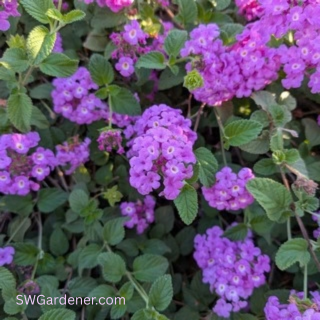
Lantana gall mites are species-specific and only affect Lantana camara. If you’ve had trouble with lantana gall mites or wish to avoid the problem, there’s a lantana species that is unaffected — trailing lantana (Lantana montevidensis).
This beautiful species grows as a shrubby ground cover with beautiful purple flowers (or sometimes white). It has the same care requirements as Lantana camara. An additional benefit is that it’s slightly more cold tolerant.
Surprising Use for Lantana Gall Mites
I end a lot of my articles, especially plant profiles, with odd, ironic, or unexpected facts that plant nerds like myself find interesting. This article is no exception.
I was pretty surprised when I learned that lantana is on the list of the top 100 invasive species in the world. Lantana is particularly problematic in Australia, Africa, and India. But I was stunned to learn that in South Africa, lantana gall mites have been intentionally introduced as a biological control to help curb lantana populations. The gall mites affect seed production, reducing a plant’s ability to reproduce by 90%.
Did you enjoy this article?
Sign up for our weekly newsletter
where you’ll find more great info on creating &
maintaining a beautiful, carefree desert landscape.
Author Bio
Deane Alban is the creator of Southwest Gardener. She is a science writer with a bachelor’s degree in botany from the University of South Florida. Gardening is her lifelong passion. She’s been gardening in Tucson for over 16 years.
