
Arabian lilac is a large, deciduous shrub that has striking two-tone leaves of green and purple, along with purple flowers and stems. Here’s everything you need to know about growing this native of Africa, Asia, and Australia.

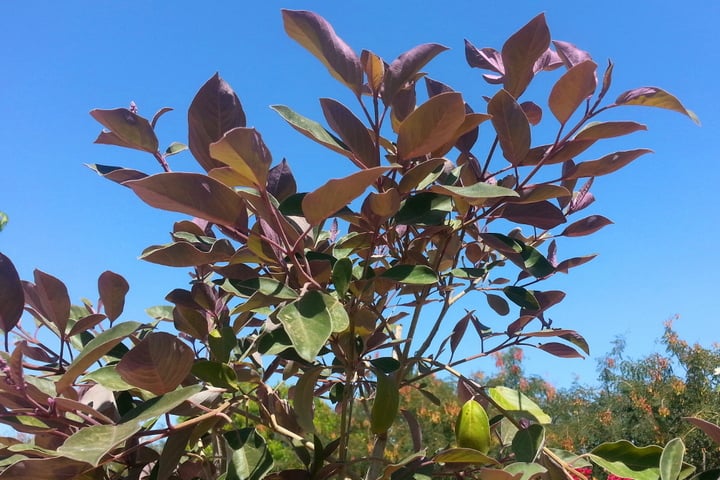
If you love to fill your garden with shades of purple, Arabian lilac (Vitex trifolia ‘Purpurea’) is a shrub to consider. It has purple stems, striking two-tone leaves with purple undersides, and clusters of lavender flowers
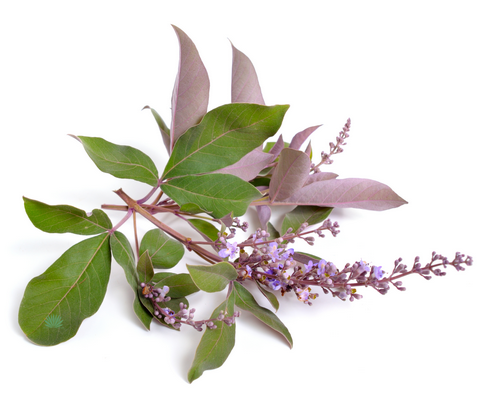
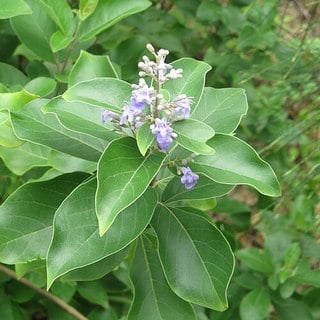
The spires of small purple flowers are delicate rather than showy and are not fragrant, but still attract bees and butterflies. Flowers are followed by small black berries that resemble peppercorns. The leaves are aromatic and smell peppery when crushed.
Arabian lilac is native to coastal and low-altitude areas of the Indo-Pacific region, yet it tolerates the Southwest desert’s sun, heat, and aridity surprisingly well.
Deer, rabbits, and javelinas usually leave this plant alone.
Why I Like This Plant
- Unusual two-tone leaves
- Delicate spires of lavender flowers
- No spines or thorns
- Attracts pollinators
Things to Watch Out For
Arabian lilac is not related to true lilac (Syringa vulgaris), so don’t expect its flowers to have that wonderful lilac scent.
Arabian lilac is mostly deciduous in Tucson, losing its leaves with the first frost. So it’s not an ideal choice for snowbirds or anyone who wants their garden to look its best during the cooler months.
This shrub grows fast and gets big, so give it plenty of room to spread, or you’ll be constantly pruning it.
Optimal Growing Conditions
If you’re thinking of adding an Arabian lilac to your garden, you need to find a suitable place that will keep your plant healthy and looking good… while minimizing maintenance for you.
Here are the key factors to keep in mind.
Temperature
Arabian lilac should be grown in USDA Hardiness Zones 9 to 11. It tolerates extreme heat but is not terribly cold hardy. It loses its leaves when the temperature dips below freezing, but is root hardy down to 20°F.
Counterintuitively, it is more likely to retain leaves when young and become deciduous as it matures.
Sun Exposure
This plant can be grown in full sun or part shade. It appreciates some relief from afternoon sun in the summer.
Size and Growth Rate
Arabian lilac is a fast grower. It typically reaches a size of 10 to 15 feet tall and wide, but its ultimate size will depend on how much water it receives and how it’s pruned.
Soil
Arabian lilac can grow well in most native soil, provided it’s well-draining. This is not a good candidate if you have heavy clay since it does not tolerate being waterlogged.
Arabian Lilac:
The Essentials
| Common Name | Arabian lilac |
| Scientific Name | Vitex trifolia ‘Purpurea’ |
| Origin | Africa, Asia, Australia |
| Plant Type | Deciduous shrub |
| USDA Zones | Zones 9 – 11 |
| Cold Hardy | To 20℉ |
| Flower Color | Lilac |
| Flower Season | Summer |
| Mature Size | 10-15’ tall & wide |
| Growth Rate | Fast |
| Sun Tolerance | Full, part sun |
| Water Needs | Moderate |
| Pests & Diseases | None |
| Wildlife | Supports bees, butterflies |
How to Plant
The rule of thumb when planting any shrub in the desert is to dig a hole three times as wide as the root ball but no deeper.
Amending the soil is not recommended. Counterintuitively, backfilling with the same native soil you just dug up helps your plant develop a stronger root system.
When to Plant
The best time to plant Arabian lilac is in the fall. This gives it three seasons to grow roots and get established before the following summer.
The second best time is in spring, as soon as the risk of frost is over. This still gives it time to get established before the intense heat of June arrives.
How to Care for Arabian Lilac
Whether you’ve recently planted an Arabian lilac or have an existing one in your yard, here’s how to take care of it to keep it healthy and looking its best.
How to Water New Plants
Once you’ve got your plant in the ground, watering is your most immediate concern. Here is the recommended watering schedule for new shrubs planted in the spring or fall.
| Weeks 1 & 2 | Every 3 – 4 days |
| Weeks 3 & 4 | Every 5 – 7 days |
| Weeks 5 & 6 | Every 7 – 10 days |
| Weeks 7 & 8 | Every 10 – 14 days |
After week 8, gradually revise your watering schedule, depending on the season.
How to Water Established Plants
As your Arabian lilac gets established, there are two watering factors to consider.
- First is how often to water. This will vary with the seasons.
- Second is how much water to give your shrub with each watering. This depends on its current size.
To determine the ideal watering schedule for your Arabian lilac, you’ll find everything you need to know, including easy-to-use charts, at How to Water Desert Shrubs: How Often? How Much?
Don’t overwater your Arabian lilac and allow it to dry out between waterings. It does not like having continually wet roots.
Should You Fertilize?
Arabian lilac doesn’t need fertilizer. It grows fast without it, but you may want to topdress with compost or mulch to help improve drainage and protect roots from temperature extremes.
How to Prune
Arabian lilac tolerates pruning better than many desert shrubs and can be grown as a hedge or even shaped into a small tree. The best time of year to prune is during winter, but it can be lightly pruned any time of year to shape, control its size, or encourage bushiness.
Since it grows fast, it will need regular pruning unless you want to let it retain its natural sprawling, informal form.
Don’t Confuse Arabian Lilac With…
As mentioned earlier, don’t confuse Arabian lilac with the highly fragrant lilac shrub of temperate regions.
Also, don’t confuse Arabian lilac with chaste tree (Vitex agnus-castus). Like Arabian lilac, it is a member of the Vitex genus. Both plants grow to be a similar size and have similar care requirements, but chaste tree is vastly more popular as a desert landscape plant. Unlike Arabian lilac, which is grown mainly for its distinctive foliage, chaste tree is grown mainly for its profusion of showy flowers.
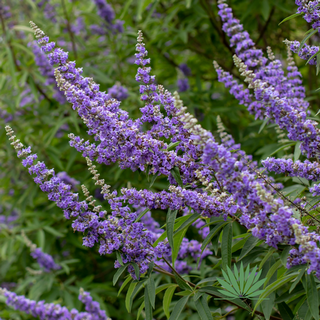
When plant shopping, you may also see Arabian lilac called Vitex ‘Fascination‘.
Plant Lover Facts
Arabian lilac (Vitex trifolia ‘Purpurea’) is a cultivar of Vitex trifolia. The parent plant has a large native range that extends from Eastern Africa, through Southern Asia, and into Australia. Its leaves lack the cultivar’s pronounced purple undersides.
The species name trifolia refers to its compound leaves comprised of three leaflets. It was traditionally used to treat fever, asthma, headache, and rashes.
Did you enjoy this article?
Sign up for our weekly newsletter
where you’ll find more great info on creating &
maintaining a beautiful, carefree desert landscape.
Author Bio
Deane Alban is the creator of Southwest Gardener. She is a science writer with a bachelor’s degree in botany from the University of South Florida. Gardening is her lifelong passion. She’s been gardening in Tucson for over 16 years.

Photo Credits
Arizona State University’s Virtual Library of Phoenix Landscape Plants
Vinayaraj, CC BY-SA 4.0, via Wikimedia Commons