
‘Tuscan Blue’ rosemary is a popular pick for desert gardens for good reason. It tolerates extreme conditions, grows well in containers, and is a favorite as a culinary herb. Here’s how to grow this resilient, versatile cultivar of an iconic Mediterranean plant.
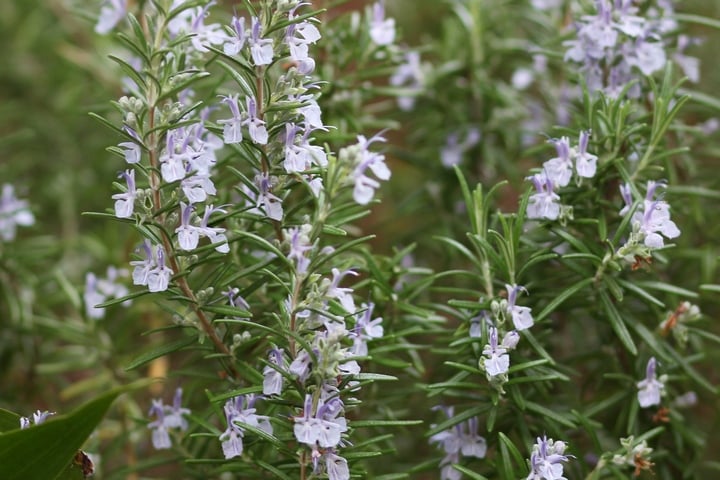
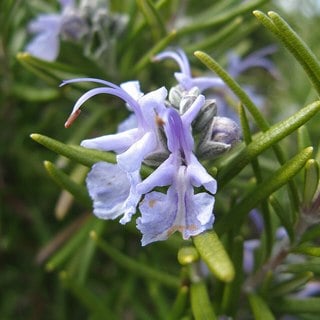
‘Tuscan Blue’ rosemary (Salvia rosmarinus ‘Tuscan Blue’) is a medium size shrub with highly aromatic, needle-like leaves and lavender-blue flowers. It’s a cultivar of an herb that’s been used in cooking and as medicine for thousands of years.
There are many cultivars of rosemary. ‘Tuscan Blue’ is one of the most popular, and a top choice for desert gardens. This all-purpose rosemary makes an excellent landscape plant and container plant, and is a culinary favorite. It’s at home in the desert and tolerates its harshest conditions — full sun, poor soil, temperature extremes, and drought.
It blooms most profusely from January to March, with flowers that are larger than those of other rosemaries. Flowers attract bees like crazy, providing nectar when few other flowers are available.
While rosemary delights the noses of humans, its scent repels deer, javelina, and rabbits, which generally leave it alone.
Did I mention how much I love the scent? I run a hand along mine whenever I get the chance. Its aroma never fails to delight me.
Why I Like This Plant
- Aromatic, edible evergreen leaves
- Profusion of lavender flowers
- Low maintenance
- No thorns, low litter, non-toxic for pets
- Attracts bees, butterflies
- Deer, rabbit, javelina resistant
Things to Watch Out For
Many gardeners struggle to grow rosemary, usually because they treat it too well. While you can use rosemary as an herb, you should treat it as you would any other desert landscape shrub, not as a garden vegetable. It’s susceptible to root rot and should not be grown in your vegetable beds along with other herbs like basil or parsley. It doesn’t like constantly moist, rich soil or humidity.
The good news is that if your rosemary makes it through the critical first year, it will probably live a long time.
Optimal Growing Conditions
If you’re thinking of adding rosemary to your garden, you need to find a suitable place that will keep your plant healthy and looking good… while minimizing maintenance for you.
Here are the key factors to keep in mind.
Temperature
‘Tuscan Blue’ rosemary should be grown in USDA Hardiness Zones 8 to 11. It tolerates summer desert heat. During the winter, it stays evergreen, flowers, and does most of its growing. It’s cold-hardy down to 15℉.
Sun Exposure
Rosemary needs 6 hours of full sun to perform its best, but appreciates some afternoon shade in the hottest climates.
Size and Growth Rate
Young rosemary plants grow slowly, so don’t expect much growth the first two years. After that, the pace picks up, and it becomes a moderate grower. Note that it grows during the cool weather, and stalls in the summer.
It grows to be around 4 to 5 feet tall and wide in desert gardens, depending on how it’s pruned and how often you snip off sprigs for cooking. It typically blooms from winter through spring, but it can flower intermittently during other seasons as well.
Soil
Rosemary prefers well-draining sandy or rocky soil. It can struggle in clay.
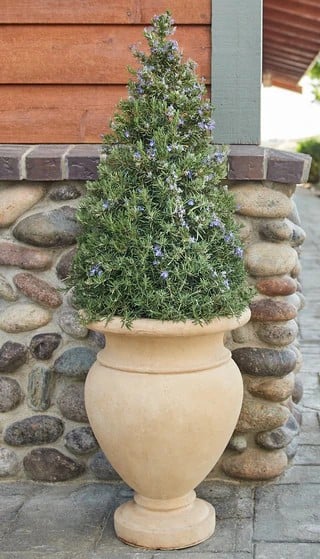
Growing Rosemary in a Container
Rosemary makes a beautiful container plant, but many gardeners find it challenging. Overwatering is the usual culprit. Here are some tips for success.
Place it in a well-draining pot, ideally one made of terra cotta, which is porous and allows the soil to dry out. Use a 50-50 blend of cactus soil and potting mix. Then err on the side of underwatering and water only when the soil feels completely dry.
‘Tuscan Blue’ Rosemary:
The Essentials
| Common Name | ‘Tuscan Blue’ rosemary |
| Scientific Name | Salvia rosmarinus ‘Tuscan Blue’ |
| Origin | Mediterranean (cultivar) |
| Plant Type | Evergreen shrub |
| USDA Zones | Zones 8 – 11 |
| Cold Hardiness | To 15℉ |
| Flower Color | Lavender-blue |
| Flower Season | Winter, spring |
| Mature Size | 4-5′ tall & wide |
| Growth Rate | Slow to moderate |
| Sun Tolerance | Full |
| Water Needs | Low |
| Pests & Diseases | Spittlebug, root rot |
| Garden Friendly | No thorns, edible, non-toxic, low litter |
| Wildlife | Attracts bees, butterflies Critter resistant |
How to Plant
The rule of thumb when planting any shrub in the desert is to dig a hole three times as wide as the root ball but no deeper. Amending the soil is not recommended. Counterintuitively, backfilling with the same native soil you just dug up helps your rosemary develop a stronger root system.
When to Plant
The best time to plant rosemary is in the fall. This gives it three seasons to grow roots and get established before the following summer. The second best time is in spring, the earlier the better. This still gives it time to get established before the intense heat of June arrives.
How to Care for Rosemary
Whether you’ve recently planted a ‘Tuscan Blue’ rosemary or have an existing plant in your yard, here’s how to take care of it to keep it healthy and looking its best.
How to Water New Plants
Once you’ve got your ‘Tuscan Blue’ in the ground, watering is your most immediate concern. Here is the recommended watering schedule for new shrubs planted in the spring or fall.
| Weeks 1 & 2 | Every 3 – 4 days |
| Weeks 3 & 4 | Every 5 – 7 days |
| Weeks 5 & 6 | Every 7 – 10 days |
| Weeks 7 & 8 | Every 10 – 14 days |
After week 8, gradually revise your watering schedule, depending on the season.
How to Water Established Plants
As your rosemary gets established, there are two watering factors to consider.
- First is how often to water. This will vary with the seasons.
- Second is how much water to give your shrub with each watering. This depends on its current size.
To determine the ideal watering schedule for any shrub, you’ll find everything you need to know, including easy-to-use charts, at How to Water Desert Shrubs: How Often? How Much?
Should You Fertilize?
Rosemary naturally thrives in poor soil and does not need to be fertilized, however an annual feeding may help keep it in top form.
Pruning & Propagation
You can snip new growth for cooking any time of year, and it won’t harm your plant’s health or shape. The best time of year to do significant pruning is in the spring. Always cut above a set of leaves and never prune more than 1/3 of the plant at a time. Never hard prune rosemary. When pruned too severely, it may not grow back.
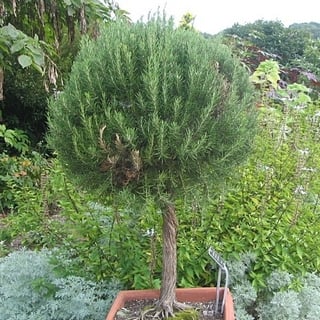
‘Tuscan Blue’ takes pruning surprisingly well and can even be shaped into topiary, provided you keep the above rules in mind.
You can use any healthy cuttings to propagate new plants. The simplest way is to place cuttings in water and wait for them to grow roots. This works best with new growth in the spring.
Pests & Diseases
Other than root rot from overwatering, rosemary is generally not bothered by pests or diseases. You may occasionally see spittlebugs on the stems, which appear as small spots of white foam. Spittlebugs are the nymph stage of froghoppers. The white foam you see is a protective coating. They are most likely to appear on stems that don’t get enough sun.
A few spittlebugs won’t harm your plant, so you can let them be. Or you can easily remove them by hosing them off.
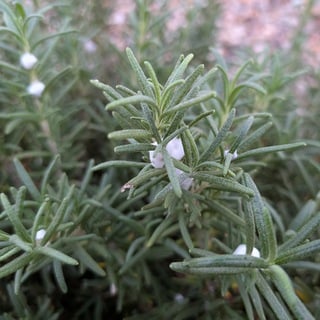
Don’t Confuse ‘Tuscan Blue’ With…
There are two main types of rosemary — upright shrubs and trailing ground covers.
‘Tuscan Blue’ is an upright rosemary shrub. Don’t confuse it with trailing rosemary (Salvia rosmarinus ‘Prostratus’) which grows wide rather than tall, staying 2 feet tall by 3 to 6 feet across. It’s a great choice on hills or slopes, in rock gardens, or cascading over walls or containers.
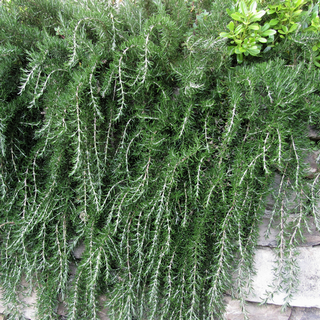
When you go plant shopping, you may find that not all rosemary containers are clearly labeled as shrub or trailing. Be sure you know which kind you are getting so you won’t be disappointed with the wrong form.
Plant Lover Facts
Rosemary (Salvia rosmarinus) is the parent plant of ‘Tuscan Blue’ and other rosemary cultivars. It’s native to the hot, dry western Mediterranean coasts of Europe, Western Asia, and Northern Africa. It’s still often referred to by its former scientific name, Rosmarinus officinalis. Consequently, ‘Tuscan Blue’ (Salvia rosmarinus ‘Tuscan Blue’) is still sometimes referred to by the former scientific name Rosmarinus officinalis ‘Tuscan Blue’.
Did you enjoy this article?
Sign up for our weekly newsletter
where you’ll find more great info on creating &
maintaining a beautiful, carefree desert landscape.
Author Bio
Deane Alban is the creator of Southwest Gardener. She studied journalism and received a bachelor’s degree in botany from the University of South Florida. Gardening is her lifelong passion. She’s been gardening in Tucson for over 16 years.

Photo Credits
Maja Dumat, CC BY-SA 2.0, Wikimedia Commons
Kenpei, CC BY-SA 3.0, Wikimedia Commons
David Stang, CC BY-SA 4.0, Wikimedia Commons