
Screwbean mesquite is a native mesquite that can be grown as either a large shrub or small tree. It’s easily recognized by its distinctive spiral seed pods and is one of the best plants for attracting and supporting wildlife. Here’s everything you need to know about growing this native of the Sonoran and Chihuahuan Deserts.

If you’d love to plant a southwest native mesquite, but are leery because of their size and reputation for messiness, screwbean mesquite is an option to consider.
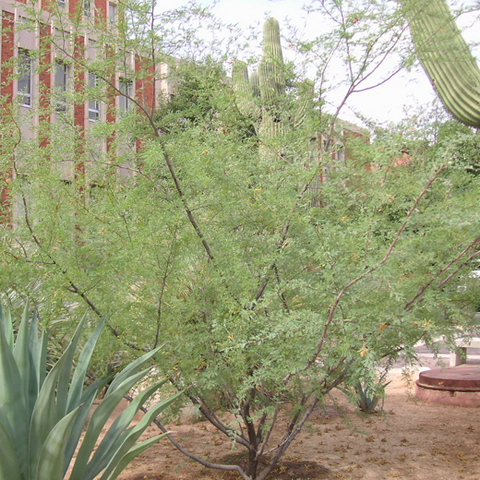
Screwbean mesquite (Strombocarpa pubescens) naturally grows as a large shrub or as a small shrubby, multi-trunk tree. It has fern-like leaves, and the overall effect is open and airy.
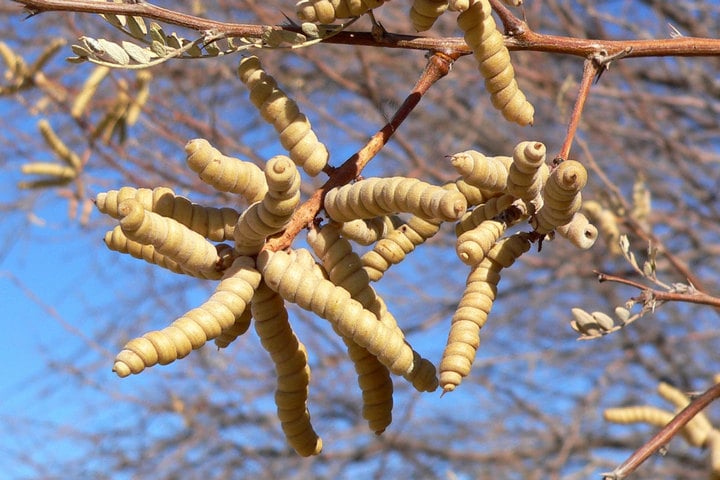
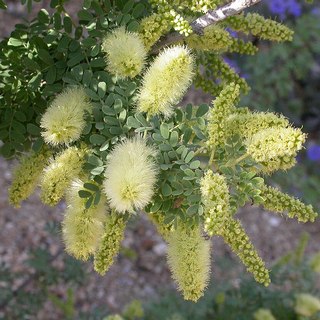
It blooms from spring into summer with fuzzy, pale yellow flowers called catkins. Flowers are followed by clusters of tight, corkscrew-shaped seed pods reminiscent of rotini. When pods are present, it’s easy to tell this tree apart from any other, since there’s nothing else in the desert that looks like this!
It’s native to riparian areas of the Sonoran and Chihuahuan Deserts and is a dominant species of the mesquite bosque. It provides food and shelter for numerous species of birds and small mammals, including icons of the desert — roadrunners, jackrabbits, and coyotes. It attracts bees and is a larval host for several species of butterflies.
Why I Like This Plant
- A manageable size mesquite
- Unique, edible seed pods
- Relatively low maintenance
- Southwest native
- Excels at supporting wildlife
Things to Watch Out For
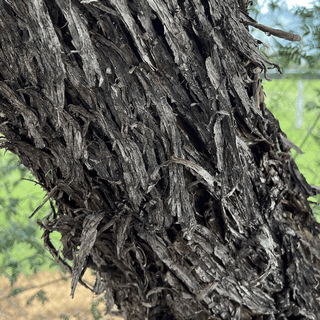
Screwbean mesquite creates a moderate amount of litter. This deciduous tree loses its leaves in winter and produces pods in the summer. Older trees shed their shaggy bark.
Trees have sharp, one inch thorns.
This wildlife magnet may attract some critters you might not want in your yard, such as rabbits, mice, and rats.
Optimal Growing Conditions
If you’re thinking of adding a screwbean mesquite to your garden, you need to find a suitable place that will keep your plant healthy and looking good… while minimizing maintenance for you.
Here are the key factors to keep in mind.
Temperature
Screwbean mesquite should be grown in USDA Hardiness Zones 7 to 10. It’s tolerant of extreme heat and cold, withstanding temperatures down to 15℉.
Sun Exposure
It thrives in full sun and doesn’t mind the reflected heat off garden walls or buildings, but will also accept part shade.
Size and Growth Rate
It is a slow to moderate grower that typically reaches a size of 15 to 20 feet tall and wide in desert gardens. However, under the right conditions, it can grow up to 30 feet tall. (This is not a concern if you grow yours as a shrub. It can be pruned to control its size.)
Soil
Screwbean mesquite is not particular about soil and does well in sandy, rocky, or clay soil, provided it’s well-draining.
Other Location Considerations
Screwbean mesquite is a good choice if you have a low spot in your yard or an area that sometimes floods, since it benefits from periodic flooding.
Screwbean Mesquite:
The Essentials
| Common Name | Screwbean mesquite |
| Scientific Name | Strombocarpa pubescens |
| Origin | Sonoran, Chihuahuan Deserts |
| Plant Type | Deciduous tree/shrub |
| USDA Zones | Zones 7 – 10 |
| Cold Hardiness | To 15℉ |
| Flower Color | Yellow |
| Flower Season | Spring, summer |
| Mature Size | 15-20’ tall & wide |
| Growth Rate | Slow to moderate |
| Sun Tolerance | Full, part, reflected sun |
| Water Needs | Low to moderate |
| Cautions | Thorns |
| Wildlife | Supports birds, mammals, insects |
How to Plant
The rule of thumb when planting a screwbean mesquite is to dig a hole three times as wide as the root ball but no deeper.
Amending the soil is not recommended. Counterintuitively, backfilling with the same native soil you just dug up helps your plant develop a stronger root system.
When to Plant
The best time to plant a screwbean mesquite is in the fall. This gives it three seasons to grow roots and get established before the following summer.
The second best time is in spring, the earlier the better. This still gives it time to get established before the intense heat of June arrives.
How to Care for Screwbean Mesquite
Whether you’ve recently planted a new screwbean mesquite or have an existing one in your yard, here’s how to take care of it to keep it healthy and looking its best.
How to Water New Plants
Once you’ve got your screwbean mesquite in the ground, watering is your most immediate concern. Here is the recommended watering schedule for new trees planted in the spring or fall.
| Weeks 1 & 2 | Every 3 – 4 days |
| Weeks 3 & 4 | Every 6 – 7 days |
| Weeks 5 & 6 | Every 7 – 10 days |
| Weeks 7 & 8 | Every 10 – 14 days |
After week 8, gradually extend the time between waterings.
How to Water Established Plants
As your tree becomes established, there are two watering factors to consider.
- First is how often to water. This will vary with the seasons.
- Second is how much water to give your tree with each watering. This depends on its current size.
To determine the ideal watering schedule for any desert tree, you’ll find everything you need to know, including easy-to-use charts, at How to Water Desert Trees: How Often? How Much?
This tree is pretty resilient when it comes to watering. It is tolerant of both drought and wetter conditions. In its native habitat, which includes desert riparian areas, flood plains, and washes, trees survive on 4 to 21 inches of annual rainfall and actually benefit from occasional flooding.
You can speed up its growth with extra water, but water deeply. Frequent, shallow watering makes this tree prone to storm damage.
Should You Fertilize?
Screwbean mesquite does not need fertilizer. As a member of the legume family (Fabaceae), this tree fixes nitrogen, which naturally improves the surrounding soil.
How to Prune
If left unpruned, screwbean mesquite has a shrubby, multi-trunked form. If you want to let yours grow as a large shrub, it won’t need much pruning. You can prune it in early spring or late fall to control its size or shape.
But if you want to grow yours as a small tree, it will require careful pruning to develop a walk-under canopy. Unless you’re experienced in training desert trees, I suggest you have an arborist train your young tree to get it off to the best possible start.
Plant Lover Facts
Screwbean mesquite (Strombocarpa pubescens) also goes by the common names American screwbean, screwbean, screwpod mesquite, twisted bean, fremont screwbean, and tornillo.
You may also see it referred to as Prosopis pubescens, the former scientific name that is still widely used.
It’s native to California, Nevada, Utah, Arizona, New Mexico, Texas, and northern Mexico.
Native Americans put this plant to good use. The seed pods were a staple food. They ate green seed pods raw and ground dried seed pods into flour used to make porridge, bread, and beverages. Various parts of the tree were used medicinally to treat wounds and earaches. Its wood made a good cooking fuel.
Screwbean mesquite pods taste slightly sweet and nutty. Since the bean casings of screwbean split easily when pounded, they are easier to process than other mesquites. You can learn how to harvest and prepare the pods of southwest native mesquites in this University of Arizona publication, “Mesquite: It’s Food“.
Did you enjoy this article?
Sign up for our weekly newsletter
where you’ll find more great info on creating &
maintaining a beautiful, carefree desert landscape.
Author Bio
Deane Alban is the creator of Southwest Gardener. She is a science writer with a bachelor’s degree in botany from the University of South Florida. Gardening is her lifelong passion. She’s been gardening in Tucson for over 16 years.
