
Purple heart is a familiar houseplant that makes a surprisingly resilient ground cover and outdoor patio plant in desert gardens. Here’s how to grow and care for this native of tropical Eastern Mexico.

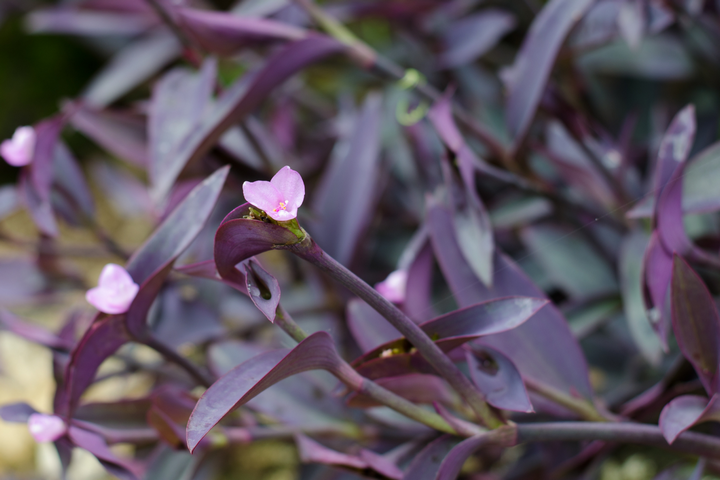
Before moving to Tucson, I was only familiar with purple heart (Tradescantia pallida ‘Purpurea’) as an easy-to-grow houseplant. So I was surprised to see it grown here as both an outdoor patio plant and as a ground cover. I had no idea it was so hardy and resilient!
This vigorous, trailing perennial keeps its purple leaves most of the year. It may die back with extreme heat, cold, or drought, but I’ve seen these plants spring back to life after being presumed dead.
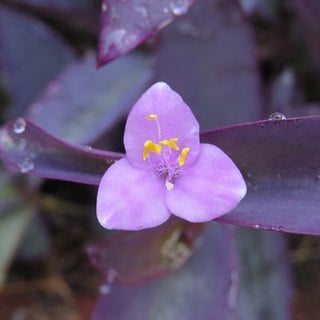
While purple heart intermittently sports dainty pink flowers, it is grown for its unusual purple foliage, not its flowers. Each small flower is quite lovely, but inconspicuous and short-lived. Plants bloom sporadically and sparsely.
Why I Like This Plant
- Pretty purple foliage
- Stays evergreen in mild winters
- Versatile! Grow as a ground cover or container plant
- Low maintenance
- No thorns, low litter
- Easy to propagate by cuttings
Things to Watch Out For
According to some reputable sources, purple heart is considered toxic to humans, dogs, and cats. Some people find it irritating to touch. The ASPCA does not list toxicity information on it, which is odd since it’s a very common houseplant, but it does mention a closely related member of the same genus as being toxic to pets and horses.
Don’t grow purple heart where it may be stepped on. Its fleshy stems easily break.
Optimal Growing Conditions
If you’re thinking of adding purple heart to your garden, you need to find a suitable place that will keep your plant healthy and looking good.
Here are the key factors to keep in mind.
Temperature
Purple heart should be grown in USDA Hardiness Zones 9 to 11. It tolerates desert heat surprisingly well. It dies back when the temperature dips into the mid-twenties, but survives cold down to 20℉. It rebounds quickly in the spring.
Sun Exposure
Plant purple heart in either part or full shade. It accepts morning sun with afternoon shade, but struggles and doesn’t look its best with too much sun.
Size and Growth Rate
Purple heart grows fast. It stays less than a foot tall and typically spreads 1 to 3 feet across. When it gets adequate moisture, it may grow adventitious roots where it comes in contact with the soil and can form large mats.
Soil
Purple heart prefers moist, fertile soil, but it will grow in sand or well-draining clay.
Other Location Considerations
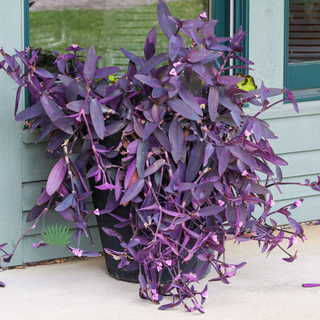
Consider growing purple heart in a container as either a houseplant or as a patio plant. Growing it in a container, hanging basket, or raised bed makes it easy to give it the conditions it prefers — moderate water, rich soil, and protection from cold and intense sun.
Purple Heart:
The Essentials
| Common Name | Purple heart |
| Scientific Name | Tradescantia pallida ‘Purpurea’ |
| Origin | Mexico (cultivar) |
| Plant Type | Perennial ground cover |
| USDA Zones | Zones 9 – 11 |
| Cold Hardiness | To 20℉ |
| Flower Color | Pink |
| Flower Season | Spring, summer, fall |
| Mature Size | ½ -1′ tall x 1-3’ wide |
| Growth Rate | Fast |
| Sun Tolerance | Part, full shade |
| Water Needs | Moderate |
| Pests & Diseases | None |
| Garden Friendly | No thorns, low litter |
| Cautions | Toxic |
How to Plant
The rule of thumb when planting any ground cover in the desert is to dig a hole twice as wide as the root ball but no deeper.
Since purple heart prefers moist, fertile soil, it’s recommended that you amend your hole with compost or a commercial soil mix. Top with organic mulch to retain moisture, increase soil fertility, and protect roots from temperature extremes.
When to Plant
The best time to plant purple heart is in the fall. This gives it three seasons to grow roots and get established before the following summer.
The second best time is in spring, the earlier the better. This still gives it time to get established before the intense heat of June arrives.
How to Care for Purple Heart
Whether you’ve recently planted purple heart or have an existing one in your yard, here’s how to take care of it to keep it healthy and looking its best.
How to Water
If you’re growing purple heart in a container, use this watering schedule as a guide.
| Spring & Fall | Every 2-5 days |
| Summer | Every 1-3 days |
| Winter | Every 5-7 days |
If you’re growing it in the ground, the University of Arizona recommends watering newly planted ground covers every 2 to 3 days for the first 2 to 4 weeks.
Since it’s not a desert plant, it needs a moderate rather than low amount of water. If grown in the shade, water every 10 to 14 days in the spring, fall, and winter and every 2 to 5 days in the summer. The more sun it receives, the more water it will need.
How much water you should give your plant with each watering depends on the diameter of your plant and will change as it grows. You can use this chart as a guide.
| 1′ diameter | .5 gallons |
| 2′ diameter | 2 gallons |
| 3′ diameter | 3.5 gallons |
Should You Fertilize?
Purple heart naturally thrives in poor, sandy soil and does not need to be fertilized. If you are growing yours in a container, fertilize it lightly a few times per year.
Pruning & Propagation
When grown in the ground, purple heart doesn’t need much pruning, other than trimming it lightly to shape and control size, or to remove damaged stems. A good time to prune is after flowering.
When grown in a container, it gets leggy and is “self-pruning” — stems break off when they get too heavy. You can avoid breakage by trimming the stems before they get too long.
You can use these pieces to easily grow new plants. You can root them in water or stick them directly in soil. They readily root either way.
Plant Lover Facts
Purple heart (Tradescantia pallida ‘Purpurea’) is also called wandering jew, but that name is slowly being replaced with the more acceptable and whimsical “wandering dude”. I’ve also heard it called purple queen, purple spiderwort, spider lily, and Moses in a basket because the leaves cradle the dainty flowers.
The parent plant (Tradescantia pallida), which is not grown commercially, is native to the tropical regions of Eastern Mexico.
Purple heart has escaped cultivation on every inhabited continent except Australia. In the US, it grows wild in Louisiana, Alabama, and Florida.
The genus Tradescantia was named in honor of two British botanists, a father and son both named John Tradescant.
Did you enjoy this article?
Sign up for our weekly newsletter
where you’ll find more great info on creating &
maintaining a beautiful, carefree desert landscape.
Author Bio
Deane Alban is the creator of Southwest Gardener. She is a science writer with a bachelor’s degree in botany from the University of South Florida. Gardening is her lifelong passion. She’s been gardening in Tucson for over 16 years.

Photo Credit
Vinayaraj, CC BY-SA 4.0, Wikimedia Commons