
Pineleaf milkweed is an attractive, evergreen perennial with pine-like stems that’s an important host plant for monarch and queen butterflies. Here’s everything you need to know about growing this Sonoran Desert native, including a few important warnings.
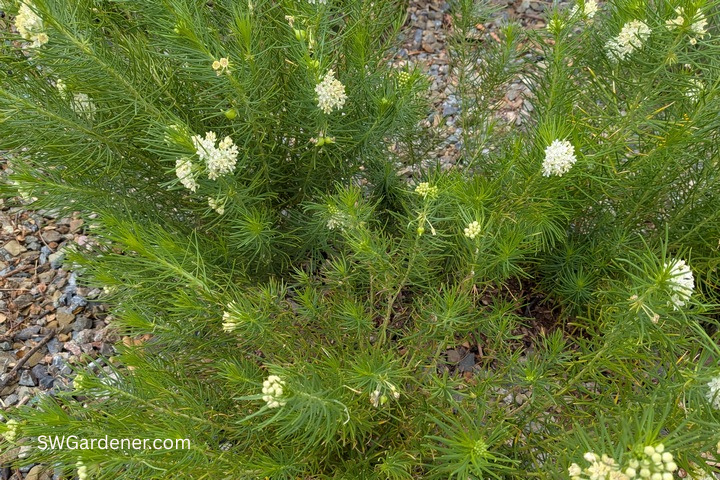
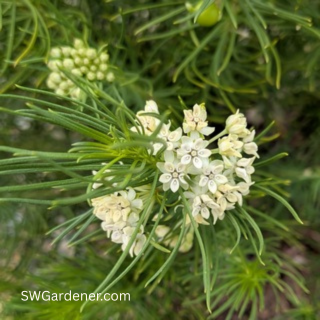
Pineleaf milkweed (Asclepias linaria) is an airy, upright shrubby perennial with evergreen, needle-like foliage. Spring through fall, the pine-like stems are topped with clusters of cream and burgundy buds and white flowers.
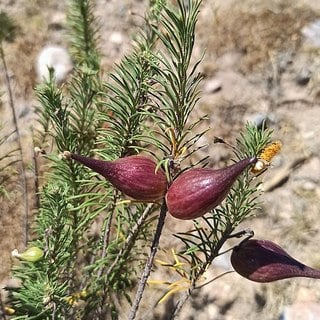
Flowers are followed by oblong seed capsules that resemble small figs. They open to release milkweed floss that disperses the seeds by wind.
While pineleaf milkweed is undoubtedly an attractive plant, it’s grown mainly for being butterfly-friendly.
Milkweed leaves are a crucial food source for the larval stage of the queen and monarch butterflies. Milkweed flower nectar is an important food source for butterflies and many other insect pollinators including bees, wasps, and moths.
Why I Like This Plant
- Attractive, pine-like foliage
- Dainty clusters of white flowers & pink buds
- Interesting-looking seed pods
- Low-maintenance plant that looks good all year
- Important food source for butterflies and their larvae
Things to Watch Out For
While many people love the idea of planting pineleaf milkweed because it is butterfly-friendly, be aware that it attracts insects of all kinds, including some you might not want to see in your yard, especially aphids and tarantula hawk wasps. While this wasp is not aggressive, its sting is considered one of the most painful of all insect stings.
If the thought of co-existing with these insects freaks you out, pineleaf milkweed is not a good choice for you.
Like all milkweeds, pineleaf milkweed is toxic to dogs, cats, horses, and livestock.
Milkweed is potentially dangerous to humans as well as animals. The sap can cause skin and eye irritation. If ingested, it can cause serious digestive and cardiac issues.
Optimal Growing Conditions
If you’re thinking of adding a pineleaf milkweed to your garden, you need to find a suitable place that will keep your plant healthy and looking good… while minimizing maintenance for you.
Here are the key factors to keep in mind.
Temperature
Pineleaf milkweed should be grown in USDA Hardiness Zones 8 to 11. It is tolerant of desert heat and is cold-hardy down to 15℉.
Sun Exposure
Pineleaf milkweed tolerates full sun, but since it naturally grows in canyons, it prefers some afternoon shade. It also grows well in part shade.
Size and Growth Rate
Pineleaf milkweed is considered a moderately fast grower, which will grow faster with more water. It typically reaches a size of 3 feet tall and wide.
Soil
Pineleaf milkweed grows well in any native desert soil, provided it’s well-draining. But avoid planting in heavy clay.
Other Location Considerations
Pineleaf milkweed should be kept away from children and pets due to its toxicity. It should not be planted where it can easily be brushed against due to its irritating sap.
Pineleaf Milkweed:
The Essentials
| Common Name | Pineleaf milkweed |
| Scientific Name | Asclepias linaria |
| Origin | Arizona, Mexico |
| Plant Type | Evergreen perennial |
| USDA Zones | Zones 8 – 11 |
| Cold Hardy | To 15℉ |
| Flower Color | White |
| Flower Season | Spring, summer, fall |
| Mature Size | 3′ tall & wide |
| Growth Rate | Moderate |
| Sun Tolerance | Full, part sun |
| Water Needs | Moderate |
| Pests & Diseases | Aphids |
| Cautions! | Toxic to people, pets, livestock |
| Wildlife | Supports pollinators, especially butterflies Deer, rabbit resistant |
How to Plant
The rule of thumb when planting any milkweed in the desert is to dig a hole twice as wide as the root ball but no deeper. Plant slightly higher than ground level, allowing room for some settling and mulch.
Amending the soil is not recommended. Backfilling with the same native soil you just dug up helps your plant develop a stronger root system.
When to Plant
The best time to plant pineleaf milkweed is in the fall. This gives it three seasons to grow roots and get established before the following summer.
The second best time is in spring, the earlier the better. This still gives your plant time to get established before the intense heat of June arrives.
Grow From Seed
Another option is to grow pineleaf milkweed from seed. You can order seeds from Terroir Seeds, an Arizona seed company that specializes in heirloom seeds.
How to Care for Pineleaf Milkweed
Whether you’ve recently planted a pineleaf milkweed or have an existing one in your yard, here’s how to take care of it to keep it healthy and looking its best.
How to Water
Once you’ve got your milkweed planted, watering is your most immediate concern. The Desert Botanical Garden recommends watering all newly planted milkweeds deeply every day for the first week to help the roots get established.
After that, they recommend watering pineleaf milkweed every 4 to 5 days.
Should You Fertilize?
There is no need to fertilize pineleaf milkweed. This plant is native to the rocky slopes and canyons, and has evolved to get all the nutrients it needs from poor soils.
However, it can develop iron chlorosis, especially if overwatered.
How to Prune
This plant maintains a naturally attractive form and doesn’t need pruning. While some perennials benefit from an annual hard prune, never prune pineleaf milkweed aggressively — it can kill this plant.
Insect Pests
When you plant pineleaf or any other milkweed, you should expect it to attract insects — that’s the main reason gardeners plant it. But many gardeners are dismayed when their milkweed attracts more aphids than butterflies.
Aphids rarely harm a milkweed plant and, in turn, they attract beneficial insects such as ladybugs and green lacewings.
While you can remove aphids naturally by shooting them with a jet spray of water from your hose, this will not solve your aphid problem because you’ll also blast away the good bugs that keep them under control. The aphids will come back faster than the beneficial insects and the end result will be more, not fewer, aphids.
Never spray milkweeds with any insecticide (including soap, neem, or Bt).
Spraying can harm butterfly larvae along with insect pests.
Pineleaf Milkweed Cultivar
When shopping for a pineleaf milkweed, you may come across a cultivar called ‘Monarch Magnet’ (Asclepias linaria ‘Monarch Magnet’ PP35492). It’s a patented Civano Grower exclusive that stays more compact and flowers more than the parent plant.
Plant Lover Facts
Pineleaf (or pine-leaf) milkweed also goes by the common names threadleaf milkweed and needle-leaf milkweed.
It’s native to Arizona and Mexico, with small populations in California and New Mexico.
Of all the milkweed species in Arizona, pineleaf contains the highest levels of cardenolide, a chemical that deters insects from eating leaves. While queen and monarch caterpillars tolerate high levels of it, it may make this plant somewhat less palatable as a larval food source than other milkweeds. Conversely, there’s evidence that consuming cardenolide may protect butterflies from the Ophryocystis elektroscirrha, a protozoan parasite that affects monarchs and queens.
Did you enjoy this article?
Sign up for our weekly newsletter
where you’ll find more great info on creating &
maintaining a beautiful, carefree desert landscape.
Author Bio
Deane Alban is the creator of Southwest Gardener. She is a science writer with a bachelor’s degree in botany from the University of South Florida. Gardening is her lifelong passion. She’s been gardening in Tucson for over 16 years.

Photo Credit
Juan Carlos Fonseca Mata, CC BY-SA 4.0, via Wikimedia Commons