
Mushrooms are a weird and wonderful phenomenon that suddenly appear after rain. If you see them pop up in your yard, you may wonder, “Is their presence good or bad? Should I remove them or leave them alone?” Learn what the presence of ‘shrooms in your yard means, and what, if anything, you should do about them.
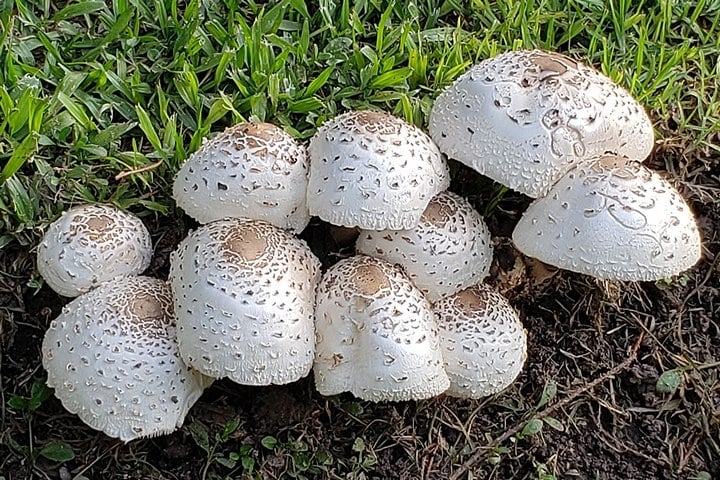
If mushrooms have popped up in your yard overnight, you may want to know whether they are toxic or edible, and whether they are helping or harming your plants. Here are answers to the most frequently asked questions about the sudden appearance of wild mushrooms.
What Are Mushrooms?
“Mushroom” is a general term applied to the fruiting bodies of some species of fungus. Mushrooms have a stem, a cap, and gills that contain reproductive spores. Mushrooms include toadstools, stinkhorns, ink caps, and puffballs.
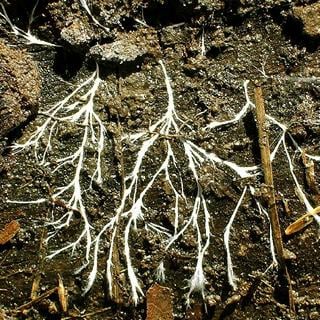
Mushrooms are a short-lived phenomenon that only appear when the conditions are just right. Mushrooms are just the tip that we see — most of the fungus lies underground. The living body of a fungus is called the mycelium, which is made up of tiny filaments called hyphae. Amazingly, a cup of native soil can contain over 60 miles of fungal hyphae!
In the desert Southwest, mushrooms usually appear after rains, particularly during the monsoon, but they can also appear anytime there is decomposing organic matter plus adequate water.
Are Mushrooms a Sign That My Soil is Healthy?
You may have heard that the presence of mushrooms means your soil is healthy, and there is some merit to this.
Desert soils are high in minerals but low in organic matter. Some fungi break down organic matter and mushrooms can be a sign that your soil has enough organic matter for this to occur.
However, mushrooms can also be a sign of overwatering, especially in pots or raised beds.
Are Mushrooms Good for My Soil and Plants?
Mushrooms, per se, aren’t good for the soil, but they are a sign that your soil is supporting the growth of beneficial fungi, which are important for healthy soil and plants.
A better question would be “How are fungi good for the soil?”
Wild mushrooms that pop up in yards are usually the fruiting bodies of either saprophytic or mycorrhizal fungi, which impact soil and plant health in different ways.
Saprophytic fungi are decomposers. They break down dead organic matter, enriching the soil and making nutrients available for plants.
Mycorrhizal fungi form symbiotic relationships with plants. They attach to plant roots and facilitate the uptake of water and nutrients. Research has found that mycorrhizal fungi can significantly increase nitrogen and phosphorus absorption, two critical nutrients for plant growth. They can also help plants repel insects, resist diseases, and attract pollinators.
In exchange, plants provide fungi with carbon they need to grow.
Ninety percent of all plant species form
partnerships with mycorrhizal fungi.
How to Encourage Beneficial Fungus
There are a few things you can do to encourage the presence of beneficial fungi. Top dress your desert landscape plants with organic mulch such as compost or wood chips. Grow native plants. They encourage the growth of native fungi which evolved to thrive in desert conditions. And never leave soil bare, which dramatically reduces the number of beneficial fungi.
Should I Remove Mushrooms?
It depends.
Mushrooms don’t harm your plants, so there is usually no reason to interrupt their lifecycle. They release their spores and usually dry up within a few days.
However, toxicity can be a concern. Most mushrooms are not toxic, but the ones that are can be deadly. So if you have curious kids or pets that may be tempted to eat them, you should remove any mushrooms as soon as you notice them.
They aren’t toxic to touch, only to consume, but it would be prudent to avoid touching them with your bare hands. Contact irritation from handling mushrooms is not unheard of.
Don’t bother using fungicides, which won’t help.
Note that removing mushrooms does not affect the underground fungal network any more than removing an apple affects the apple tree, so you are not harming your soil by removing them.
How Can I Tell if a Mushroom is Edible?
There’s a common saying about mushroom toxicity:
All mushrooms are edible… once.
You should always assume a mushroom is not edible unless you are an expert or can have your mushroom identified by an expert.
Mushrooms are notoriously difficult to identify. Do NOT rely on online search or AI for identification. Likewise, do not rely on general (i.e., non-expert) gardening group advice.
Need help now?
Call the Poison Help Line at
800-222-1222
The Arizona Mushroom Society, which hosts forays but will not identify mushrooms for you, has a liability waiver that starts with these sobering statements that I would take to heart:
- The consumption of wild fungi is widely recognized as an inherently dangerous activity that can result in serious illness, permanent disability, or death.
- Even mushrooms that are well known to be non-toxic for the great majority of people can potentially cause allergic reactions and other idiosyncratic symptoms in certain susceptible individuals.
Are Mushrooms Toxic to Pets?
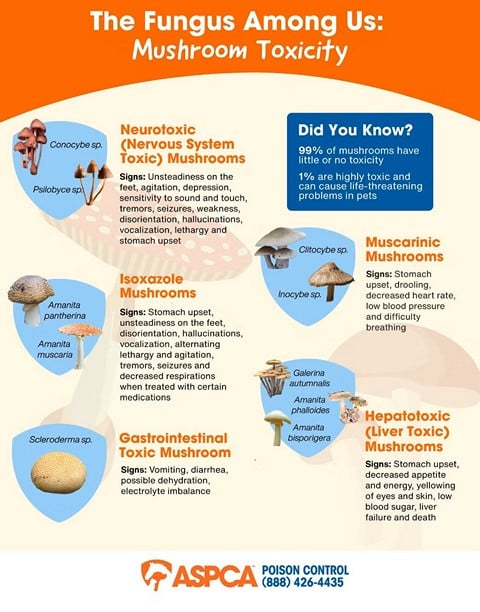
According to the ASPCA, only 1% of mushroom species are toxic to pets. However, those that are toxic can cause severe stomach upset, trouble breathing, seizures, liver or kidney damage, and even death.
If you suspect your pet has consumed an unidentified mushroom, contact your veterinarian or ASPCA Poison Control at 888-426-4435 immediately.
This infographic from the ASPCA classifies five types of mushrooms by their toxicity mechanisms and symptoms.
Did you enjoy this article?
Sign up for our weekly newsletter
where you’ll find more great info on creating &
maintaining a beautiful, carefree desert landscape.
Author Bio
Deane Alban is the creator of Southwest Gardener. She is a science writer with a bachelor’s degree in botany from the University of South Florida. Gardening is her lifelong passion. She’s been gardening in Tucson for over 16 years.

Photo Credits
Faqu, CC BY-SA 4.0, via Wikimedia Commons
TheAlphaWolf, CC BY-SA 3.0, via Wikimedia Commons