
Mexican hat is a whimsical perennial with flowers that look like small sombreros. It’s native to much of North America, including much colder climes, but is resilient enough to thrive in the desert southwest.

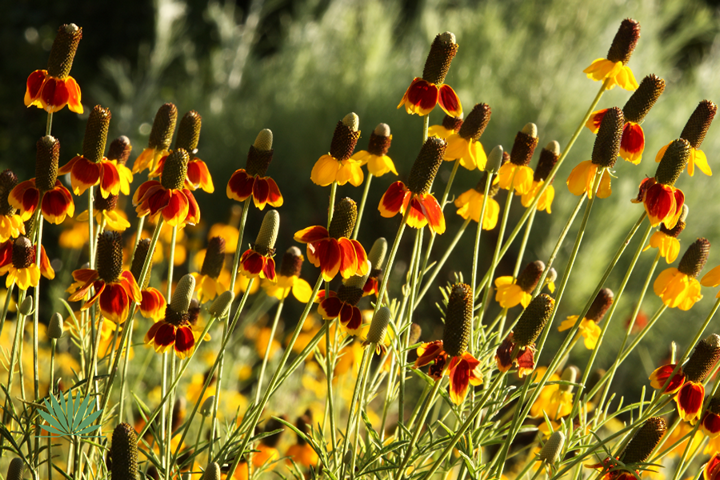
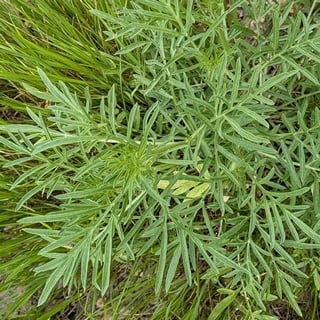
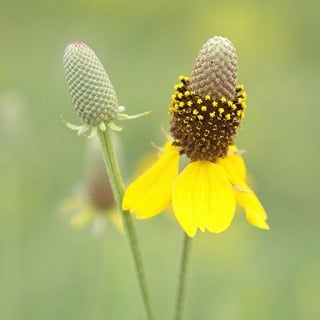
Mexican hat (Ratibida columnifera) is a perennial with lacy green leaves and charming flowers that resemble doll-size sombreros.
Flowers are usually two-toned — rusty red with yellow edges — but they can be solid, too, either yellow or brick red. Perched on the ends of long leafless stems, they dance in the breeze.
Mexican hat has a large native habitat that includes prairies, plains, roadsides, and disturbed areas, attesting to its resilience.
Flowers attract bees, butterflies, and other pollinating insects. Birds eat the seeds.
Why I Like This Plant
- Adorable, two-tone flowers
- Long bloom season
- Resilient, low maintenance
- Readily reseeds
- Supports bees, butterflies, moths, birds
Things to Watch Out For
It has an informal look that works best in wildflower, meadow, or “chaos” gardens. It is not the right choice if you want neat, formal-looking rows of flowers.
Mexican hat can overwhelm less robust species. It reseeds readily, sometimes even aggressively, if it’s happy in its spot.
Plants may remain green during wild winters, but usually die back.
Mexican hat is not toxic to people or pets, but like many members of the Asteraceae family, its leaves, stems, flowers, and pollen contain compounds that may cause contact dermatitis in some people.
Optimal Growing Conditions
If you’re thinking of adding Mexican hats to your garden, you need to find a suitable place that will keep your plants looking good and coming back every year.
Here are the key factors to keep in mind.
Temperature
Mexican hat can be grown in USDA Hardiness Zones 3 to 10, which covers most of the continental US. They tolerate the heat of the desert southwest and are extremely cold-hardy, surviving temperatures as low as -30℉!
Sun Exposure
In most parts of its range, Mexican hat can handle full sun. But in the low desert, it appreciates some relief from our “death star” sun.
Size and Growth Rate
Mexican hat grows moderately fast and reaches a size of 1 to 3 feet tall by 2 feet wide. It readily reseeds to form colonies, so you rarely see just one plant.
If you start plants from seed, don’t expect them to bloom the first year. They usually flower in their second year.
Soil
Mexican hat will grow in any type of soil — sandy, clay, loam, rocky, and even caliche — as long as it’s well-draining.
Mexican Hat:
The Essentials
| Common Name | Mexican hat |
| Scientific Name | Ratibida columnifera |
| Origin | Central US, Mexico, Canada |
| Plant Type | Perennial |
| USDA Zones | Zones 3 – 10 |
| Cold Hardiness | To -30℉ |
| Flower Color | Yellow, brown-red |
| Flower Season | Spring, summer, fall |
| Mature Size | 1-3′ tall x 2’ wide |
| Growth Rate | Fast |
| Sun Tolerance | Full, part sun |
| Water Needs | Low to moderate |
| Pests & Diseases | None |
| Garden Friendly | No thorns, non toxic |
| Wildlife | Supports bees, birds, butterflies |
Growing Mexican Hat: Seed vs Transplants
You can grow Mexican hat from seed, or you can buy plants. Transplants can be hard to find. Here in Tucson, Spadefoot Nursery sometimes carries them. You can check for availability here. If you live elsewhere, try High Country Gardens, which will ship them to you.
How to Start From Seed
Seeds are not hard to find. You can buy them from Tucson’s Native Seeds/SEARCH or from one of the seed companies that carry Mexican hat seeds on Amazon.
Seeds can be planted directly in the ground in the fall or in the spring after the danger of frost has passed. Scatter the seeds directly on top of the soil, then lightly press them into the soil — you don’t want to deeply bury them. Keep the soil moist until they are about 6 inches tall, then water sparingly after that.
Here’s what the seedlings look like, so you recognize them when the seeds you’ve planted (or volunteers) pop up.
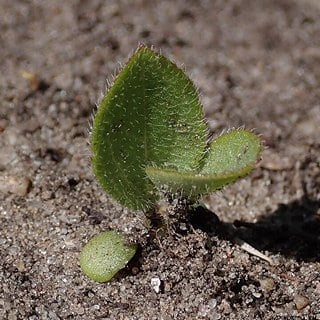
Once your first plant goes to seed, you can gather your own seeds from the dried seed heads. Seeds will have a higher germination rate when cold-stratified at 40 degrees for 9 weeks.
You’ll find more tips for growing wildflowers here.
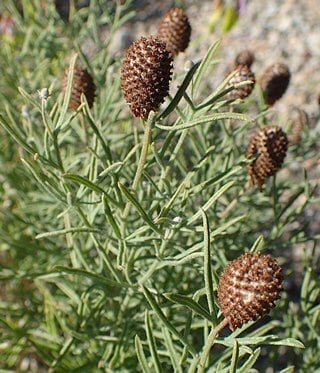
Red hat seeds are so small,
it takes over a million to make a pound.
How to Plant Transplants
The rule of thumb when planting any perennial in the desert is to dig a hole twice as wide as the root ball but no deeper. Amending the soil is not recommended. Counterintuitively, backfilling with the same native soil you just dug up helps your plant develop a stronger root system.
The best time to plant Mexican hat is in the fall. This gives it three seasons to grow roots and get established before the following summer.
The second best time is in spring, the earlier the better. This still gives your plant time to get established before the intense heat of June arrives.
How to Care for Mexican Hat
Whether you’ve recently planted a Mexican hat or have an existing one in your yard, here’s how to take care of it to keep it healthy and looking its best.
How to Water
During the first growing season, give your plant about 1/2 gallon of water once a week while it’s establishing its root system.
After that, the University of Arizona recommends watering desert perennials on this schedule:
| Spring (March – May) | 10 – 14 days |
| Summer (May – Oct.) | 7 – 10 days |
| Fall (Oct. – Dec.) | 10 – 14 days |
| Winter (Dec – March) | 14 – 21 days |
Should You Fertilize?
Mexican hat naturally grows in poor soil and does not need to be fertilized.
How to Prune
Cut Mexican hat back to a few inches in the early spring to stimulate new growth.
Deadheading is optional, depending on your goals for this plant. If rampant reseeding becomes an issue, you can deadhead flowers before they go to seed. Removing spent flowers will encourage more blooms.
Conversely, leaving dried seed heads will help assure reseeding and support the birds that enjoy the seeds.
Plant Lover Facts
Mexican hat (Ratibida columnifera) goes by several other common names including Mexican hat plant, red-spike Mexican hat, and prairie coneflower.
It has a large native range that covers much of North America, extending from Mexico to Canada. In the US, it naturally grows in a large band across the center of the country — from Arizona, New Mexico, and Texas in the southwest to Montana and North Dakota in the north.
Native Americans had many medicinal uses for this plant. They used it for pain and to treat poison ivy, snake bite, and fever.
As an Amazon Associate, Southwest Gardener earns from qualifying purchases, at no cost to you.
See our Terms of Use for details.
Did you enjoy this article?
Sign up for our weekly newsletter
where you’ll find more great info on creating &
maintaining a beautiful, carefree desert landscape.
Author Bio
Deane Alban is the creator of Southwest Gardener. She is a science writer with a bachelor’s degree in botany from the University of South Florida. Gardening is her lifelong passion. She’s been gardening in Tucson for over 16 years.

Photo Credits
iNaturalist, CC0
Cephas, CC BY-SA 4.0, via Wikimedia Commons
Salicyna, CC BY-SA 4.0, via Wikimedia Commons
Krzysztof Ziarnek, Kenraiz, CC BY-SA 4.0, via Wikimedia Commons