
Mexican daisy is a charming, evergreen ground cover for hot, dry gardens. It’s covered in a multicolored array of daisy-like flowers nearly all year. Here’s how to grow and care for this surprisingly resilient native of Mexico.
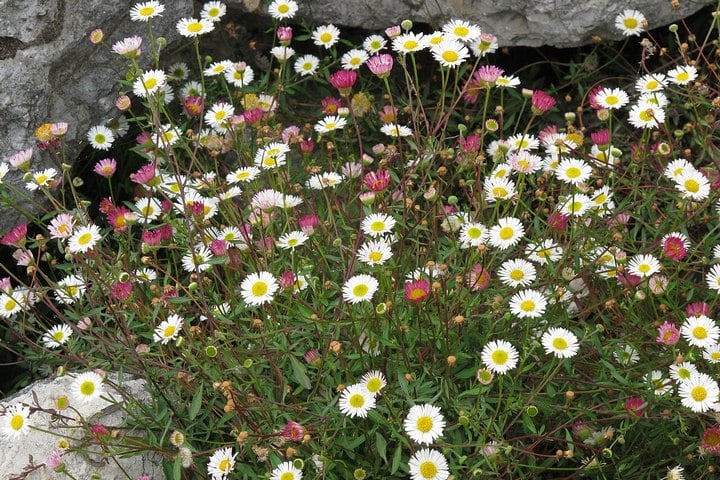
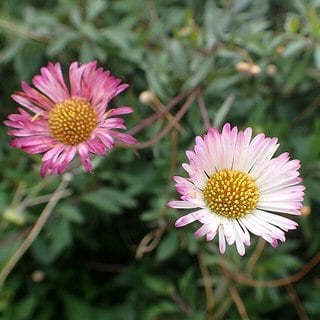
Mexican daisy (Erigeron karvinskianus) is a trailing, perennial ground cover with narrow, green leaves and daisy-like flowers with yellow centers. The small, dainty flowers start out white, gradually fading to pink and then magenta. Not all flowers bloom and fade on the same schedule, giving this plant a charming, confetti-like appearance.
This Mexican native may look delicate, but is surprisingly resilient. It tolerates the desert’s extremes — sun, heat, and winter cold. Yet, it has naturalized around the world in places as far afield as New Zealand and Sweden! It spreads by seed and rhizomes, but does not get out of control in desert gardens.
It retains its leaves and flowers, which attract bees and butterflies, nearly all year in mild climates.
Why I Like This Plant
- Charming multicolor flowers
- Low maintenance
- No thorns, low litter, non-toxic
- Supports bees, butterflies
Things to Watch Out For
Mexican daisy reseeds readily. This may be a benefit or a drawback, depending on your situation.
It’s generally considered rabbit resistant, but they will occasionally nibble on young plants, so you may need to protect new transplants or seedlings.
You probably won’t find Mexican daisy at big box garden centers, but I’ve seen it for sale at local nurseries including Spadefoot Nursery (Tucson) and Four Arrows Garden (Vail, AZ). If you can’t find it locally, you can grow it from seeds. (Seeds must be popular, because they were out of stock at several places I checked.)
Like many members of the Asteraceae family, its leaves, stems, flowers, and pollen contain compounds that can cause contact dermatitis.
Optimal Growing Conditions
If you’re thinking of adding Mexican daisy to your garden, you need to find a suitable place that will keep your plant looking good and coming back every year. Here are the key factors to keep in mind.
Temperature
Mexican daisy should be grown in USDA Hardiness Zones 6 to 9. It tolerates desert heat and can survive temperatures down to 20℉. It will bloom through fall until the first hard frost.
Sun Exposure
Mexican daisy will grow in full sun or part shade. It appreciates some relief from afternoon sun in the summer.
Size and Growth Rate
Mexican daisy is a fast growing ground cover that forms an attractive mound, typically 1 foot tall by 2 to 4 feet wide. It blooms nearly year-round, but usually takes a break during the hottest months of the summer.
Soil
In its native habitat, Mexican daisy grows in rocky soil and disturbed sites. It will grow in any type of desert soil — rocky, sandy, or chalky — provided it’s well-draining.
Other Location Considerations
Mexican daisy has no thorns, stickers, or irritating hairs. Because plants are “unarmed,” non-toxic, and nearly litter-free, you can feel comfortable placing them near a pool, sidewalk, or anywhere they might come in contact with pets and people.
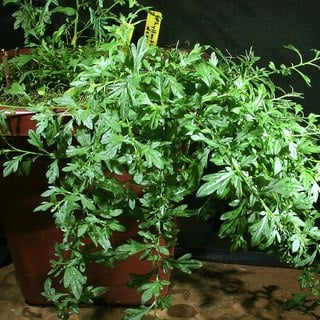
This ground cover makes a beautiful addition to rock gardens where it softens the look of boulders. It can be grown on hills or hanging over garden walls, or as a container plant.
Mexican Daisy:
The Essentials
| Common Name | Mexican daisy |
| Scientific Name | Erigeron karvinskianus |
| Origin | Mexico, Central & South America |
| Plant Type | Perennial ground cover |
| USDA Zones | Zones 6 – 9 |
| Cold Hardiness | To 20℉ |
| Flower Color | White, pink, magenta |
| Flower Season | Spring, fall, winter |
| Mature Size | 1′ tall x 2-4’ wide |
| Growth Rate | Fast |
| Sun Tolerance | Full, part sun |
| Water Needs | Moderate |
| Pests & Diseases | None |
| Garden Friendly | No thorns, low litter, non-toxic |
| Wildlife | Supports bees, butterflies |
How to Plant
The rule of thumb when planting any ground cover in the desert is to dig a hole twice as wide as the root ball but no deeper. Amending the soil is not recommended. Counterintuitively, backfilling with the same native soil you just dug up helps your daisy develop a stronger root system.
When to Plant
The best time to plant Mexican daisy is in the fall. This gives it three seasons to grow roots and get established before the following summer.
The second best time is in spring, the earlier the better. This still gives it time to get established before the intense heat of June arrives.
How to Care for Mexican Daisy
Whether you’ve recently planted a Mexican daisy or have an existing one in your yard, here’s how to take care of it to keep it healthy and looking its best.
How to Water
The University of Arizona recommends watering newly planted ground covers on this schedule.
| Weeks 1 – 4 | Every 2 – 3 days |
| Weeks 5 & 6 | Every 6 – 7 days |
| Weeks 7 & 8 | Every 10 – 14 days |
Give your Mexican daisy about ½ gallon with each watering. After that, you can water it on this schedule:
| Spring (March – May) | 7 – 10 days |
| Summer (May – Oct.) | 5 – 7 days |
| Fall (Oct. – Dec.) | 7 – 10 days |
| Winter (Dec – March) | 10 – 14 days |
As it grows, it will need more water with each watering, depending on its diameter. Use this chart as a guide.
| 1′ diameter | .5 gallons |
| 2′ diameter | 2 gallons |
| 3′ diameter | 3.5 gallons |
| 4′ diameter | 5 gallons |
Should You Fertilize?
There is no need to fertilize Mexican daisy. It has evolved to grow in poor, rocky, and disturbed soil.
Pruning
You can cut back your Mexican daisy in late winter or early spring to shape, control size, rejuvenate, or remove any cold damage. You can also give it a trim in late summer to early fall to keep it compact and tidy. Deadheading is optional but can promote flowering.
Plant Lover Facts
Mexican daisy (Erigeron karvinskianus) is also called Mexican fleabane. At one time, it was believed that members of the Erigeron genus could get rid of fleas. It sometimes goes by the name Santa Barbara daisy because it grows so prolifically there.
Its native range is Mexico, Central America, and a few countries in northern South America. It has naturalized on every continent, a testament to its resilience and adaptability. In the US, it has only escaped cultivation in California.
The species karvinskianus is named in honor of Wilhelm Friedrich Karwinski von Karwin, a Bavarian naturalist.
Did you enjoy this article?
Sign up for our weekly newsletter
where you’ll find more great info on creating &
maintaining a beautiful, carefree desert landscape.
Author Bio
Deane Alban is the creator of Southwest Gardener. She is a science writer with a bachelor’s degree in botany from the University of South Florida. Gardening is her lifelong passion. She’s been gardening in Tucson for over 16 years.

Photo Credits
Robert Flogaus-Faust, CC BY-SA 4.0, Wikimedia Commons
Krzysztof Ziarnek, CC BY-SA 4.0, Wikimedia Commons
Auckland Museum, CC BY-SA 4.0, Wikimedia Commons