
Looking for something out of the ordinary? Look no further than mangaves. These unique, whimsical agave hybrids are prized for their unusual leaves that come in an amazing array of forms, colors, and patterns. Here’s everything you need to know about planting and taking care of this cross between two Mexican natives.

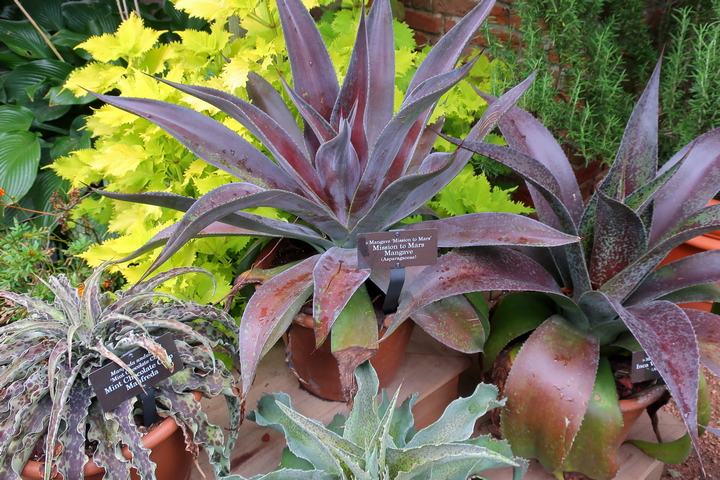
If you’ve lived or gardened in the desert Southwest for even a short time, you’re almost certainly familiar with agaves. But you may be wondering, “What the heck is a mangave?”
Mangave is a hybrid cross between an agave and a manfreda, a lesser-known succulent. The first mangave occurred naturally, but since then, plant breeders have developed thousands of mangave hybrids.
Mangaves grow in the standard agave rosette, but have leaves that come in a jaw-dropping variety of forms (smooth, wavy, twisted, toothed), colors (green, silver, purple, burgundy), and patterns (stripes, dots, flecks). Some are so weird, they look straight out of Alice in Wonderland!
How do agaves and mangaves compare?
Compared to agaves, mangaves are more compact, have softer leaves and spines, and grow faster. Like agaves, mangaves send up a large flower stalk. But unlike agaves, which bloom once and die, mangaves live on after flowering by reliably replacing the original plant with offsets.
Mangaves are most commonly grown as container plants, but can also be grown in the ground as a landscape plant. However you choose to grow one, it will make a unique, eye-catching addition to your desert garden.
Mangave rhymes with agave and is pronounced man-GAH-vay.
It’s not pronounced MAN-gave, as in “man cave”. 😆
Why I Like This Plant
- Something different!
- Endless variety of shapes, patterns, colors
- Hardy, extremely low-maintenance
- Doesn’t die after flowering
- Not particularly spikey
Things to Watch Out For
Mangaves may seem like they would be a good houseplant, but when grown or overwintered indoors, they lose their color and interesting patterns due to lack of UV light.
They may need protecting if rabbits or rodents frequent your yard.
Optimal Growing Conditions
If you’re thinking of adding a mangave to your garden, you need to find a suitable place that will keep your plant healthy and looking good… while minimizing maintenance for you.
Here are the key factors to keep in mind.
Temperature
Mangaves should be grown in USDA Hardiness Zones 9 to 11. According to Proven Winners, they perform best between 60℉ and 85℉. However, they have proven to be extremely heat tolerant and can be successfully grown in hot spots like Phoenix. They survive cold down to 20℉.
Sun Exposure
You can plant mangaves in part sun or filtered shade. When grown in full sun, they appreciate relief from intense afternoon sun.
Size and Growth Rate
Mangaves grow fast but generally stay small, rarely getting larger than 1½ to 2 feet wide by 2 feet tall. But, of course, a plant’s size will depend on the cultivar.
You can somewhat control a mangave’s growth rate and ultimate size by giving it more or less water. A plant grown in a container generally stays smaller than one in the ground.
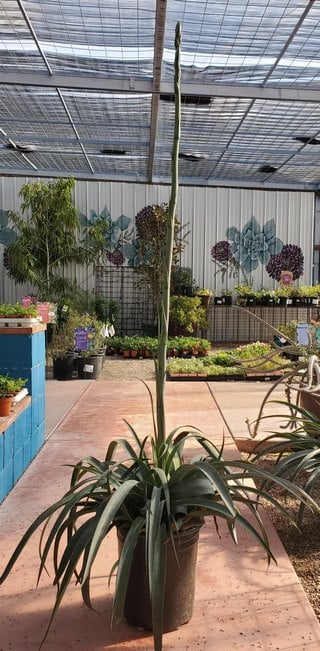
Mangaves bloom after a few years, sending up tall flower stalks in late spring to early summer. Flowers vary in color, and some are fragrant.
As you can see in this picture, the flower stalk is every bit as impressive as an agave’s.
Soil
Mangaves prefer sandy or rocky, well-draining desert soil. Avoid planting in heavy clay.
If you are growing a mangave in a container, make sure your pot has adequate drainage and use specifically formulated cactus soil.
Mangave:
The Essentials
| Common Name | Mangave |
| Scientific Name | x Mangave |
| Origin | Mexico (hybrid) |
| USDA Zones | Zones 9 – 11 |
| Cold Hardiness | To 20℉ |
| Flower Season | Spring, summer |
| Mature Size | 2′ tall x 1½- 2’ wide |
| Growth Rate | Fast |
| Sun Tolerance | Full, part sun |
| Water Needs | Low to moderate |
| Pests & Diseases | Root rot, agave weevil |
| Wildlife | Support pollinators (when in bloom) |
How to Plant
To plant a mangave, dig a hole the same depth as the root system and twice as wide. Carefully remove the plant from the container, place it in the hole, and fill with the same native soil you just removed. Press the soil to remove any air pockets.
Never plant deeper than the depth of the root ball which can cause rot. Actually, it’s best to plant an inch or two above soil level to give it room to settle.
It’s generally recommended that you not amend the soil. However, good drainage is critical, so if your soil drains slowly, amend with coarse sand or small gravel until you have a loose, well-drained mix.
When to Plant
The best time to plant a mangave is in the fall (October), when warm soil temperatures encourage root development. The second best time is in spring (April or May).
How to Care for Mangave
Whether you’ve recently planted a mangave or have an existing plant in your yard, here’s how to take care of it to keep it healthy and looking its best.
How to Water
Newly planted mangaves need more water than agaves. Water well after planting, and water regularly until established, allowing the soil to dry out between waterings to prevent root rot. Here is the recommended watering schedule for new plants planted in the spring or fall.
| Weeks 1 & 2 | Every 3 – 4 days |
| Weeks 3 & 4 | Every 6 – 7 days |
| Weeks 5 & 6 | Every 7 – 10 days |
| Weeks 7 & 8 | Every 10 – 14 days |
Once established, you can use the following schedule as a guide.
| Spring & Fall | Every 3-5 weeks |
| Summer | Every 2-4 weeks |
| Winter | Only if no winter rains |
If you’re growing your mangave in a container, use this watering schedule instead.
| Spring & Fall | Every 7-10 days |
| Summer | Every 5-7 days |
| Winter | Every 10-14 days |
Mangaves are more water-tolerant than other succulents.
This makes them a good choice if you tend to overwater.
Should You Fertilize?
There is no need to fertilize mangaves in the ground, they get all the nutrients they need from the surrounding desert soil. If you grow one in a pot, you can fertilize it every 3 months, but it’s not necessary.
Pruning & Propagation
Mangaves should not be pruned except to remove dead or damaged lower leaves. You will want to remove the spent flower stalk after it’s finished blooming.
Mangaves are easy to propagate. All you have to do is dig up any offsets, making sure that some root remains intact, and plant them in pots or elsewhere in your yard.
Pests
Agave snout weevil is an insect pest that almost exclusively affects agaves. Unfortunately, even though mangaves have “hybrid vigor,” they are not immune to this destructive pest. Note that mangaves in the ground face a higher risk than those in pots.
Mangave Hybrids
When you go mangave shopping, you’ll find dozens of cultivars that vary in leaf shape, color, and pattern. The names are so whimsical, they never fail to make me smile. 😍
- ‘Bad Hair Day’
- ‘Cherry Chocolate Chip’
- ‘Mission to Mars’
- ‘Pineapple Express’
- ‘Purple People Eater’
- ‘Tooth Fairy’
You can see pictures of these and more at Mad About Mangave.
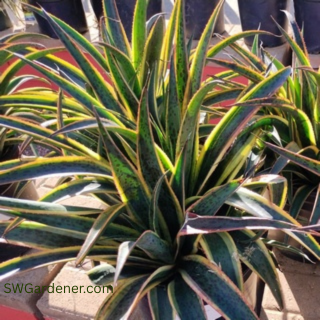
Mangaves are sold at many local nurseries. Here in Tucson, I’ve seen them for sale at Civano Nursery, Harlow Gardens, Four Arrows Garden, Green Things, and Lowe’s. If you can’t find mangaves locally, or can’t find the cultivar you want, you can order online from Plant Delights Nursery.
Plant Lover Facts
Mangave (x Mangave) is a hybrid cross between an agave (most likely Agave mitis, a native of Northwest Mexico) and an unknown member of the closely related Manfreda genus. (Both genera belong to the Asparagaceae family.)
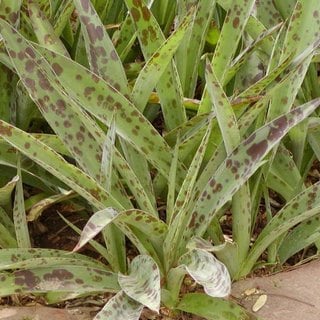
Manfredas are succulents with spotted leaves that have a large native range extending from the Southeastern US through Central America.
The first Agave-Manfred cross occurred naturally in Northwest Mexico. Plant breeders took it from there to develop thousands of unique crosses. If you want to learn more about mangave’s history, I suggest reading Plant Expert Tony Avent on Mangaves. (Tony is the owner of Plant Delights Nursery.)
Did you enjoy this article?
Sign up for our weekly newsletter
where you’ll find more great info on creating &
maintaining a beautiful, carefree desert landscape.
Author Bio
Deane Alban is the creator of Southwest Gardener. She is a science writer with a bachelor’s degree in botany from the University of South Florida. Gardening is her lifelong passion. She’s been gardening in Tucson for over 16 years.

Photo Credits
cultivar413, CC BY-SA 2.0, via Wikimedia Commons
Stan Shebs, CC BY-SA 3.0, via Wikimedia Commons