
‘Little Ollie’ is an attractive evergreen shrub that has silvery-green leaves but no flowers or olives, making it non-allergenic and nearly litter-free. Here’s everything you need to know about planting and caring for this cultivar of a Mediterranean icon.

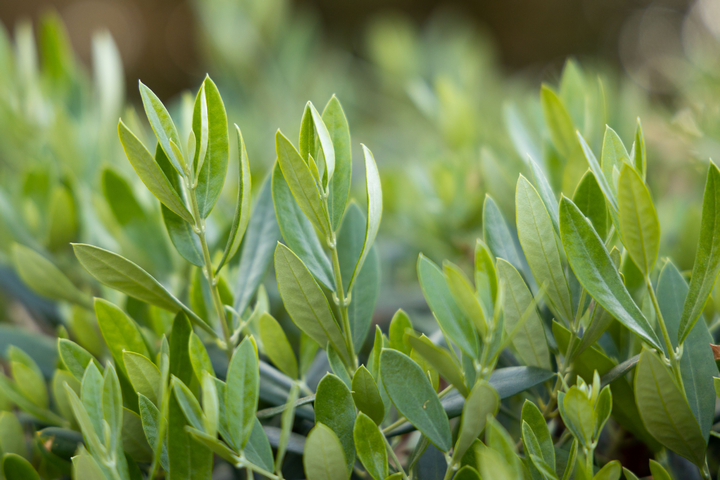
‘Little Ollie’® (Olea europaea ‘Montra’) is a dwarf olive that grows as a medium size shrub, not a tree. Like olive trees, it has thin, two-toned leaves that are olive green on top and silver on the underside.
It’s a cultivar of fruitless olive tree (Olea europaea Wilsonii‘), and like its parent, has insignificant, sterile flowers and, consequently, no olives form.
This resilient, versatile shrub thrives in the extreme temperatures, harsh sun, and poor rocky soil of the desert Southwest. It can be pruned to grow however you like — as an informal shrub, small tree, formal hedge, or even as a topiary.
Why “Fruitless” Olives?
You might be wondering why there is a need for “fruitless” olives. Olive trees have been banned for decades in Pima County (Tucson), Clark County (Las Vegas), and several municipalities in the Phoenix area due to their being highly allergenic.
Other complaints about olive trees include that uncollected olives make a mess and stain pavement, and that heaving roots can be a trip hazard.
In response, non-allergenic fruitless olive cultivars were developed, including the dwarf cultivar, ‘Little Ollie’.
Why I Like This Plant
- Evergreen shrub looks beautiful all year
- Attractive silver-green leaves
- Thrives in extreme environments
- Versatile, accepts various pruning styles
- Non-allergenic, low litter, low maintenance
Optimal Growing Conditions
If you’re thinking of adding a ‘Little Ollie’ to your garden, you need to find a suitable place that will keep your plant healthy and looking good… while minimizing maintenance for you.
Here are the key factors to keep in mind.
Temperature
‘Little Ollie’ should be grown in USDA Hardiness Zones 8 to 11. It’s tolerates extreme heat and can withstand cold down to 15℉.
Sun Exposure
‘Little Ollie’ thrives in full sun, including the reflected sun off of garden walls and buildings.
Size and Growth Rate
‘Little Ollie’ is considered a moderate grower. In desert gardens, it typically reaches a size of 6 feet tall and wide. But its ultimate size depends on where you live and how it’s watered and pruned.
According to the patent application, ‘Little Ollie’ only reached a size of 3½ feet tall and wide during 10 years of observation. Conversely, the UC Master Gardener Program of Sonoma County found that it reached 10 to 12 feet within a few years when given summer irrigation.
Soil
‘Little Ollie’ will grow in any type of soil — sandy, clay, loam, or rocky — as long as it’s well-draining.
Other Location Considerations
Since ‘Little Ollie’ has no thorns and is non-toxic, you can feel comfortable planting it where it might come in contact with people and pets.
Except for the occasional shedding of old leaves, it’s virtually litter-free, making it a good choice to put near a pool, sidewalk, or patio.
‘Little Ollie’ makes an eye-catching container plant that gives patios a Mediterranean vibe. If you’ve longed to grow an olive tree in a container, this is the cultivar to choose. It stays small and readily withstands trimming into formal shapes and can even be used to create topiaries.
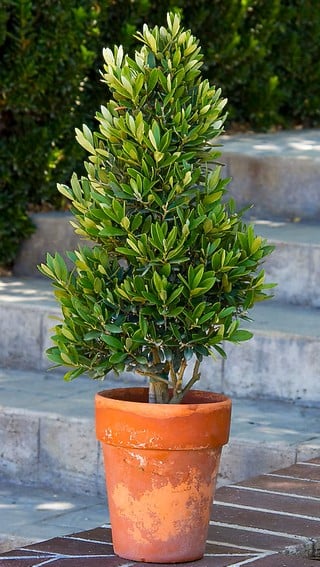
And since it doesn’t mind pruning, it’s one of the few desert shrubs that tolerates being sheared into a formal hedge.
‘Little Ollie’:
The Essentials
| Common Name | ‘Little Ollie’ |
| Scientific Name | Olea europaea ‘Montra’ |
| Origin | Mediterranean (cultivar) |
| Plant Type | Evergreen shrub |
| USDA Zones | Zones 8 – 11 |
| Cold Hardiness | To 15℉ |
| Flowers | Inconspicuous, sterile |
| Mature Size | 6’ tall & wide |
| Growth Rate | Moderate |
| Sun Tolerance | Full, reflected sun |
| Water Needs | Low |
| Pests & Diseases | None |
| Garden Friendly | No thorns, non-toxic, non-allergenic |
| Wildlife | Deer resistant |
How to Plant
The rule of thumb when planting any shrub in the desert is to dig a hole three times as wide as the root ball but no deeper.
Amending the soil is not recommended. Counterintuitively, backfilling with the same native soil you just dug up helps your plant develop a stronger root system.
When to Plant
The best time to plant ‘Little Ollie’ is in the fall. This gives it three seasons to grow roots and get established before the following summer.
The second best time is in spring, the earlier the better. This still gives it time to get established before the intense heat of June arrives.
How to Care for ‘Little Ollie’
Whether you’ve recently planted a new dwarf olive or have an existing one in your yard, here’s how to take care of it to keep it healthy and looking its best.
How to Water New Plants
Once you’ve got your ‘Little Ollie’ planted, watering is your most immediate concern. Here is the recommended watering schedule for new shrubs.
| Weeks 1 & 2 | Every 3 – 4 days |
| Weeks 3 & 4 | Every 6 – 7 days |
| Weeks 5 & 6 | Every 7 – 10 days |
| Weeks 7 & 8 | Every 10 – 14 days |
After week 8, gradually revise your watering schedule, depending on the season.
How to Water Established Plants
As your shrub becomes established, there are two watering factors to consider.
- First is how often to water. This will vary with the seasons.
- Second is how much water to give your shrub with each watering. This depends on its current size.
To determine the ideal watering schedule for any desert shrub, you’ll find everything you need to know, including easy-to-use charts, at How to Water Desert Shrubs: How Often? How Much?
Should You Fertilize?
Monrovia, the nursery that patented ‘Little Ollie’, recommends fertilizing it in the spring before new growth appears.
How to Prune
‘Little Ollie’ naturally grows as a shrub, but unlike most desert shrubs, is not particular about how it’s pruned. You can let it grow naturally or selectively prune it to grow as a container-size, single-trunk tree. You can prune it into formal shapes or topiary, or shear it as a formal hedge.
Plant Lover Facts
‘Little Ollie’ (Olea europaea ‘Montra’) was discovered at West Covina Nursery, a wholesale nursery in southern California. It was patented by Monrovia Nursery, hence the cultivar name “Montra” (as in Monrovia). Its patent expired in 2006, but Monrovia continues to sell this plant under the trademarked name of ‘Little Ollie’®.
This dwarf olive is a cultivar of a cultivar — Olea europaea ‘Wilsonii‘ — which in turn is a cultivar of “true” olive trees (Olea europaea).
Olive trees are strongly associated with the Mediterranean. DNA analysis reveals that humans started growing domestic olive trees in the Mediterranean between 6,000 and 8,000 years ago. But this plant has a large native range that extends well beyond the Mediterranean. It extends from Spain through southern China, and includes much of Africa.
Did you enjoy this article?
Sign up for our weekly newsletter
where you’ll find more great info on creating &
maintaining a beautiful, carefree desert landscape.
Author Bio
Deane Alban is the creator of Southwest Gardener. She is a science writer with a bachelor’s degree in botany from the University of South Florida. Gardening is her lifelong passion. She’s been gardening in Tucson for over 16 years.
