
Fishhook barrel is a rugged cactus that looks rather nondescript until it blooms during the monsoon, when it adds a surprising touch of vivid color when many other desert plants are looking tired. Here’s everything you need to know about planting and caring for this native of the Sonoran and Chihuahuan Deserts.

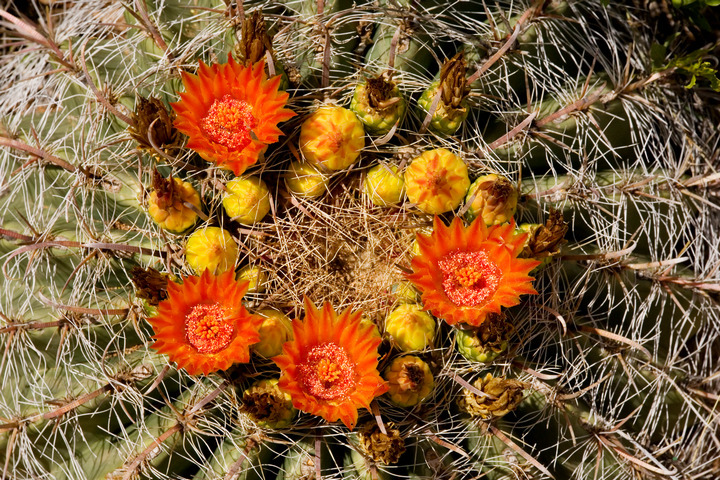
If you’re looking for a sturdy, medium size cactus for your yard, consider fishhook barrel cactus (Ferocactus wislizeni). It’s commonly seen growing wild in southern Arizona, but it also makes a reliable, low maintenance landscape plant.
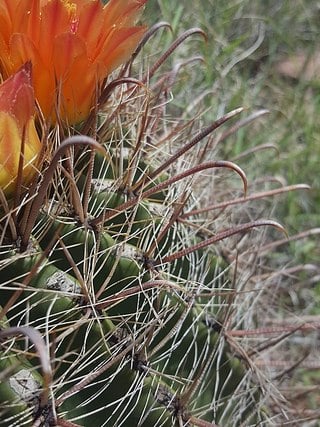
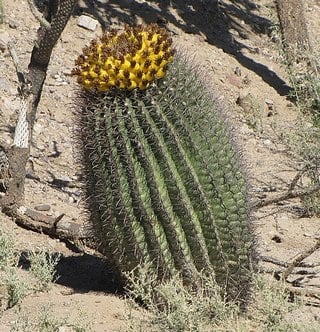
This stout, rugged-looking cactus lives up to its name. It truly is barrel-shaped, growing taller than wide, and is covered with clusters of hook-shaped spines.
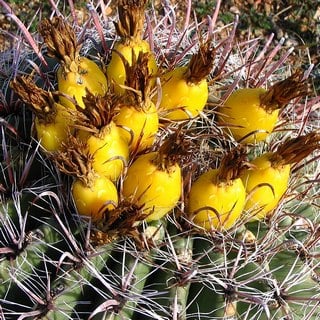
When in bloom, the top is ringed with colorful cup-shaped flowers that are usually orange, but may be yellow or red. Flowering often coincides with the monsoon rains. Yellow, pineapple-shaped fruits follow.
This cactus can be long lived — some specimens are more than 100 years old. Unfortunately, they are prone to toppling over before reaching this landmark.
Flowers are pollinated by bees. Fruits and seeds feed birds and desert mammals, large and small.
Why I Like This Plant
- Vivid flowers in shades of orange
- Very slow growing — won’t outgrow its space
- As maintenance-free as a plant can be
- Supports bees, birds, mammals
Things to Watch Out For
With a name like fishhook, it should come as no surprise that it has hook-like spines. This plant is covered with 3 to 4 inch spines that can do serious harm.
This cactus is also called compass cactus because, in the wild, it usually leans towards the southwest. The shady, north-facing side of the cactus grows faster than the sunny, south-facing side, causing it to lean south. (However, the direction of the lean can be affected by the presence of shade from structures or other plants.) When it leans too far, it will fall over, especially when the ground is saturated.
If your barrel cactus falls over, it’s not doomed.
It can be replanted and live for many more years.
While the fruit is technically edible, grow it for wildlife, not personal consumption. Fruits are bitter and loaded with seeds. One fruit can contain up to 30,000 seeds!
Note that the fruits may lure some critters you don’t want in your yard, such as deer, javelina, rabbits, and rodents.
This cactus can develop root rot if overwatered or when growing in poor draining soil. Don’t plant one next to plants on irrigation.
Optimal Growing Conditions
If you’re thinking of adding a fishhook barrel cactus to your garden, you need to find a suitable place that will keep your plant healthy and looking good… while minimizing maintenance for you.
Here are the key factors to keep in mind.
Temperature
Fishhook barrel cactus should be grown in USDA Hardiness Zones 8 to 11. As a tough desert native, it is tolerant of extreme desert heat and cold down to 15℉
Sun Exposure
Fishhook barrel should be grown in full sun.
Size and Growth Rate
Fishhook barrel grows slowly. It typically reaches a size of 3 to 5 feet tall by 1 to 2 feet wide in desert gardens. But in its natural habitat, it can grow up to 10 feet tall.
Soil
Fishhook barrel cactus grows best in well-draining sandy or rocky native desert soil. Poor drainage will cause root rot.
Fishhook Barrel:
The Essentials
| Common Names | Fishhook barrel, fishhook barrel cactus |
| Scientific Name | Ferocactus wislizeni |
| Origin | Sonoran, Chihuahuan Deserts |
| Plant Type | Barrel cactus |
| USDA Zones | Zones 8 – 11 |
| Cold Hardiness | To 15℉ |
| Flower Color | Orange |
| Flower Season | Summer |
| Mature Size | 3-5’ tall & 1-2′ wide |
| Growth Rate | Slow |
| Sun Tolerance | Full, part sun |
| Water Needs | Very low |
| Pests & Diseases | Root rot |
| Cautions! | Prominent spines |
| Wildlife | Supports bees, birds, mammals |
How to Plant
To plant a fishhook barrel cactus, dig a hole the same depth as the root system and twice as wide. Carefully remove it from the container, place it in the hole, and press the soil to remove any air pockets.
It’s generally recommended to skip adding amendments and backfill with just native soil. However, good drainage is critical. If you know your soil is slow-draining, amend with coarse sand or small gravel until you have a loose, well-drained mix.
Plant your cactus facing in the same direction that it was in the nursery. Better nurseries will mark the pot so you know which direction your cactus has been facing. Surprisingly, cactus can get sunburned, but planting them in the same direction can minimize this.
Planting cactus is serious business — so be prepared. Helpful tools include tongs and old pieces of carpet or old towels. Wear long sleeves and sturdy, protective gloves. Most garden gloves are no match for our spikiest desert plants. I use a thick pair of nitrile chemical-resistant gloves.
When to Plant
The best time to plant cactus is in the spring or early summer when warm soil temperatures encourage root development.
How to Care for Fishhook Barrel Cactus
Whether you’ve recently planted a fishhook barrel cactus or have an existing plant in your yard, here’s how to take care of it to keep it healthy and looking its best.
How to Water
You’re probably used to giving a plant a good soaking immediately after transplanting, but that isn’t the best practice with cactus.
The Arizona-Sonora Desert Museum advises not to water cactus for one to two weeks after planting.
When your cactus is young, water it once per month during the hot spring and summer, unless you’ve had rains of ½“ or more. It should not need any irrigation during the winter. Too much water can cause this cactus to rot or topple over due to engorgement.
Once established, it should not need any supplemental water, except during extreme drought.
Should You Fertilize?
There is no need to fertilize fishhook barrel, it gets all the nutrients it needs from the desert soil.
Pruning
Since fishhook barrel cactus does not need pruning — there is actually nothing to prune. However, you may want to tidy it up by removing old fruits which can persist as long as year, until manually removed either by you or wildlife. You can pluck them out with tongs or leave them for wildlife.
Plant Lover Facts
Fishhook barrel cactus (Ferocactus wislizeni) also goes by the common names Arizona barrel cactus, compass barrel cactus, and candy barrel cactus.
The genus name Ferocactus is from the Latin word ‘ferox’ which means fierce. The spiny barrel cactus that comprise this genus definitely qualify.
It’s native to Arizona, New Mexico, Texas, and Northern Mexico. It is listed as “salvage restricted” under the Arizona Native Plant Law.
Native Americans used various parts of it as a food source. The persistent fruits and liquid inside the barrel were consumed in emergencies. The spines were used to make fish hooks.
Did you enjoy this article?
Sign up for our weekly newsletter
where you’ll find more great info on creating &
maintaining a beautiful, carefree desert landscape.
Author Bio
Deane Alban is the creator of Southwest Gardener. She is a science writer with a bachelor’s degree in botany from the University of South Florida. Gardening is her lifelong passion. She’s been gardening in Tucson for over 16 years.

Photo Credits
Patrick Alexander, CC0, via Wikimedia Commons
Alex Abair, CC BY-SA 3.0, via Wikimedia Commons
John Owens, CC BY-SA 3.0, via Wikimedia Commons
Ken Kneidel, CC BY-SA 3.0, via Wikimedia Commons