
Desert zinnia is a wonderful wildflower for hot, dry gardens. It blooms intermittently throughout the year and requires virtually no maintenance. Here’s how to grow and care for this native ot the Sonoran and Chihuahuan Deserts.

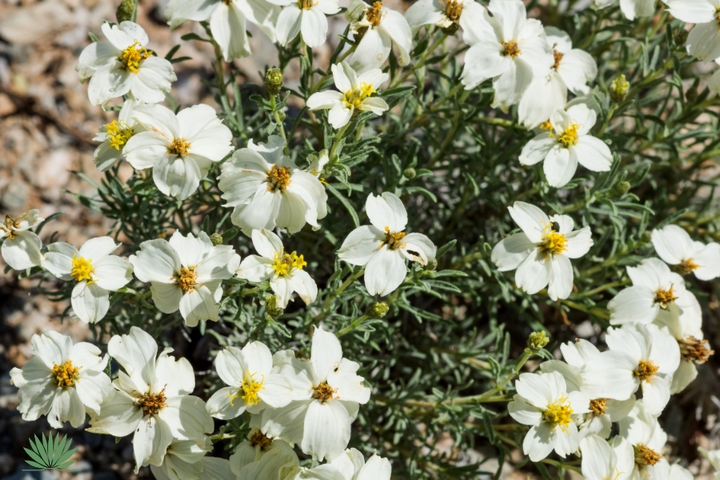
Desert zinnia (Zinnia acerosa) is a true zinnia — it belongs to the same genus as the flowering annuals that grow in gardens everywhere. But unlike typical zinnias, which have colorful, long-stemmed flowers, desert zinnia is a squat, mounding wildflower with white, short-stemmed flowers.
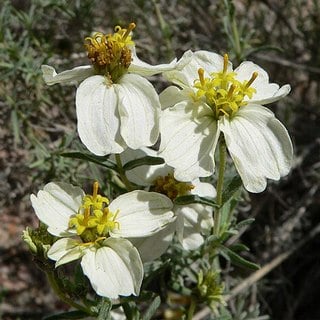
Desert zinnia’s appearance is delicate. It has fine, gray-green, needle-like leaves and dainty white flowers with yellow centers. But this plant is tough and easily handles the desert’s extremes — sun, heat, drought, and winter cold. It needs little care and thrives on neglect.
Desert zinnias are known for supporting a large number of native bee species. They are also an important food source for butterflies and moths.
Why I Like This Plant
- Dainty white flowers
- Thrives on neglect
- No thorns, low litter, non-toxic
- Supports bees, moths, butterflies
Things to Watch Out For
Rabbits will nibble on desert zinnias, especially when plants are young, so you may need to protect new transplants or seedlings.
Spent flowers turn papery and remain on the plant for several weeks. This makes them look like the wildflowers that they are. This may not fit with your garden’s (or your HOA’s) aesthetics, if you prefer a more formal, manicured look.
Like many members of the Asteraceae family, its leaves, stems, flowers, and pollen contain compounds that can cause contact dermatitis.
Optimal Growing Conditions
If you’re thinking of adding desert zinnia to your garden, you need to find a suitable place that will keep your plant looking good and coming back every year.
Here are the key factors to keep in mind.
Temperature
Desert zinnia should be grown in USDA Hardiness Zones 6 to 10. As a resilient desert native, it tolerates the desert’s temperature extremes. It’s considered evergreen but may lose its leaves during extreme cold. It can survive temperatures down to -10℉.
Sun Exposure
Desert zinnia performs best in full sun, and I mean real death-star Arizona sun. It can handle true full sun and the reflected heat off garden walls and buildings.
Size and Growth Rate
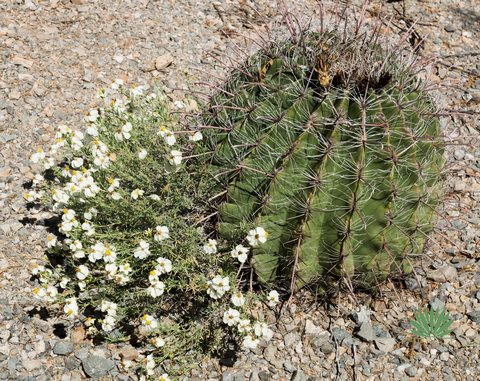
Desert zinnia is a moderate to fast grower that forms an attractive mound, typically 1 foot tall by 1 to 2 feet wide.
It can bloom intermittently from spring through fall, but it flowers most profusely in late summer after monsoon rains.
Soil
Desert zinnia will grow in any type of desert soil — sandy, clay, rocky, or even caliche — as long as it’s well-draining.
Other Location Considerations
Unlike many native plants, desert zinnia has no thorns, stickers, or irritating hairs. Because plants are “unarmed,” non-toxic, and nearly litter-free, you can feel comfortable placing them near a pool, sidewalk, or anywhere they might come in contact with pets and people.
Desert zinnia balances the harsh look of boulders. And since it needs little water, it can grow as a companion to cactus and other succulents.
Desert Zinnia:
The Essentials
| Common Name | Desert zinnia |
| Scientific Name | Zinnia acerosa |
| Origin | Chihuahuan, Sonoran Deserts |
| Plant Type | Evergreen perennial |
| USDA Zones | Zones 6 – 10 |
| Cold Hardiness | To -10℉ |
| Flower Color | White |
| Flower Season | Spring, summer, fall |
| Mature Size | 1′ tall x 1-2’ wide |
| Growth Rate | Moderate to fast |
| Sun Tolerance | Full, reflected sun |
| Water Needs | Low |
| Pests & Diseases | Root rot |
| Garden Friendly | No thorns, low litter, non-toxic |
| Wildlife | Supports bees, butterflies, moths |
Growing Desert Zinnia: Transplants vs Seeds
Desert zinnia is not common in garden centers, but you may find it at nurseries that specialize in native plants. I’ve seen them for sale at Spadefoot Nursery (Tucson) and Borderlands Nursery & Seed (Patagonia).
If you’re starting with transplants, plant them as soon as you buy them, disturbing the roots as little as possible — wildflower roots do not like being disturbed.
I haven’t found desert zinnia seeds for sale individually, but Native Seed/SEARCH includes them in their Old Town Tucson wildflowers mix and their monsoon wildflower mix. This not-for-profit organization will ship seeds to you, or you can pick them up at their Tucson location. You can also buy their seeds from Spadefoot Nursery.
You can harvest seeds, provided you do so responsibly. Seeds are most plentiful in the fall. Please see A Guide to Collecting and Growing Sonoran Desert Wildflowers. This brochure published by the Native Arizona Plant Society will tell you everything you need to know about collecting and sowing wildflower seeds.
Do not dig up wildflowers!
They rarely survive and you will have deprived
the area of next year’s seedlings.
How to Care for Desert Zinnias
Desert zinnia doesn’t require much care. In fact, care guidelines are more about what not to do.
Desert zinnia should not be on your irrigation system. Rainwater should provide your seeds and plants with all the water they need. If you experience a prolonged dry spell, you can hand water every few weeks. Overwatering or poor drainage can cause root rot.
It doesn’t need fertilizer, it evolved to thrive in native desert soil.
Prune away cold damage in the spring. Every few years, give it a hard prune down to a few inches before new spring growth appears. This will promote bushiness and prevent it from getting overly woody. Deadheading spent flowers is optional.
Don’t Confuse Desert Zinnia With…
It’s unlikely that anyone would confuse desert zinnia with other zinnias, but it’s often confused with blackfoot daisy (Melampodium leucanthum), another small, shrubby native wildflower with dainty white flowers.
If you can’t find desert zinnia for sale, blackfoot daisy makes an excellent alternative. It should be easier to find. Additionally, it has a longer bloom season, and during mild winters it may bloom all year.
Plant Lover Facts
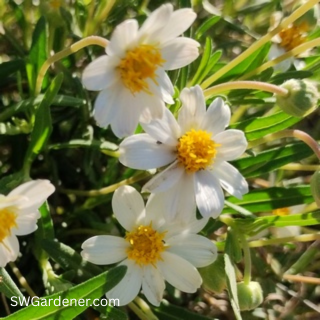
For a plant that’s seldom seen in the nursery trade, desert zinnia (Zinnia acerosa) has a surprising number of common names including dwarf zinnia, dwarf white zinnia, white zinnia, wild zinnia, spinyleaf zinnia, shrubby zinnia, and Southern zinnia.
Its native range includes Arizona, New Mexico, and Texas, along with much of Mexico.
The genus Zinnia was named in honor of the German botanist Johann Gottfried Zinn.
Did you enjoy this article?
Sign up for our weekly newsletter
where you’ll find more great info on creating &
maintaining a beautiful, carefree desert landscape.
Author Bio
Deane Alban is the creator of Southwest Gardener. She is a science writer with a bachelor’s degree in botany from the University of South Florida. Gardening is her lifelong passion. She’s been gardening in Tucson for over 16 years.

Photo Credit
Stan Shebs, CC BY-SA 3.0, Wikimedia Commons