
If you live in the desert southwest and suffer from seasonal allergies, you may be blaming the wrong plants for your misery. Learn which plants are most likely to cause allergies (month by month) and why the wrong plants often get the blame.

There are thousands of species of flowering plants native to the Sonoran Desert and innumerable non-native landscape plants that have been introduced, and some of them cause allergies. Desert broom, palo verdes, and other prolific bloomers often get the blame for seasonal allergies, but they are not a major culprit.
Here’s why…
Plants with showy flowers evolved to attract pollinators and have heavy, sticky pollen rather than light, wind-borne pollen. (That’s why bees get coated with pollen!)
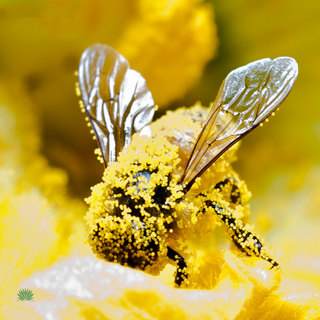
This heavy, sticky pollen is not designed to fly through the air. Plants with inconspicuous flowers have wind-borne pollen. The pollen is usually so small you can’t see it, but it gets up your nose and triggers allergies. Consequently, it’s the plants you’d never suspect that are most likely to trigger allergies.
Top Allergens in Tucson
According to Pollen.com, here are the top allergens in Tucson, by month.
| Month | Top Allergens |
| January | Juniper |
| February | Ash, juniper, poplar |
| March | Ash, juniper, mulberry |
| April | Ash, mulberry, juniper, olive, ragweed |
| May | Grasses, mesquite, mulberry, olive, ragweed |
| June | Chenopods, grasses, mesquite, ragweed |
| July | Chenopods, grasses, mesquite, ragweed |
| August | Chenopods, grasses, mesquite, ragweed, sagebrush |
| September | Chenopods, ragweed, sagebrush |
| October | Composites, chenopods, ragweed |
| November | Chenopods, ragweed |
| December | Grasses, juniper |
Some of these plants are native, while others, such as mulberry and olive, have been introduced.
As you’ll notice, there are no palo verdes or other trees with obvious flowers on this list.
You’re probably familiar with many of these plants, but you may be scratching your head at a few of them, like chenopods. This is a group of plants that belong to either the Chenopodiaceae or Amaranthaceae families that includes amaranth, pigweed, waterhemp, Russian thistle, and lamb’s quarters.
Pollen.com defines sagebrush as a plant in the Artemisia genus, such as wormwood. You can find a list of plants in this genus here. This group is the 3rd most common cause of allergies, after grasses and ragweeds.
Composites are plants that belong to the Asteraceae family and often have daisy-like flowers. Numerous common desert plants belong to this plant family including brittlebush and desert marigold.
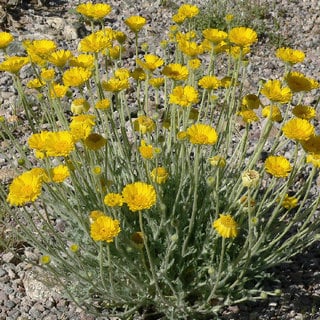
For a more comprehensive look at top allergens, check out Pollen.com’s sister site, PollenLibrary.com. Again, you’ll notice that the plants considered allergenic do not have obvious flowers.
Get your local allergy report at Pollen.com.
How Gardeners Can Limit Exposure
If you’re like me, common sense goes out the window when I get in the garden. I often find myself pottering around my yard without my hat, gloves, or water bottle. (Do you ever do this, too?) 😉
If you have allergies, here are a few common sense ways you can limit your exposure to pollen:
- Garden when pollen levels are low. Trees and weeds typically release pollen in the morning, while grasses release pollen both morning and night.
- Avoid gardening when it’s windy out.
- If your plants are dry and dusty, hose them off to rinse away pollen before pruning or working around them.
- Wear a mask that filters out allergens. (I started wearing a mask for allergies years before COVID.)
- If you have disruptive garden tasks that must be done during your allergy prime time, such as blowing and mowing, get someone else to do them for you.
I’ve written more about seasonal allergies and natural relief strategies on my other website, Be Brain Fit. You might want to check it out.
Did you enjoy this article?
Sign up for our weekly newsletter
where you’ll find more great info on creating &
maintaining a beautiful, carefree desert landscape.
Author Bio
Deane Alban is the creator of Southwest Gardener. She is a science writer with a bachelor’s degree in botany from the University of South Florida. Gardening is her lifelong passion. She’s been gardening in Tucson for over 16 years.

Photo Credit
Stan Shebs, CC BY-SA 3.0, Wikimedia Commons