
Cochineal scale is an insect pest found almost exclusively on prickly pear cactus. It’s not usually serious, but it can disfigure and weaken your plant. Discover how to identify cochineal, what to do if your cactus is infected, cochineal-resistant species, and steps to prevent infestations.

Prickly pears are tough native cactus that are popular desert landscape plants. They come in a wide variety of sizes, pad shapes, and flower colors.
They require minimal care and are generally not bothered by pests and diseases. However, they are susceptible to an insect pest called cochineal scale (Dactylopius spp.).
Fortunately, cochineal is rarely serious and easy to control naturally, especially when caught early. Let’s take a look at the signs of an infestation, what you can do if your cactus is infected, and how to prevent future problems.
And if you stay to the end, you can learn about cochineal’s fascinating history and current commercial value.
Signs of Cochineal
You may notice some white fuzzy stuff on the pads of your prickly pear that looks like tiny cotton balls. It may look like a fungus, but it’s not. The female cochineal scale insect creates a white, waxy fiber that shelters it from predators and the weather.
These small, wingless insects have piercing mouthparts that enable them to feed on the cactus. When left untreated, significant infestations can eventually weaken, damage, or even kill your plant.
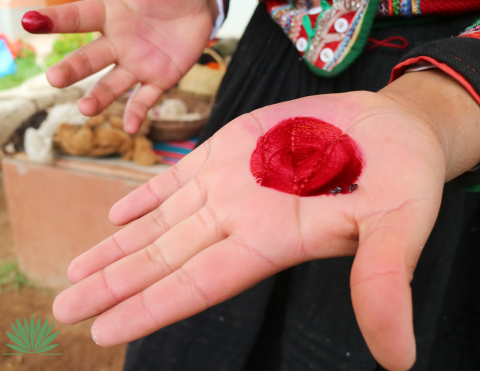
To positively identify cochineal scale, take a stick or garden tool and gently poke at the white mass. (If you use your finger, beware of spines and glochids!) When punctured, the insect will ooze a bright red liquid. The color is due to carminic acid, a compound that repels predators and has historically been valued as a source of red dye.
While cochineal is found almost exclusively on prickly pears (Opuntia spp.), it can also occur on cholla cactus (Cylindropuntia spp.).
How Does Cochineal Spread?
You might be wondering how your cactus got cochineal. During one stage of their life cycle, insects are light enough to be blown by the wind and are dispersed from pad to pad and from plant to plant.
How to Treat Cochineal
If you’ve determined your cactus has cochineal, here are the steps you can take to get rid of it or keep it under control.
Spray with Water
The first-line treatment for cochineal scale is surprisingly simple. Give your cactus a shot of water using the jet spray setting on your hose nozzle. This should dislodge them from your plant.
This might be all you need to do, especially if you caught the infestation early. Since their life cycle is short and they reproduce several times per year, it’s advised that you repeat spraying every few weeks for a while to be sure you blast them in all stages of their lifecycle.
Spray with Insecticidal Soap
After you’ve dislodged the existing cochineal and removed its protective webbing, you may want to take further measures. The next step would be to spray your cactus with an insecticidal soap such as Safer’s Insect Killing Soap. This works best on the exposed scale bodies, not through the white fluff.
Cautions!
But before spraying any plant with any product,
test it on one spot and wait 24 hours.
If you see any signs of stress, do not use.
Never spray plants with anything other than water
when the temperature is over 90℉.
Do not spray with “dish soap” which is actually a harsh detergent. It might kill the cochineal, but it may also damage your cactus by removing its protective cuticle. Cactus depend on this waxy coating for survival. Ironically, removing it makes them more susceptible to future infestations.
Prune Infected Pads
If your infestation is bad, prune away the most heavily infected pads, always cutting at the joint. This will prevent the infestation from getting worse and from spreading to other plants.
You can then hose down the remaining pads with water, followed by a spray of insecticidal soap.
How to Prevent Future Infestations
Before buying or otherwise acquiring a new prickly pear, inspect it for signs of cochineal.
You can preventatively hose down your cactus with a jet spray, especially during the summer. It keeps down cochineal populations, removes unseen insects before they have a chance to get established. It also cleans their pores so they can transpire more efficiently.
Keep your prickly pears pruned so that the pads are not densely crowded. This makes them less likely to develop severe infestations.
Lastly, keep your existing cactus healthy. Make sure they get the right amount of sun exposure and water them correctly. Pests and diseases of all kinds cause more damage in unhealthy, stressed plants.
Plant Resistant Species
Whether you’ve had trouble with cochineal or wish to avoid the problem, you can choose prickly pear species that are known to be resistant.
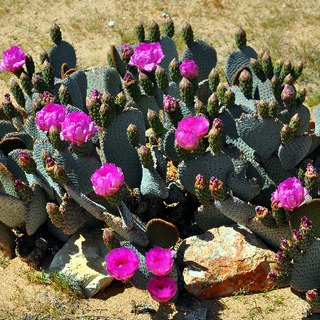
Bunny ears cactus and beavertail cactus are less prone to cochineal infestations than many other Opuntias, and both are attractive landscape plants.
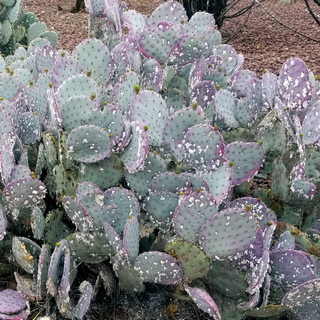
Unfortunately, the most susceptible species is also one of the most desirable landscape plants — Santa Rita prickly pear. Cochineal is a huge problem for this colorful species.
The Arizona State University Plant Library advises gardeners not to plant Santa Rita unless they are willing to take active measures to keep infestations under control.
A Brief History of Cochineal
Entire books have been written about the history of cochineal, such as A Perfect Red: Empire, Espionage, and the Quest for the Color of Desire. Yes, there’s that much to know!
But here’s a seriously short executive summary:
In Mexico and South America, the cochineal insect has been cultivated for centuries as the source of bright red dye. During its heyday, few things were more prized than cochineal. The cochineal industry was lucrative for several hundred years and peaked in the 1870s, when as much as 7 million pounds of cochineal were produced.
The development of synthetic dyes caused a dramatic decline in cochineal production, but it’s still produced commercially in Peru, Mexico, and a handful of other countries.
Fun Fact!
It takes 70,000 bugs to produce 3 oz. of pure carminic acid pigment.
Current Uses
Surprisingly, cochineal is still used today as a red dye in foods (red candies, beverages, sausages, jams, canned fruit, cake mixes, fruit yogurt, ice cream, and more) and in cosmetics (lipstick, face powder, eye shadow).
Today, cochineal is one of the few red dyes approved by the US Food and Drug Administration, since many synthetic red food colorings are banned.
It’s not always obvious that a product contains cochineal. Alternative names for cochineal extract include E120, natural red 4, crimson lake, carmine lake, CI 75470, carminic acid, and “natural colorings”.
Consuming cochineal extract is generally considered safe, although it can cause allergic reactions in some people.
I admit I’m squeamish, and would rather not knowingly eat dyes made from bugs — how about you? 😜
As an Amazon Associate, Southwest Gardener earns from qualifying purchases, at no cost to you.
See our Terms of Use for details.
Did you enjoy this article?
Sign up for our weekly newsletter
where you’ll find more great info on creating &
maintaining a beautiful, carefree desert landscape.
Author Bio
Deane Alban is the creator of Southwest Gardener. She studied journalism and received a bachelor’s degree in botany from the University of South Florida. Gardening is her lifelong passion. She’s been gardening in Tucson for over 16 years.

Photo Credits
Jessie Eastland, CC BY-SA 3.0, Wikimedia Commons
Arizona State University’s Virtual Library of Phoenix Landscape Plants