
Asparagus fern is usually grown in a container as a patio plant or houseplant, but it can also be grown as an evergreen ground cover in Southwest desert gardens. Here’s how to care for this South African native, whether you grow it in a container or in the ground.
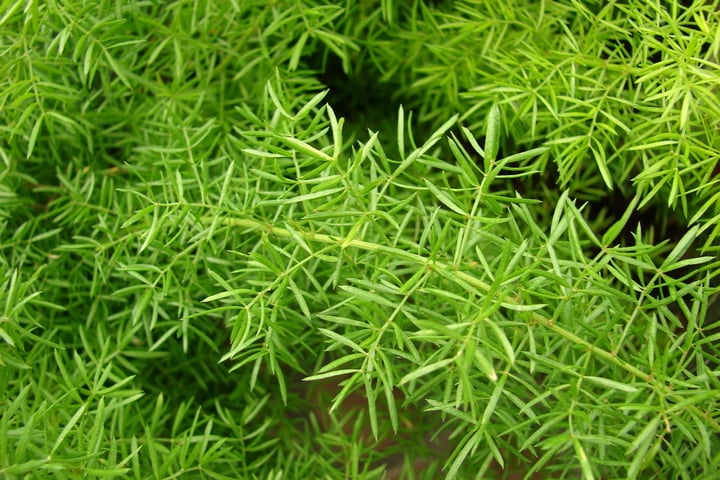
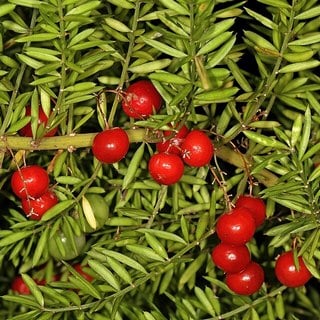
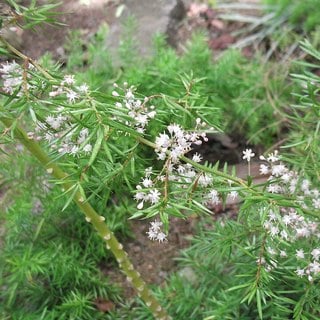
Asparagus fern (Asparagus densiflorus) is a trailing ground cover covered with fine needle-like foliage. In spite of its name, this plant is not a fern, but it does have a fern-like appearance. Its small white flowers are relatively inconspicuous and not a main feature. Flowers are followed by small, bright red berries.
If you’ve ever grown garden asparagus, you can see where this plant gets its name. Its fern-like foliage is similar to that of the perennial vegetable.
It’s most commonly grown as a container plant, but it can also be planted in the ground. It prefers some shade, making it an excellent ground cover to plant under trees or on the shady north side of a wall or building.
Why I Like This Plant
- Bright evergreen foliage all year
- Low maintenance
- Versatile! Can be grown as a ground cover, houseplant, or patio plant
- Rabbit, javelina resistant
Things to Watch Out For
Asparagus fern may look friendly, but its stems are lined with small, irritating thorns. Touching this plant can cause contact dermatitis in some people.
While birds can eat the berries, all parts of this plant are mildly toxic to people and pets, causing gastric upset.
If you grow asparagus fern in a container, be prepared to repot or divide it every few years. If you leave one in the same pot for too long, the vigorous root system may eventually crack its container. I’ve seen this happen in both plastic and ceramic pots.
Optimal Growing Conditions
If you’re thinking of adding an asparagus fern to your garden, you need to find a suitable place that will keep your plant healthy and looking good. Here are the key factors to keep in mind.
Temperature
Asparagus fern should be grown in USDA Hardiness Zones 9 to 11. This plant is tolerant of desert heat provided it’s protected from the sun. It’s cold-hardy down to around 25℉. It can survive short cold spells down to 20℉, but it might die back.
Sun Exposure
Asparagus fern should be grown in part or full shade. Too much sun will cause it to turn yellow. If a plant experiences intense sun and heat simultaneously, some stems may turn brown.
Size and Growth Rate
Asparagus fern grows moderately fast. This low growing plant stays 1 to 2 feet tall but grows 3 to 4 feet wide.
Soil
Asparagus fern will grow in sand or well-draining clay, but it prefers loamy, slightly acidic soil. If you grow one in a container, be sure it has good drainage and use potting mix, not native soil.
Other Location Considerations
Asparagus fern makes a beautiful, resilient patio plant. For maximum effect, grow it in a tall planter or hanging basket, which allows its long branches to spill over the sides.
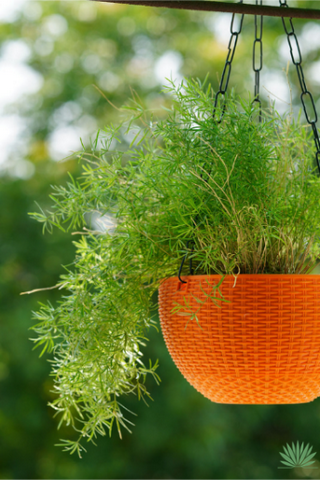
While it can be grown as a houseplant, I prefer to grow it outside since it drops small needle-like leaves that can be a nuisance indoors.
Asparagus Fern:
The Essentials
| Common Name | Asparagus fern |
| Scientific Name | Asparagus densiflorus |
| Origin | Southern Africa |
| Plant Type | Ground cover |
| USDA Zones | Zones 9 – 11 |
| Cold Hardiness | To 25℉ |
| Flowers | White, inconspicuous |
| Flower Season | Spring |
| Mature Size | 1-2′ tall x 3-4’ wide |
| Growth Rate | Fast |
| Sun Tolerance | Part, full shade |
| Water Needs | Moderate |
| Pests & Diseases | None |
| Cautions | Small thorns, contact dermatitis, mildly toxic |
How to Plant
If you’re planting an asparagus fern in the ground, dig a hole as deep as and twice as wide as the nursery container. Since asparagus fern prefers fertile soil, amend your hole with compost or a commercial soil mix. Top with organic mulch to retain moisture, increase soil fertility, and protect roots from temperature extremes.
When to Plant
The best time to plant asparagus fern is in the fall. This gives it three seasons to grow roots and get established before the following summer. The second best time is in spring, the earlier the better. This still gives it time to get established before the intense heat of June arrives.
How to Care for Asparagus Fern
Whether you’ve recently planted a new asparagus fern or have an existing one in your yard, here’s how to take care of it to keep it healthy and looking its best.
How to Water
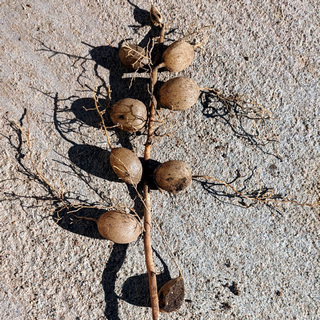
Asparagus fern is surprisingly drought tolerant due to its tuberous root system, which stores water. The more sun and heat your plant is exposed to, the more water it will need.
If you’re growing asparagus fern in a container, use this watering schedule as a guide.
| Spring & Fall | Every 2-5 days |
| Summer | Every 1-3 days |
| Winter | Every 5-7 days |
Once a container plant is established, it can survive on much less than this, especially if it’s grown in the shade. Avoid overwatering, which can cause root rot.
If you’re growing yours in the ground, the University of Arizona recommends watering newly planted ground covers every 2 to 3 days for the first 4 weeks. Give your asparagus fern about ½ gallon with each watering. After that, you can gradually switch to this schedule:
| Spring (March – May) | 7 – 10 days |
| Summer (May – Oct.) | 5 – 7 days |
| Fall (Oct. – Dec.) | 7 – 10 days |
| Winter (Dec – March) | 10 – 14 days |
How much water you should give your plant with each watering depends on the diameter of your plant and will change as it grows. You can use this chart as a guide.
| 1 foot diameter | ½ gallon |
| 2 feet diameter | 2 gallons |
| 3 feet diameter | 3½ gallons |
| 4 feet diameter | 5 gallons |
Should You Fertilize?
Asparagus fern in the ground should be fertilized in late winter and again during the summer. Plants in containers should be fertilized monthly spring through fall. This plant has a relatively high need for nitrogen and feeding it will help it stay vivid green.
Pruning & Propagation
Asparagus fern should only be trimmed to remove dead or damaged stems. Whenever you need to trim a stem, cut it back as close to the base as possible. New stems will emerge from the base.
If your plant gets too large, don’t try to reduce its size by pruning. Divide or repot it instead.
Many gardeners are surprised to see how dense and tuberous the root system can become. When I divide mine, I use a saw to cut through the roots. Don’t worry about this rough treatment — this plant can handle it.
If you’re growing it as a ground cover, give it a hard prune every 3 years or so to rejuvenate it and improve its appearance.
Asparagus Fern Cultivars
You may come across a few asparagus fern cultivars when shopping such as ‘Sprengeri’ or ‘Sprengeri Compacta’ which are compact forms.
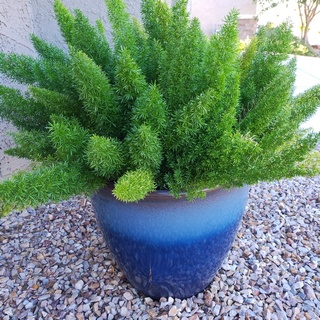
You’ll almost certainly come across foxtail fern (Asparagus densiflorus ‘Myers’), a very different-looking form that’s a popular plant in its own right. It has shorter, fuzzy, foxtail-looking stems, is less prickly, and rarely produces toxic berries.
Plant Lover Facts
Asparagus fern (Asparagus densiflorus) is native to southeastern Africa.
If you’ve ever grown garden asparagus, you can see where it gets its common name. Its fern-like foliage looks much like that of the perennial vegetable. It even has similar small red berries.
Asparagus “fern” isn’t remotely related to ferns. As a member of the asparagus (Asparagaceae) family, it’s more closely related to agaves than to ferns!
Asparagus fern doesn’t actually have leaves. It has cladodes — small, needle-like modified stems that function as leaves.
Did you enjoy this article?
Sign up for our weekly newsletter
where you’ll find more great info on creating &
maintaining a beautiful, carefree desert landscape.
Author Bio
Deane Alban is the creator of Southwest Gardener. She studied journalism and received a bachelor’s degree in botany from the University of South Florida. Gardening is her lifelong passion. She’s been gardening in Tucson for over 16 years.

Photo Credits
Forest & Kim Starr, CC BY 3.0, via Wikimedia Commons
SAplants, CC BY-SA 4.0, via Wikimedia Commons
Yercaud-elango, CC BY-SA 4.0, via Wikimedia Commons
Arizona State University’s Virtual Library of Phoenix Landscape Plants