
When you hear “aloe vera”, you may think of a healing gel for burns or a popular houseplant… and it is those things. But it also makes an easy-care, prolific desert landscape plant. Here’s how to grow this native of the Middle East in Southwest desert gardens.
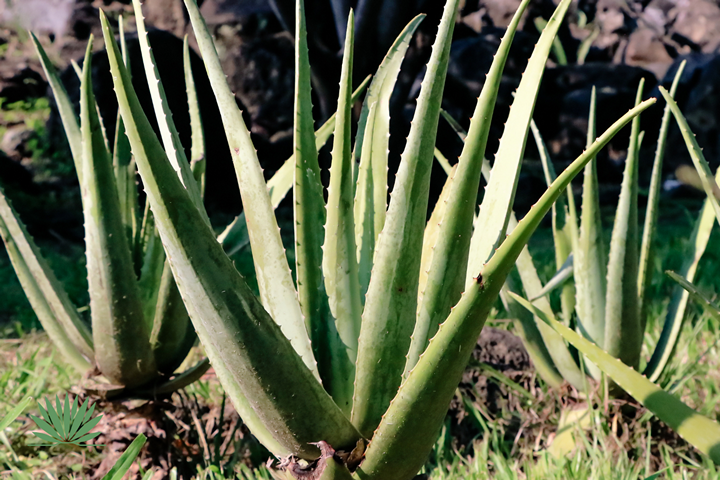
Aloe vera (Aloe vera) is the most widely used medicinal plant in the world. This plant is so popular that if you mention the name “aloe”, most people will assume you mean aloe vera. (Which makes it the “Elvis” or “Beyoncé” of plants. 😉) It has naturalized around the world and is grown commercially to become an ingredient in a plethora of personal care products.
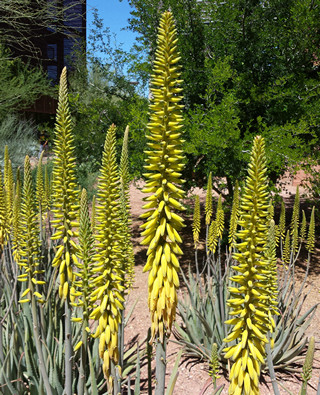
This aloe has fleshy, gray-green leaves that form upright rosettes. In the winter, when little else is blooming, it sends up showy flower stalks covered with tubular yellow flowers that attract hummingbirds.
Aloe vera prolifically reproduces by offsets called pups. Get one established and you’ll have an endless supply of free plants to transplant or give away. It’s not unusual to see boxes of aloe vera pups wherever gardeners give away plants, such as at free plant stands.
Why I Like This Plant
- Attractive all year long
- Colorful winter blooms
- Endless supply of free pups
- Low maintenance
- No thorns, no litter
- DIY remedy for skin irritations
- Attracts hummingbirds, bees, butterflies
- Deer, rabbit, javelina resistant
Things to Watch Out For
Aloe vera isn’t as tough as our native succulents, and will let you know if it’s stressed from heat, cold, or drought by turning reddish-purple. It performs best when grown in part shade, and often scalds when grown in full sun. It’s borderline cold-tolerant, and young plants benefit from being covered during cold snaps.
Aloe vera is considered toxic to dogs, cats, and horses. When consumed in large quantities, it can be a gastrointestinal irritant and should be kept away from children.
Optimal Growing Conditions
If you’re thinking of adding an aloe vera to your garden, you need to find a suitable place that will keep your plant healthy and looking good… while minimizing maintenance for you.
Here are the key factors to keep in mind.
Temperature
Aloe vera should be grown in USDA Hardiness Zones 9 to 11. It tolerates summer heat, especially when grown in part shade, and is cold tolerant down to the mid-twenties. Plants become more cold tolerant as they mature.
Sun Exposure
Aloe vera will grow in any sun exposure from full sun to full shade, but bright, indirect sunlight or dappled shade is ideal. Plants may survive but struggle when grown in full sun or near a hot garden wall, and appreciate some afternoon shade.
Size and Growth Rate
Each aloe vera plant typically reaches a mature size of 1 to 2 feet wide, but it sends out pups that create clusters that grow much wider. When in bloom, flower stalks will add a few feet in height.
Soil
Aloe vera will grow in any native desert soil, but prefers sandy or rocky well-draining soil. If you grow one in a container, use specifically formulated cactus soil.
Other Location Considerations
An ideal spot for growing aloe vera is under a tree, which will provide both dappled shade and cold protection.
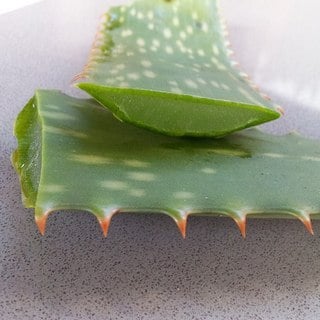
Because it is low-litter and leaves are lined with soft spines, it is a good choice for planting near a pool.
Aloe vera makes a great container plant that can be grown outside as a patio plant or inside as houseplant.
Aloe Vera:
The Essentials
| Common Name | Aloe vera |
| Scientific Name | Aloe vera |
| Origin | Oman |
| Plant Type | Evergreen succulent |
| USDA Zones | Zones 9 – 11 |
| Cold Hardiness | To 25℉ |
| Flower Color | Yellow |
| Flower Season | Winter |
| Mature Size | 1-2′ tall & wide |
| Growth Rate | Slow to moderate |
| Sun Tolerance | Full, part sun |
| Water Needs | Low |
| Pests & Diseases | Root rot, aloe mites |
| Garden Friendly | No thorns, no litter |
| Cautions | Toxic to pets, children |
| Wildlife | Attracts hummingbirds, bees, butterflies Critter resistant |
How to Plant
To plant an aloe vera, dig a hole the same depth as the root system and twice as wide.
It’s generally recommended that you not add amendments to the soil. However, good drainage is critical, so if your soil drains slowly, amend with coarse sand or small gravel until you have a loose, well-drained mix.
When to Plant
Most landscape succulents (cactus, agaves, yuccas, etc.) should be planted in the spring, but aloes are an exception. They do most of their growing in the winter and establish best when planted in the fall.
How to Care for Aloe Vera
Whether you’ve recently planted an aloe vera or have an existing plant in your yard, here’s how to take care of it to keep it healthy and looking its best.
How to Water
You’re probably used to giving a plant a good soaking immediately after transplanting, but that isn’t the best practice with aloes and other succulents. Counterintuitively, it’s better to wait a week or two after planting to water.
Then, water twice per month spring through fall. Always allow the soil to dry out between waterings.
No supplemental water is needed during the winter, provided there have been normal winter rains. And, as with all succulents, skip watering when freezing temperatures are expected.
Should You Fertilize?
There is no need to fertilize aloes growing in the ground. They get all they need from the surrounding desert soil. But if you grow one in a pot, fertilize it lightly a few times a year when it’s actively growing.
Pruning & Propagation
Aloes don’t need pruning, but you can remove dead or damaged leaves any time you see them. You’ll probably want to remove spent flower stalks after they’re done blooming.
Aloe vera propagates by sending up new offsets called pups. You can easily separate the pups from the parent plant once they’re big enough to have some roots. It’s recommended that you divide the clusters every 3 years or so to prevent overcrowding and keep plants looking their best.
Pests & Diseases
Aloe vera is generally not bothered by pests and diseases. However, it is susceptible to a pest called the aloe mite (Aceria aloinis). Aloe mites rarely kill a plant, but they can make it look weird and distorted.
Don’t Confuse Aloe Vera With…
Don’t confuse aloe vera with other aloes. There are over 600 species of aloes, and aloe vera is by far the most well-known and well-studied. Many people assume that all aloes have medicinal properties, but they do not. Only a very few aloes, such as Cape aloe, have similar beneficial properties, while others are poisonous.
Plant Lover Facts
Aloe vera (Aloe vera) also goes by many other common names, but the ones you’re most likely to see are medicinal aloe or true aloe. Aloe vera is unusual in that its common name and scientific name are the same.
Its previous scientific name, Aloe barbadensis, is still often used. The accepted scientific name has changed back and forth between A. vera and A. barbadensis. The naming controversy goes back to 1768 when both names were published nearly simultaneously. Botanists have been arguing about it ever since!
Aloe vera’s native range is generally considered to be the mountains of Oman, however, some scientists question its origin and think it may be a hybrid. It has naturalized on every inhabited continent, and has escaped cultivation in Arizona and Texas.
Aloe vera gel has been used medicinally for thousands of years. Many gardeners keep a plant on hand to treat minor burns, insect bites, sunburn, and other skin irritations.
Aloe vera is grown commercially around the world. It’s an ingredient in personal care products of all kinds — moisturizers, soap, shampoo, sunscreen, cosmetics, and more. It is also taken as an herbal remedy to treat a wide variety of ailments, but there are potential side effects and interactions to be aware of before taking it internally.
Did you enjoy this article?
Sign up for our weekly newsletter
where you’ll find more great info on creating &
maintaining a beautiful, carefree desert landscape.
Author Bio
Deane Alban is the creator of Southwest Gardener. She is a science writer with a bachelor’s degree in botany from the University of South Florida. Gardening is her lifelong passion. She’s been gardening in Tucson for over 16 years.

Photo Credits
Arizona State University’s Virtual Library of Phoenix Landscape Plants
Rae Allen, CC BY 2.0, Wikipedia Commons