
Pineapple guava is a gorgeous plant that has exotic edible flowers and, with the right care, “may” produce edible fruit. It can be grown in the desert, but it’s not ideally suited for it. Here’s everything you need to know about planting and taking care of this South American native to give it the best possible chance in a hot, dry climate.
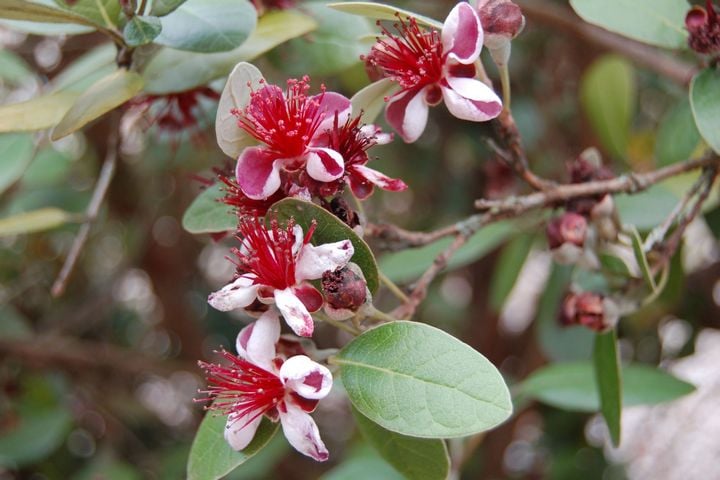
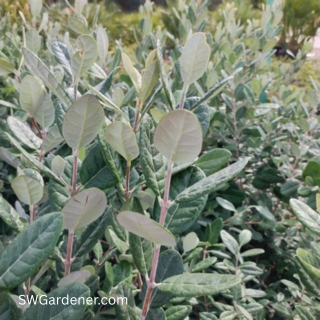
Pineapple guava (Feijoa sellowiana) is a beautiful evergreen plant that naturally grows as a large shrub, but is usually grown as a small tree when used as a landscape plant. Its leathery two-tone leaves are dark green on top and silver on the underside.
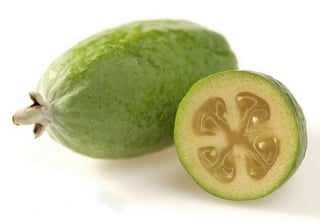
Exotic, fragrant, multi-colored flowers cover the tree in the spring. These gorgeous flowers have a lot going on –white and pink petals and bright red fairy duster stamens tipped with yellow pollen. Green, egg-shaped fruits reminiscent of smooth kiwis appear in the fall.
Both flowers and fruits are edible. The flower petals are slightly sweet and can turn an ordinary salad into something special. The fruit has been described as tasting like pineapple, strawberry, kiwi, and/or mint.
Pineapple guava naturally grows in cool, humid climates with moderate summers, so obviously, the desert southwest is not its ideal habitat and growing them here can be a challenge. But, when planted in the right spot and given the right care (as described below), it can grow well here.
Why I Like This Plant
- Evergreen, two-toned leaves
- Exotic, multi-colored flowers
- Edible flowers and fruit
- Attracts birds, bees
Things to Watch Out For
Pineapple guava is slow to take off, and it can take several years to see your first flower.
Grow it because it’s beautiful, not for the fruit. The fruit can be an acquired taste, and its texture is simultaneously gelatinous and gritty.
Fruit rarely sets in the desert southwest due to excessive heat (90℉ is the cutoff point for fruit setting) and lack of pollination. Even commercial growers in the US (Florida, California, and Texas) find fruit production unreliable.
If you decide to grow it for the fruit, you’ll need more than one tree unless you choose one of the self-pollinating cultivars. And for best results, it’s recommended that you hand-pollinate with a small brush, since we don’t have the same species that pollinates them in their native habitat.
Optimal Growing Conditions
If you’re thinking of adding a pineapple guava to your garden, you need to find a suitable place that will keep your plant healthy and looking good… while minimizing maintenance for you.
Here are the key factors to keep in mind.
Temperature
Pineapple guava should be grown in USDA Hardiness Zones 8 – 10. It does best where temperatures are moderate. It tolerates desert heat (with some shade and adequate water), but try to plant it in one of the “cooler” spots in your yard.
Cold is not a problem since it is cold hardy down to 15℉.
Sun Exposure
In the desert southwest, pineapple guava is happiest in part shade. Full morning sun with afternoon shade is ideal.
Too much sun will cause leaf scorch and plants I’ve seen growing in full sun look worse for wear by summer’s end.
Size and Growth Rate
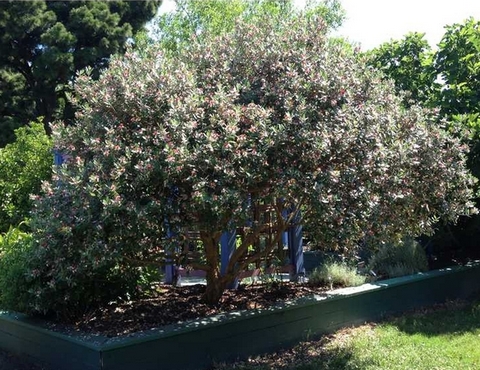
Pineapple guava is a slow grower that can eventually reach a mature size of 12 to 15 feet tall and wide. It naturally grows as a large shrub but can be trained to grow as a multi-branched tree, as in the picture below.
Soil
Pineapple guava will grow in any native soil — clay, sandy, or rocky — provided it’s well-draining, but our dry, alkaline soil is not ideal. It prefers moist, slightly acidic soil.
If you suspect your soil will pose a problem, consider growing one in a large container or raised bed with amended soil.
Pineapple Guava:
The Essentials
| Common Name | Pineapple guava |
| Scientific Name | Feijoa sellowiana |
| Origin | South American |
| Plant Type | Evergreen tree/shrub |
| USDA Zones | Zones 8 – 10 |
| Cold Hardy | To 10℉ |
| Flower Color | White & pink |
| Flower Season | Spring |
| Mature Size | 15′ tall x 15′ wide |
| Growth Rate | Slow |
| Sun Tolerance | Full, part sun |
| Water Needs | Moderate |
| Pests & Diseases | None |
| Wildlife | Attracts birds, bees |
How to Plant
The rule of thumb when planting any tree or shrub in the desert is to dig a hole three times as wide as the root ball but no deeper. Since pineapple guava prefers moist, acidic soil, consider amending your hole with compost or a commercial soil mix.
Top with organic mulch rather than gravel, which helps to retain moisture, increase soil fertility, and reduce alkalinity.
When to Plant
The best time to plant pineapple guava is in the fall. This gives it three seasons to grow roots and get established before the following summer.
The second best time is in spring, as soon as the risk of frost is over. This still gives your plant time to get established before the intense heat of June arrives.
How to Care for Pineapple Guava
Whether you’ve recently planted a pineapple guava or have an existing one in your yard, here’s how to take care of it to keep it healthy and looking its best.
How to Water New Plants
Once you’ve got your shrub in the ground, watering is your most immediate concern. Here is the recommended watering schedule for new shrubs planted in the spring or fall.
| Weeks 1 & 2 | Every 3 – 4 days |
| Weeks 3 & 4 | Every 5 – 7 days |
| Weeks 5 & 6 | Every 7 – 10 days |
| Weeks 7 & 8 | Every 10 – 14 days |
How to Water Established Plants
Pineapple guava needs consistent watering to look its best.
As your shrub gets established, there are two watering factors to consider.
- First is how often to water. This will vary with the seasons.
- Second is how much water to give your shrub with each watering. This depends on its current size.
To determine the ideal watering schedule for your pineapple guava, you’ll find everything you need to know, including easy-to-use charts, at How to Water Desert Shrubs: How Often? How Much?
Since it’s a moderate rather than low water use plant, use the “High Water Use” schedule.
Should You Fertilize?
Pineapple guava does not need fertilizer, but benefits from an occasional top dressing of organic mulch or compost.
How to Prune
Unlike many desert shrubs, pineapple guava is flexible when it comes to pruning and can be shaped into a small tree, a hedge, or even as an espalier.
Keep in mind that the more you prune, the fewer flowers you’ll have. And don’t prune after it flowers if you’re hoping to get fruit.
Plant Lover Facts
Pineapple guava (Feijoa sellowiana) also goes by the common names fig guava, guavasteen, and fiejoa. It’s the only member of its genus. The species name is in honor of German botanist Friedrich Sello. It’s still often referred to by its former scientific name, Acca sellowiana.
It’s not a true guava (Psidium guajava), but both are members of the myrtle family (Myrtaceae).
It is native to the highlands of Argentina, Brazil, and Uruguay, but now also grows in New Zealand and a few countries in South America and Africa.
In New Zealand, serious efforts were made to turn the fruit into a commercial crop, but without much success. Although commercially grown fruits can be sold locally, they are rarely transported because they don’t travel well.
The fruit, which is thought to have medicinal properties, can be eaten raw or used in cooking to make pies and jams.
Did you enjoy this article?
Sign up for our weekly newsletter
where you’ll find more great info on creating &
maintaining a beautiful, carefree desert landscape.
Author Bio
Deane Alban is the creator of Southwest Gardener. She is a science writer with a bachelor’s degree in botany from the University of South Florida. Gardening is her lifelong passion. She’s been gardening in Tucson for over 15 years.

Photo Credits
Michel Chauvet, CC BY-SA 4.0, Wikimedia Commons
ACurry, CC BY-SA 3.0, Wikimedia Commons
JC Raulston Arboretum, CC BY 2.0, North Carolina State Extension