
Peruvian apple is a spectacular columnar cactus with gorgeous flowers and attractive, edible fruit. But be aware that it’s not as tolerant of desert conditions as cactus native to the southwest. Here’s everything you need to know about planting and caring for this South American native.
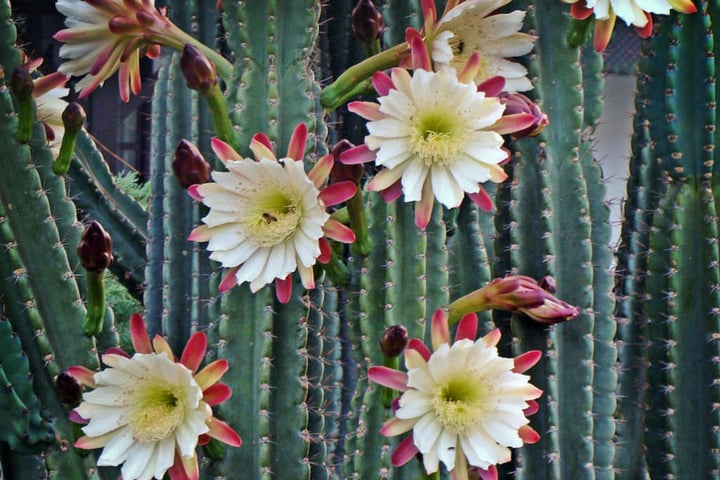
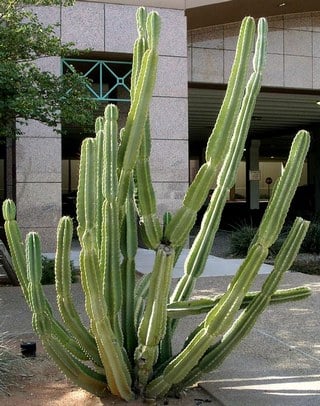
Peruvian apple (Cereus repandus) is an imposing cactus with a multitude of blue-green columns that grow branched and sometimes segmented, creating a tangled, tree-like appearance.
In late spring, it puts on a stunning display of slightly fragrant, nocturnal flowers that only last one night. These pink and white beauties can be 6 inches across.
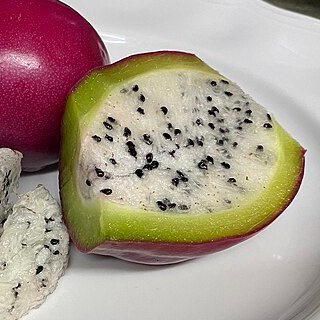
Flowers are followed by shiny, egg-shaped fruit that range from pink to red. The edible fruit, which is called pitaya, has white flesh speckled with small, black seeds, similar to those of kiwi.
Flowers are pollinated at night by bats and hawk moths. The fruits are a food source for birds, mammals, and even desert tortoises.
Why I Like This Plant
- Makes a stunning focal point
- Large, gorgeous flowers
- Thornless, edible, apple-like fruit
- Produces fruit fast
- Low maintenance
- Easy to propagate new plants
Things to Watch Out For
Peruvian apple is not as tolerant of our harsh desert climate as native cactus, especially when young.
It’s marginally cold-tolerant in USDA hardiness zone 9. When the temperature drops below 25℉, the column tips can suffer frost damage. So you may need to protect your plant from cold, depending on how cold your winters are.
In its native habitat, it grows under the shade of a nurse plant, so it benefits from protective shade during its first year once the temperature hits 90°F.
If you’re growing this because you plan to eat the fruit, make sure you like it. People seem to either love it or hate it. I’ve heard it described as tasting like everything from vanilla sorbet (yum!) to slimy okra (yuck). And many gardeners complain that their fruit is tasteless and leave it for wildlife.
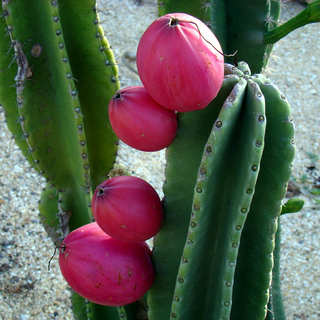
Self-pollination rates can be low, and sometimes a second plant is needed for a bumper crop of fruit.
It’s not unusual for birds to get to the fruit first, and fallen fruit will attract animals, including some you may not want.
The presence of thorns is variable. Some plants have 2 inch thorns, while others are nearly thornless. The fruits are always thornless.
Optimal Growing Conditions
If you’re thinking of adding a Peruvian apple cactus to your garden, you need to find a suitable place that will keep your plant healthy and looking good… while minimizing maintenance for you.
Here are the key factors to keep in mind.
Temperature
Peruvian apple should be grown in USDA Hardiness Zones 9 – 11. When grown in zone 9, it will need protection from frost. While it can survive temperatures down to 20℉, when the temperature drops below 25℉, the tender tips will experience frost damage.
It’s not unusual to see column tips protected with paper bags, styrofoam cups, knit caps, or even Santa Claus hats in the winter here in Tucson.
Sun Exposure
Ideally, Peruvian apple should get full morning sun with part shade in the afternoon, so grow this on the east side of your house or east of a large tree for permanent afternoon shade.
Young plants particularly need relief from the sun. Some experts recommend covering new plants with shade cloth during the first summer.
You can find creative ways to provide temporary shade here.
Size and Growth Rate
Peruvian apple’s growth rate can vary from slow to fast, depending on how it’s cared for. Under ideal conditions, it can grow a few feet per year. A typical mature specimen will reach a size of 40 feet tall by 15 feet wide, so give it plenty of room to grow.
You can expect your plant to start bearing fruit within two to three years after planting.
Soil
Peruvian apple grows well in any native desert soil, from sandy to rocky, provided it’s well-draining.
It can be grown in a large container. When grown in a container, its size will be limited by the size of the pot. Make sure the pot has drainage holes and use specifically formulated cactus soil.
Peruvian Apple Cactus:
The Essentials
| Common Names | Peruvian apple, Peruvian apple cactus |
| Scientific Name | Cereus repandus |
| Origin | South America |
| Plant Type | Columnar cactus |
| USDA Zones | Zones 9 – 11 |
| Cold Hardiness | To 25℉ |
| Flower Color | White |
| Flower Season | Spring, summer |
| Mature Size | 40′ high x 15’ wide |
| Growth Rate | Slow to fast |
| Sun Tolerance | Full, part sun |
| Water Needs | Low |
| Pests & Diseases | Root rot |
| Cautions | Spines |
| Wildlife | Attracts moths, bats |
How to Plant
To plant a Peruvian apple cactus, dig a hole the same depth as the root system and twice as wide.
Amending the soil with compost or soil mix is not recommended. However, good drainage is critical. If you know your soil is slow-draining, amend with coarse sand or small gravel until you have a loose, well-drained mix.
Carefully remove the plant from the container, put it in the hole, and press the soil to remove any air pockets.
Plant facing in the same direction that it was in the nursery. Surprisingly, cactus can get sunburned! Better nurseries will mark the pot so you know which direction your cactus has been facing.
When to Plant
The best time to plant a Peruvian apple cactus is in April or May. Higher temperatures encourage root development.
How to Care for Peruvian Apple Cactus
Whether you’ve recently planted a Peruvian apple cactus or have an existing plant in your yard, here’s how to take care of it to keep it healthy and looking its best.
How to Water
You’re probably used to giving plants a good soaking immediately after transplanting, but that isn’t the best practice with cactus.
The Arizona-Sonora Desert Museum advises not to water succulents for one to two weeks after planting.
Water it once every 2 weeks in the summer and once per month in the winter. Any time you’ve had ½ “ or more or rain, you can skip the next watering. It can develop root rot with too much water.
Should You Fertilize?
Since Peruvian apple is not native to desert soils and puts out an abundance of fruit and flowers, it’s recommended that you fertilize it once in the spring.
Pruning & Propagation
Peruvian apples don’t need pruning unless one of the stems has experienced damage. This can occur from frost, an animal taking a bite, or some human folly.
You can also prune to control its size or to remove awkward or crossing branches. Cut at the joins between segments, if possible.
You can use any cuttings to grow new plants by simply setting your cuttings aside for a few weeks to let them form a callus. Then stick the hardened ends into the soil. That’s all there is to it!
Don’t Confuse Peruvian Apple With…
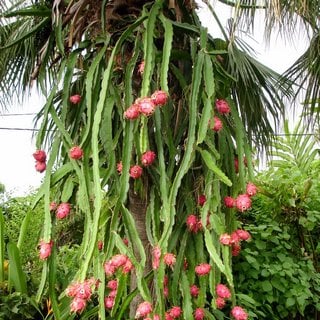
Peruvian apple is sometimes confused with dragon fruit (Selenicereus undatus). Both bear red fruits with flesh speckled with black seeds.
But dragon fruit is a tropical epiphytic cactus that clings to trees like a vine. Its fruits are large and nobby, and the flesh ranges from white to deep pink.
Plant Lover Facts
Peruvian apple cactus (Cereus repandus) also goes by the name hedge cactus.
It’s native to Colombia, Venezuela, and a few island countries, but oddly, it’s not native to Peru. (Go figure?!)
Did you enjoy this article?
Sign up for our weekly newsletter
where you’ll find more great info on creating &
maintaining a beautiful, carefree desert landscape.
Author Bio
Deane Alban is the creator of Southwest Gardener. She is a science writer with a bachelor’s degree in botany from the University of South Florida. Gardening is her lifelong passion. She’s been gardening in Tucson for over 15 years.

Photo Credits
Friends of the Port Lucie Botanical Gardens
Saifunny, CC BY-SA 4.0 via Wikimedia Commons
Arizona State University’s Virtual Library of Phoenix Landscape Plants
Tominiko974, CC BY-SA 3.0 via Wikimedia Commons