
Parry’s penstemon is a tall, pink knockout of a wildflower that reliably blooms every spring. Here’s everything you need to know about growing and caring for this gorgeous Sonoran Desert native.

Parry’s penstemon (Penstemon parryi) is a native desert wildflower that’s a beloved harbinger of spring. Its foliage is unremarkable — triangular blue-green leaves that grow low to the ground. But when this plant is in bloom, it’s a traffic stopper.
Plants send up 3 to 5-foot flower stalks that are covered with dozens of bright rose tubular flowers. They provide a striking contrast to the abundance of yellow flowers that bloom in the desert spring.
This charming native would not look out of place in an English cottage garden, yet it can take whatever the desert throws at it — true full sun and temperature extremes.
Plants are extremely low maintenance, and when grown in the garden, they’re more likely to die from too much attention than from neglect.
The flowers, which generally bloom between February and April, attract numerous pollinators including butterflies, moths, bees, and hummingbirds. The seeds provide food for various birds.
Deer and rabbits usually leave this plant alone.
Why I Like This Plant
- Gorgeous, eye-catching flowers
- Fuss-free Sonoran Desert native
- Easy to start from seed
- Reseeds readily for more free plants
- Attracts bees, butterflies, birds
Things to Watch Out For
This is a plant that thrives on neglect. Plant it in poor soil where it receives full sun and minimal water — the conditions it experiences in the wild — and it will be a happy plant. Pampering will make it more prone to root rot, powdery mildew, and aphids.
Note that Parry’s penstemon is a short-lived perennial, only living 3 to 5 years. But it readily reseeds. As new plants pop up, they eventually outgrow and replace the older plants.
If the conditions are favorable, they can reseed prolifically. This may or may not be a good thing, depending on your situation. If you want to control exactly where they grow, simply remove the seed stalks as soon as the blooms fade so they can’t reseed.
Here’s a cluster of seedlings, so you know what to look for.
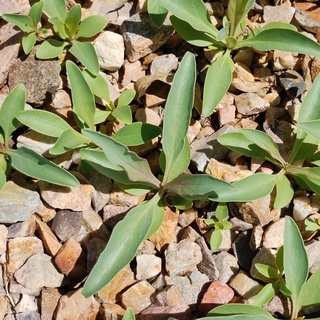
While it’s considered an evergreen perennial, it’s not unusual for it to go dormant during the summer. So don’t be surprised if your plant completely dies back. They usually resurface the following spring.
Penstemons are not considered poisonous, but since they can accumulate selenium, it’s best to keep people, pets, poultry, and livestock from consuming any species of penstemon.
Optimal Growing Conditions
If you’re thinking of adding Parry’s penstemon to your garden, you need to find a suitable place that will keep your plants looking good and coming back year after year.
Here are the main factors to keep in mind.
Temperature
Parry’s penstemon should be grown in USDA Hardiness Zones 9 to 11. It easily handles desert heat and is cold-hardy down to 10℉.
Sun Exposure
As a native desert wildflower, Parry’s penstemon prefers full sun. You can grow it in part shade, but it will have fewer flowers and be more susceptible to powdery mildew and root rot.

Size and Growth Rate
Parry’s penstemon grows moderately fast. If you start plants from seed, note that it usually takes them two years to bloom. (Although sometimes you get lucky and they bloom in one.) The foliage forms rosettes 1 foot tall by 2 feet wide, but the flower stalks shoot up to an impressive 3, 4, or even 5 feet tall!
Soil
Parry’s penstemon naturally grows in dry, sandy, or gravelly, alkaline soil. It performs best in the garden when planted in similar conditions, and will not tolerate poor-draining soil.
Other Location Considerations
When in bloom, this plant is a tall eye-catcher. Once it has stopped blooming, it doesn’t look like much and can actually “disappear” as it goes dormant. For these reasons, it’s best to plant at the back of your garden or among plants with longer periods of visual interest to fill the gap. Some of my favorite pairings are with desert marigolds or ornamental grasses.
Parry’s Penstemon:
The Essentials
| Common Name | Parry’s penstemon |
| Scientific Name | Penstemon parryi |
| Origin | Arizona, Mexico |
| Plant Type | Perennial wildflower |
| USDA Zones | Zones 9 – 11 |
| Cold Hardy | To 10℉ |
| Flower Color | Rose pink |
| Flower Season | Spring |
| Mature Size | 1’ high x 2’ wide |
| Growth Rate | Moderate |
| Sun Tolerance | Full sun |
| Water Needs | Low |
| Pests & Diseases | Root rot if overwatered, powdery mildew |
| Garden Friendly | No thorns, non-toxic |
| Wildlife | Attracts hummingbirds, butterflies, bees, birds Deer, rabbit resistant |
Growing Parry’s Penstemon: Seed vs Transplants
There are two ways to grow Parry’s penstemon. You can buy transplants or grow from seed. Let’s take a look at both so you can decide which makes more sense for you.
Grow From Seed (Preferred)
I rarely have the patience to start perennials from seed, but I make an exception for Parry’s penstemon.
Sow seeds in the fall and if they like the location, you’ll be rewarded with seedlings the following spring.
You can buy seeds or gather them, provided you do it responsibly.
Please see A Guide to Collecting and Growing Sonoran Desert Wildflowers. This brochure published by the Native Arizona Plant Society will tell you everything you need to know about collecting wildflower seeds.
Do not dig up wild plants!
They almost certainly will not survive and you will have
deprived the area of next year’s seedlings.
Grow from Transplants
The best time to plant penstemon is in the fall, but ironically, they can be hard to find at nurseries then.
If you buy a flowering plant in the spring, you may be disappointed that the show will be almost over by the time you get it in the ground.
If you do decide to go with a transplant, be aware that wildflowers do not like to have their roots disturbed, so remove from the pot very carefully and disturb the roots as little as possible.
Amending the soil is not recommended. Counterintuitively, backfilling with the same native soil you just dug up helps your plant develop a stronger root system.
Parry’s penstemon doesn’t like to be crowded, so give it a few feet of space from other plants.
How to Care for Parry’s Penstemon
This section is short since these plants really don’t need much care.
How to Water
While your plant could live on rainfall alone — as it does in the wild — it will do better if it gets watered 1 to 2 times per month, either from rainfall or irrigation.
Should You Fertilize?
Parry’s penstemon doesn’t need fertilizer, since it is well-adapted to thrive in native soil.
Pruning & Thinning
Parry’s penstemon needs no pruning other than cutting spent flower stalks. If you want it to reseed or plan to collect seeds, leave the flower stalks in place until the seed pods have turned brown and dried. Then you can easily collect the seeds.
Parry’s penstemon doesn’t like to be crowded, so if it reseeds, sometimes the best strategy is to remove older plants to give its offspring room to grow.
Parry’s Penstemon Cultivar
One Parry’s penstemon cultivar I’ve come across is Penstemon x ‘Red Headed Beauty’. This Civano Growers exclusive is a hybrid cross between P. palmeri, P. parryi, and P. superbus. ‘Red Headed Beauty’ is larger, more vigorous, and longer-lived than the parent plants, and has fragrant, vibrant pink flowers.
Plant Lover Facts
Parry’s penstemon is native to Arizona and northeast Mexico. It’s named after the American botanist Charles Parry. Dozens of plants are named after him, including Parry pinyon, Parry’s primrose, and Parry’s agave.
Did you enjoy this article?
Sign up for our weekly newsletter
where you’ll find more great info on creating &
maintaining a beautiful, carefree desert landscape.
Author Bio
Deane Alban is the creator of Southwest Gardener. She is a science writer with a bachelor’s degree in botany from the University of South Florida. Gardening is her lifelong passion. She’s been gardening in Tucson for over 15 years.
