
Paperflower is a charming, sunny-yellow wildflower that blooms much of the year with almost no care. Here’s how to grow this native of the Sonoran and Mojave Deserts.
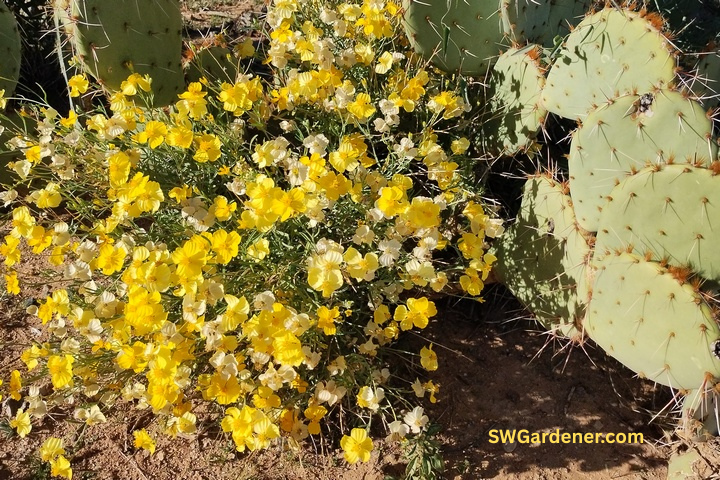
Paperflower (Psilostrophe cooperi) is a shrubby perennial with narrow, fuzzy green-gray leaves and cheerful yellow flowers.
It blooms from June through fall, but if the conditions are right, it can have flowers nearly all year. When in bloom, the flowers form on branch tips, creating a rounded mound of flowers so dense that you can barely see the leaves.
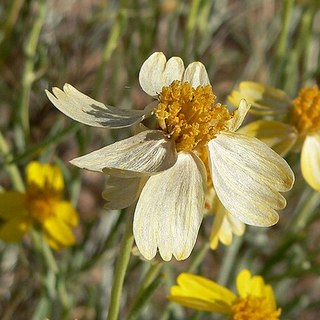
The flowers start out bright yellow and gradually fade to cream. Since not all flowers bloom and fade on the same schedule, there is often an interesting two-tone effect. Older flowers are persistent and paper-like, hence the name paperflower.
Paperflower is easy to grow. These plants are tough. They can easily handle the desert’s heat, sun, and aridity, and require almost no maintenance. In their natural environment, they can survive on as little as 4” of annual rainfall. I often see them growing along bike paths and hiking trails in Tucson.
Paperflower attracts bees and butterflies, while the seeds provide food for birds.
Why I Like This Plant
- Cheerful yellow flowers
- Thrives in poor soil — even caliche!
- Extremely low maintenance
- No thorns, low-litter
- Supports bees, butterflies, birds
Things to Watch Out For
Paperflower is a relatively short-lived perennial that generally lasts around 3 years or so. However, plants often reseed for an endless supply of plants. And you can actively encourage reseeding by harvesting and sowing seeds from the parent plant.
When not in bloom, this plant isn’t much to look at, but fortunately, it blooms often. Plants are drought-deciduous and may lose their leaves in the summer.
Paperflower is toxic to livestock (especially sheep) and people. While I couldn’t find any specific information on its toxicity to pets, I would assume it’s toxic to pets, too.
Optimal Growing Conditions
If you’re thinking of adding paperflower to your garden, you need to find a suitable place that will keep your plants looking good and coming back every year.
Here are the key factors to keep in mind.
Temperature
Paperflower should be grown in USDA Hardiness Zones 8 – 11. As a native to the Mojave and Sonoran Deserts, it’s well-equipped to tolerate desert heat and can survive cold down to 10℉.
Sun Exposure
Paperflower grows best in full sun. But it tolerates some light shade or reflected heat.
Size and Growth Rate
Paperflower grows moderately fast and typically reaches a size of 2 feet tall by 2 feet wide.
Soil
Paperflower prefers sandy or rocky soil, but will grow in clay soil provided it’s well-draining. It is one of the few landscape plants that will thrive in caliche!
In its native habitat, it can be found growing on rocky slopes or in sandy river washes.
Other Location Considerations
It makes a great companion to other wildflowers such as desert marigold, desert senna, or penstemons. It softens the appearance of boulders and spiky plants.
Paperflower:
The Essentials
| Common Name | Paperflower |
| Scientific Name | Psilostrophe cooperi |
| Origin | Mojave, Sonoran Deserts |
| Plant Type | Perennial subshrub |
| USDA Zones | Zones 8 – 11 |
| Cold Hardiness | To 10℉ |
| Flower Color | Yellow |
| Flower Season | Spring, summer, fall |
| Mature Size | 2′ high x 2′ wide |
| Growth Rate | Moderate |
| Sun Tolerance | Full, part, reflected sun |
| Water Needs | Low |
| Pests & Diseases | None |
| Garden Friendly | No thorns, low litter |
| Wildlife | Supports birds, bees, butterflies |
Growing Paperflower: Seed & Transplants
Paperflower is not easy to find, but I’ve seen it at nurseries that specialize in native plants such as Spadefoot Nursery (Tucson) and Borderlands Nursery & Seed (Patagonia).
If you can’t find plants, you can easily grow them from seeds.
I’ve seen some seed mixes for sale that include paperflower, but I haven’t found a source of just paperflower seeds. You can gather seeds, provided you do so responsibly. Please see A Guide to Collecting and Growing Sonoran Desert Wildflowers. This brochure, published by the Native Arizona Plant Society, will tell you everything you need to know about collecting wildflower seeds.
If you’re starting with transplants, plant them as soon as you buy them. Disturb the roots as little as possible — wildflowers do not like their roots being disturbed.
The best time to sow seeds is in the fall.
Do not dig up wild plants!
They rarely survive and you will have deprived
the area of next year’s seedlings.
How to Care for Paperflower
Paperflower doesn’t require much care. In fact, care guidelines are more about what not to do.
There is no need to fertilize paperflower, which evolved to grow in desert soil.
They should not be on irrigation. Rainwater should provide most of the water they need. While they can survive on rainwater alone, they’ll look better with some supplemental water.
If you experience a prolonged dry spell, hand water every few weeks. But don’t overwater, which can reduce flowering.
You can prune this plant severely once a year in the spring to rejuvenate it and remove old growth.
Plant Lover Facts
Paperflower (Psilostrophe cooperi) also goes by the common names white stem paperflower, Cooper’s paperflower, and yellow paper daisy.
It is native to Arizona, California, Nevada, Utah, and northwest Mexico.
The species is named in honor of James Graham Cooper, an American surgeon and naturalist.
Did you enjoy this article?
Sign up for our weekly newsletter
where you’ll find more great info on creating &
maintaining a beautiful, carefree desert landscape.
Author Bio
Deane Alban is the creator of Southwest Gardener. She is a science writer with a bachelor’s degree in botany from the University of South Florida. Gardening is her lifelong passion. She’s been gardening in Tucson for over 15 years.

Photo Credit
Stan Shebs, CC BY-SA 3.0, Wikimedia Commons