
Natal plum is not a true plum. While it does have edible fruit, this elegant evergreen shrub is usually grown in desert gardens for the year-round interest it provides. Here’s how to plant and care for this native of tropical East Africa.
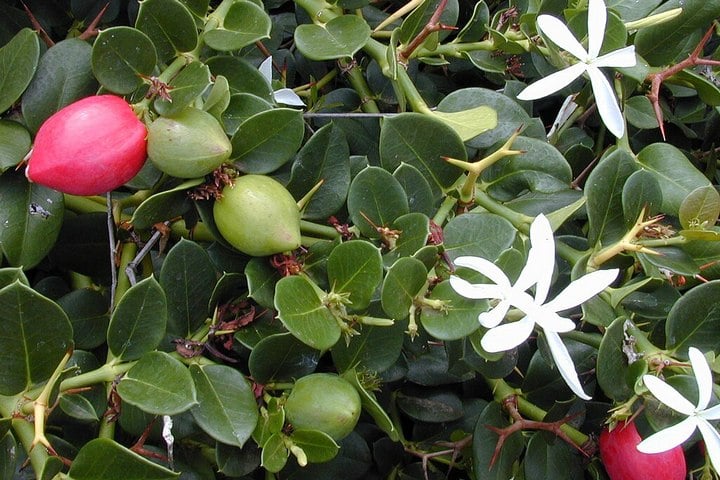
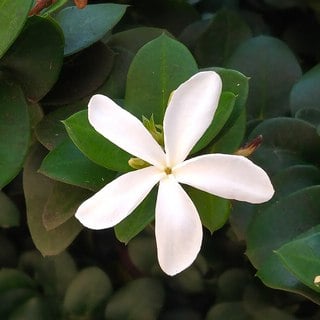
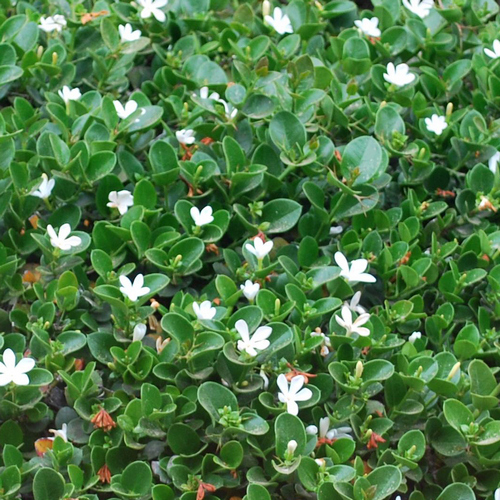
Natal plum (Carissa macrocarpa) is not a plum-bearing tree. It’s a colorful shrub with densely-packed, leathery green foliage and snow white flowers. The aroma of its delicate, star-shaped flowers has been compared to gardenia, jasmine, or orange blossoms.
Flowers are followed by attractive, edible red fruits that are best described as tasting like cranberries, only sweeter.
Natal plum is native to the tropics, and yet, when planted in the right spot and given the right care, it can thrive in desert gardens.
Why I Like This Plant
- Fragrant, star-shaped flowers
- Glossy evergreen foliage
- Cranberry-like fruit
- Low maintenance, low-litter
- Fruits attract birds
Things to Watch Out For
When buying a natal plum, read the label carefully. This plant has many cultivars and they can vary dramatically in size — from 20 inches to 20 feet tall!
This shrub is not always tolerant of temperature extremes, so know your microclimate before planting one.
While it produces fruit, it’s rarely prolific outside of its native habitat. This is believed to be due to inadequate pollination. If you want to harvest the fruit, choose a cultivar known for better yields.
Natal plum usually has 1 to 2 inch thorns, but some cultivars are nearly thornless.
While the ripe fruits are edible, all other plant parts produce a white sticky sap that many people find irritating. Eating unripe fruits or other plant parts can cause digestive upset (in people). It is not considered toxic to pets or horses, and birds enjoy the fruits.
Fun Fact!
Natal plums contain more vitamin C than citrus.
Optimal Growing Conditions
If you’re thinking of adding natal plum to your garden, you need to find a suitable place that will keep your plant healthy and looking good… while minimizing maintenance for you.
Here are the key factors to keep in mind.
Temperature
Natal plum should be grown in USDA Hardiness Zones 9 – 11. It is generally tolerant of desert heat and cold, but is not happy in extreme temperatures. Temperatures above 113℉ will stress natal plum, and temperatures above 118℉ can kill it.
Young plants need protection below 30°F. Mature plants survive down to 20℉, but may suffer cold damage below 26℉.
Sun Exposure
Some sources report that natal plum likes full sun, but they aren’t talking about the “death star” full sun of the desert. Plants develop sun scald when exposed to too much sun here.
Most natal plum cultivars sold in the southwest perform best in part shade, but can tolerate fairly heavy shade.
Size and Growth Rate
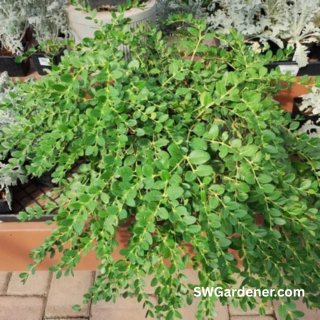
Natal plum is a slow to moderate grower and generally reaches a mature size of 3 to 4 feet tall and wide. But yours might grow significantly larger or smaller, depending on the cultivar.
Soil
Natal plum tolerates sand or clay as long as it’s well-draining, but prefers rich, moist soil that is neutral to slightly acidic.
Plants can develop iron chlorosis when grown in alkaline native desert soil, especially if the pH exceeds 8.
Other Location Considerations
Natal plum makes an excellent foundation or border shrub. But don’t plant it where people or pets might be pricked by its thorns.
Since it likes rich, moist soil, consider growing one in a large container.
Natal Plum:
The Essentials
| Common Name | Natal plum |
| Scientific Name | Carissa macrocarpa |
| Origin | Southeast Africa |
| Plant Type | Evergreen shrub |
| USDA Zones | Zones 9 – 11 |
| Cold Hardy | To 20℉ |
| Flower Color | White |
| Flower Season | Spring, summer |
| Mature Size | 3-4’ high x 3-4’ wide |
| Growth Rate | Slow to moderate |
| Sun Tolerance | Part shade |
| Water Needs | Moderate |
| Pests/Diseases | Root rot |
| Cautions | Thorns, mildly toxic, irritating sap |
| Wildlife | Attracts birds, rabbit resistant |
How to Plant
When planting any shrub in the desert, dig a hole three times as wide as the root ball but no deeper.
Since natal plum prefers fertile soil, it’s recommended that you amend your hole with compost or a commercial soil mix.
Top with organic mulch rather than gravel to retain moisture, increase soil fertility, and protect roots from temperature extremes.
When to Plant
The best time to plant natal plum is in the fall. This gives your shrub three seasons to grow roots and get established before the following summer.
The second best time is in spring, the earlier the better. This still gives your plant time to get established before the intense heat of June arrives.
How to Care for Natal Plum
Whether you’ve recently planted a natal plum or have an existing one in your yard, here’s how to take care of it to keep it healthy and looking its best.
How to Water New Plants
Once you’ve got your shrub in the ground, watering is your most immediate concern. Here is the recommended watering schedule for new shrubs planted in the spring or fall.
| Weeks 1 & 2 | Every 3 – 4 days |
| Weeks 3 & 4 | Every 5 – 7 days |
| Weeks 5 & 6 | Every 7 – 10 days |
| Weeks 7 & 8 | Every 10 – 14 days |
How to Water Established Plants
As your shrub gets established, there are two watering factors to consider.
- First is how often to water. This will vary with the seasons.
- Second is how much water to give your shrub with each watering. This depends on its current size.
To determine the ideal watering schedule for your natal plum, you’ll find everything you need to know, including easy-to-use charts, at How to Water Desert Shrubs: How Often? How Much? Since natal plum is not a low water use plant, use the “High Water Use Schedule.”
Should You Fertilize?
Since natal plum did not evolve to grow in desert soil, give it an annual application of fertilizer in late winter or early spring to enhance its general appearance and vitality.
Natal plum can develop iron chlorosis when grown in alkaline desert soil. If your plant’s leaves turn yellow between the veins, fertilize it with chelated iron.
How to Prune
Natal plum is a manageable shrub with a naturally mounding form that doesn’t need regular pruning. Some dwarf cultivars never need pruning.
You can lightly prune errant branches or remove cold damage in late winter or early spring after the danger of frost has passed.
Natal Plum Cultivars
Here are a few cultivars you may come across, and what sets them apart from the parent plant.
- ‘Boxwood Beauty’ – compact, nearly thornless
- ‘Fancy’ – large fruit
- ‘Green Carpet’ – low growing ground cover
- ‘Tomlinson’ – compact, small thorns
Plant Lover Facts
The natal plum (Carissa macrocarpa) also goes by the common name large num-num. It is named after Natal, a former province of South Africa. Its species name, macrocarpa, means large flower. (The flowers are one to two inches across, not what I’d call large.)
It is native to tropical East Africa, but has naturalized in Arizona, Florida, Texas, and parts of Mexico.
Natal plum has many traditional uses. Fruits are eaten fresh or made into pies, jams, and sauces. The fruits and roots are used medicinally to treat colds, flu, toothaches, inflammation, and malaria.
Natal plum is not related to true plums. It belongs to the dogbane family (Apocynaceae). Many members of this family, notably oleander and milkweeds, also have milky sap and are toxic.
Plums belong to the rose family (Rosaceae), which includes many of our favorite edible fruits — apples, apricots, plums, cherries, peaches, pears, almonds, and berries of all kinds.
Did you enjoy this article?
Sign up for our weekly newsletter
where you’ll find more great info on creating &
maintaining a beautiful, carefree desert landscape.
Author Bio
Deane Alban is the creator of Southwest Gardener. She is a science writer with a bachelor’s degree in botany from the University of South Florida. Gardening is her lifelong passion. She’s been gardening in Tucson for over 15 years.

Photo Credits
Forest & Kim Starr, CC BY-SA 3.0, Wikimedia Commons
PapiPijuan, CC BY-SA 4.0, Wikimedia Commons
Lazaregagnidze, CC BY-SA 3.0, Wikimedia Commons