
With its large pads, tree-like form, and flowers and fruits in a rainbow of colors, Indian fig provides year-long interest (and edible fruit) in desert gardens. Here’s everything you need to know about planting and caring for this Mexican native.
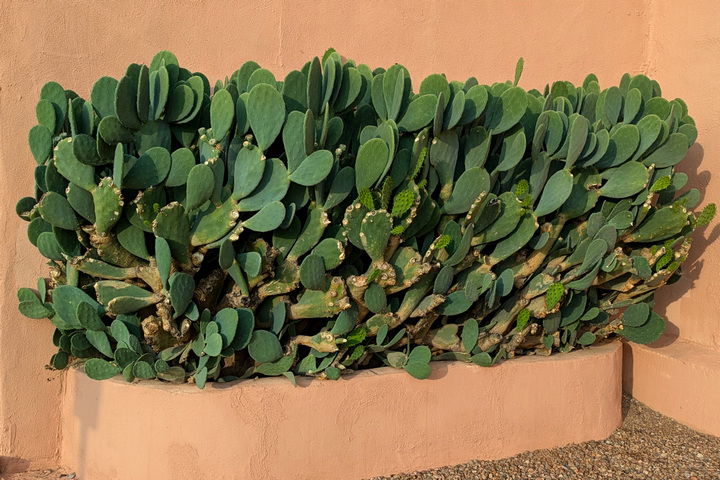
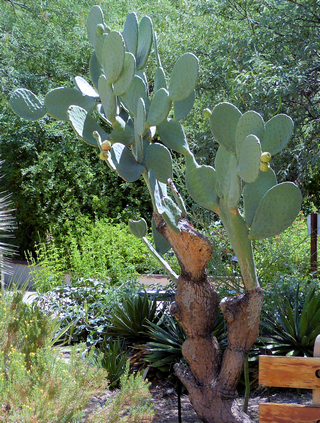
Indian fig (Opuntia ficus-indica) is a huge segmented cactus that looks like a cross between a prickly pear and a tree. It has large, flat, oval pads that extend from a woody trunk. When mature, it develops an upright, tree-like form.
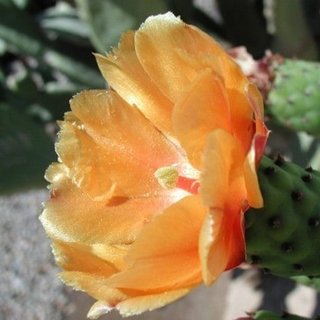
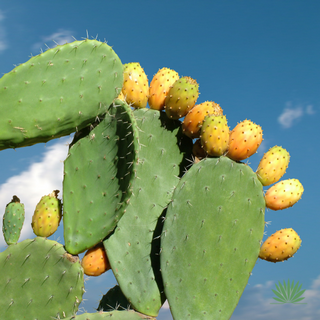
In the spring, pad tips are lined with cup-shaped flowers in various shades of yellow, orange, and red. Edible, oblong fruits follow in the summer with skin colors that range from orange to purple.
Indian fig’s fruits have edible, sweet flesh and contain edible seeds.
Its flowers attract bees, and its pads, fruit, and seeds attract birds and mammals.
Indian fig is a low-maintenance plant. Once established, it can largely exist on rainfall alone and requires only occasional pruning. And it’s long-lived. Plants can live for 80 years!
Why I Like This Plant
- Bold cactus makes a statement
- Tough desert native
- Low maintenance
- Edible pads and fruit
- Supports wildlife
Things to Watch Out For
One of Indian fig’s other common names is spineless cactus, but don’t take that literally. It’s not as wickedly pokey as some other prickly pears — the number of spines can range from just a few to many. But both pads and fruits are covered with tiny, barely visible thorns called glochids. They can be very annoying.
Indian fig can surpass 20 feet in height, so be mindful of its mature size when planting.
Mature Indian figs are prone to losing branches or toppling over. The reason for this is two-fold. If left unpruned, they eventually get top-heavy. This can be avoided with proper pruning. Additionally, this plant’s root system spreads wide — up to 16 feet across — but is shallow, so there isn’t a lot of root mass to anchor it.
Plants attract wildlife of all kinds, both welcome and unwelcome. You may not like all of the visitors this plant attracts, including javelinas and rodents.
Optimal Growing Conditions
If you’re thinking of adding an Indian fig plant to your garden, you need to find a suitable place that will keep your plant healthy and looking good… while minimizing maintenance for you.
Here are the key factors to keep in mind.
Temperature
Indian fig should be grown in USDA Hardiness Zones 9 to 11. Being a desert native, it can handle extreme heat and is cold-hardy down to 15℉.
Sun Exposure
Indian fig thrives in full sun and the reflected heat off of buildings and garden walls, but will tolerate part shade.
Size and Growth Rate
Indian fig is a moderately fast growing cactus that typically reaches a size of 15 feet tall and 10 feet wide if left unpruned.
As it matures, it develops a woody, tree-like trunk.
Soil
Indian fig prefers poor, well-draining soil that’s sandy or rocky and alkaline. If you can, plant it on a berm or mound to help assure good drainage.
Other Location Considerations
Indian fig makes an excellent barrier, screen, or living fence.
It can be planted in a large container or raised bed, provided it has excellent drainage. You can expect container plants to stay smaller than those grown in the ground.
Indian Fig:
The Essentials
| Common Name | Indian fig |
| Scientific Name | Opuntia ficus-indica |
| Origin | Mexico |
| Plant Type | Segmented cactus |
| USDA Zones | Zones 8 – 11 |
| Cold Hardiness | To 15℉ |
| Flower Color | Yellow, orange |
| Flower Season | Late spring |
| Mature Size | 15′ high x 10’ wide |
| Growth Rate | Moderate |
| Sun Tolerance | Full, reflected, part sun |
| Water Needs | Low |
| Pests & Diseases | Cochineal, Root rot |
| Wildlife | Supports bees, birds, mammals Deer, rabbit resistant |
How to Plant
To plant an Indian fig, dig a hole the same depth as the root system and twice as wide. Carefully remove the plant from the container, put it in the hole, and press the soil to remove any air pockets.
It’s generally recommended that you backfill with native soil and not add any amendments.
However, good drainage is critical. So if you know your soil is slow draining, amend with coarse sand or small gravel until you have a loose, well-drained mix.
Plant your cactus in the same direction that it faced in the nursery. Better nurseries will mark the pot so you know which direction your cactus has been facing. Surprisingly, cactus can get sunburned, and planting them in the same orientation can minimize this.
When to Plant
The best time to plant cactus is in the spring or early summer when warm soil temperatures encourage root development.
How to Care for Indian Fig
Whether you’ve recently planted an Indian fig or have an existing plant in your yard, here’s how to take care of it to keep it healthy and looking its best.
How to Water
You’re probably used to giving plants a good soaking immediately after transplanting, but that isn’t the best practice with cactus. Counterintuitively, it’s best to not water them for one to two weeks after planting.
When your cactus is young, water it once per month during the hot spring and summer, unless you’ve had half an inch of rain or more. It should not need any irrigation during the winter. Too much water can cause this cactus to rot. Overly wet ground is a contributing factor to mature plants toppling over, as well.
Once it’s established, it should not need supplemental water unless there is severe drought. You’ll know your Indian fig needs water if its pads start to shrivel.
Should You Fertilize?
There is no need to fertilize Indian fig. It gets all the nutrients it needs from the surrounding desert soil. But if you want maximum fruit production, the University of Arizona recommends fertilizing it monthly from spring through fall with a nitrogen-free fertilizer.
Pruning & Propagation
Indian fig rarely needs pruning except to remove dead or damaged pads or to keep its size in check. If you prune, always cut it at the pad joints. As it matures, you’ll want to prune it before it gets too top-heavy.
You can use any pads that you’ve pruned or that have broken off to easily propagate new plants. Let the pads dry and callus in the shade for a week or two, and then lay them flat on the ground or on the soil in a pot. They send out new roots from each areole (glochid-bearing structure). It’s recommended that you not water them for the next month to avoid rot.
Litter & Critters
Indian fig sheds messy fruit during the summer. Some people gather the fruit to eat or extract the juice.
But even if you have no interest in consuming the fruit, you’ll probably want to pick up the fallen fruit anyway. When left on the ground, they become a magnet for critters you might not want in your yard, including javelinas, rodents, wasps, flies, and gnats.
Cochineal scale is a common problem on most prickly pears, including Indian fig. An infestation looks like small balls of white cotton. Start by spraying it with the jet spray setting on your hose nozzle. If that doesn’t keep it under control, you can cut off badly infested pads.
Plant Lover Facts
Indian fig (Opuntia ficus-indica) goes by several other common names including spineless cactus, mission cactus, and Barbary fig. Opuntia is the “prickly pear genus”.
Humans have cultivated what we call Indian fig for at least 9,000 years, resulting in hundreds of domesticated hybrids. Its exact origin is not known for sure, but DNA analysis indicates that it originated in central Mexico. It has naturalized on all inhabited continents, and, in the US, has escaped cultivation in California, Arizona, and New Mexico.
It is the most widespread and commercially important domesticated cactus. The fruit tastes like strawberry and can be eaten raw, made into jam, or used to make alcoholic beverages. The pads taste like green beans and can be eaten raw or used as an ingredient in cooked dishes.
If you want to try either the pads or the fruits, be sure to remove the glochids first. The University of Nevada offers instructions here. And if you want to juice the fruit, check out the Arizona-Sonora Desert Museum’s article Prickly Pear Harvesting 101.
Did you enjoy this article?
Sign up for our weekly newsletter
where you’ll find more great info on creating &
maintaining a beautiful, carefree desert landscape.
Author Bio
Deane Alban is the creator of Southwest Gardener. She is a science writer with a bachelor’s degree in botany from the University of South Florida. Gardening is her lifelong passion. She’s been gardening in Tucson for over 15 years.
