
Foxtail fern is usually grown in a container as a patio plant or houseplant, but it can also be grown as an evergreen ground cover in desert gardens. Here’s how to care for this South African native, whether you grow it in a container or in the ground.
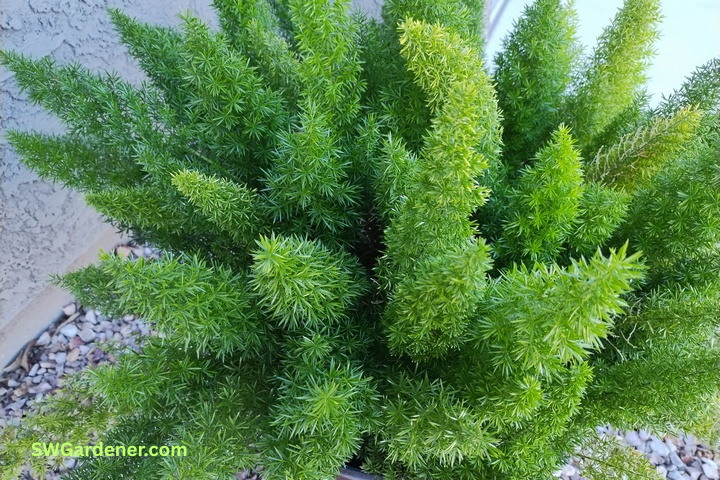
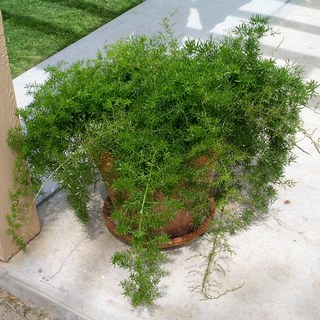
Foxtail fern (Asparagus densiflorus ‘Myers’) is a low-growing shrubby perennial with fluffy, bright green “foxtails”. In spite of its name, this plant is not a fern, but its fine needle-like leaves give it a fern-like appearance. It has a cooling, softening effect in desert gardens.
It’s most commonly grown as a container plant, but it can also be planted in the ground. It prefers some shade, making it an excellent ground cover to plant under trees or on the shady north side of a wall or building.
Why I Like This Plant
- Fluffy, bright green foliage all year
- Low maintenance
- Versatile! Grow as a ground cover or container plant
- Easy to propagate by division
- Rabbit and javelina resistant
Things to Watch Out For
Foxtail fern looks so soft and fuzzy that you may be tempted to run your hands over it, but don’t. It has small, mildly irritating thorns and can cause contact dermatitis in some people.
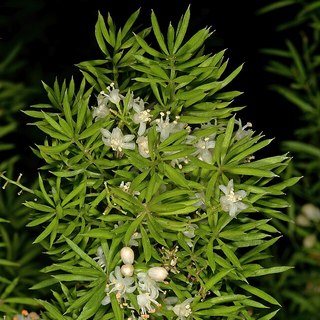
The berries of this species are mildly toxic to people and pets, causing gastric upset. However, foxtail fern is a cultivar that produces few inconspicuous flowers and even fewer berries. I’ve had this one for over 10 years, and it’s never produced a single berry!
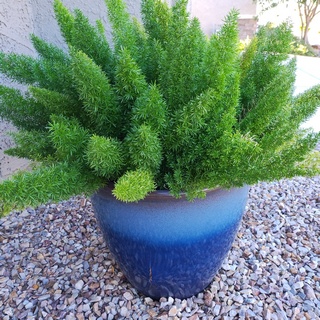
If you grow this plant in a container, be prepared to repot or divide it every few years. If you leave one in the same pot for too long, the vigorous root system may eventually crack your pot. I’ve seen this happen in both plastic and ceramic pots.
Optimal Growing Conditions
If you’re thinking of adding a foxtail fern plant to your garden, you need to find a suitable place that will keep your plant healthy and looking good.
Here are the key factors to keep in mind.
Temperature
Foxtail fern should be grown in USDA Hardiness Zones 9 – 11. These plants are tolerant of desert heat, even in the hottest places like Phoenix, provided they are protected from the sun.
They are cold-hardy down to around 25℉. They can survive short cold spells down to 20℉ but might die back. I’ve never covered mine in the winter, even when it has snowed, and they’ve never suffered from cold damage.
Sun Exposure
Foxtail fern should be grown in part or full shade. Plants that get too much sun bleach out and turn yellow. If a plant experiences intense sun and heat simultaneously, some stems may turn brown.
Size and Growth Rate
Foxtail fern grows moderately fast. Clusters can reach 2 to 3 feet tall by 3 to 4 feet wide.
Soil
Foxtail fern will grow in sand or well-draining clay, but it prefers loamy, slightly acidic soil.
If you grow one in a container, be sure it has good drainage and use potting mix, not native soil.
Other Location Considerations
Foxtail fern makes a beautiful, resilient patio plant. And while it can be grown as a houseplant, I prefer to grow it outside. It constantly drops small needle-like leaves that are barely noticeable outside, but can be a nuisance indoors.
Foxtail Fern:
The Essentials
| Common Name | Foxtail fern |
| Scientific Name | Asparagus densiflorus ‘Myers’ |
| Origin | Southern Africa |
| Plant Type | Ground cover |
| USDA Zones | Zones 9 – 11 |
| Cold Hardiness | To 25℉ |
| Flowers | White, inconspicuous |
| Flower Season | Spring |
| Mature Size | 2-3′ high x 3-4’ wide |
| Growth Rate | Fast |
| Sun Tolerance | Part, full shade |
| Water Needs | Moderate |
| Pests & Diseases | None |
| Cautions | Small thorns, contact dermatitis, mildly toxic |
How to Plant
If you’re planting a foxtail fern in the ground, dig a hole as deep as and twice as wide as the nursery container. Carefully remove the plant from the container, place it in the hole, and press the soil to remove any air pockets.
Since foxtail fern prefers fertile soil, amend your hole with compost or a commercial soil mix. Top with organic mulch rather than gravel to retain moisture, increase soil fertility, and protect roots from temperature extremes.
When to Plant
The best time to plant foxtail fern is in the fall. This gives it three seasons to grow roots and get established before the following summer.
The second best time is in spring, the earlier the better. This still gives your plant time to get established before the intense heat of June arrives.
How to Care for Foxtail Fern
Whether you’ve recently planted a new foxtail fern or have an existing one in your yard, here’s how to take care of it to keep it healthy and looking its best.
How to Water
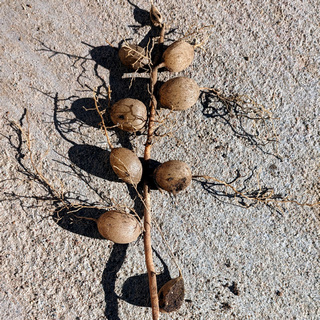
Foxtail fern is surprisingly drought tolerant due to its tuberous root system, which stores water. The more sun and heat your plant is exposed to, the more water it will need.
If you’re growing foxtail fern in a container, use this watering schedule as a guide.
| Spring & Fall | Every 1-3 days |
| Summer | Every 2-5 days |
| Winter | Every 5-7 days |
Once a container plant is established, it can survive on much less than this, especially if it’s grown in the shade. Avoid overwatering, which can cause root rot.
If you’re growing yours in the ground, the University of Arizona recommends watering newly planted ground covers every 2 to 3 days for the first 2 to 4 weeks.
Since it’s not a desert plant, it needs a moderate rather than low amount of water. Water every 10 to 14 days in the spring, fall, and winter and every 2 to 5 days in the summer.
How much water you should give your plant with each watering depends on the diameter of your plant and will change as it grows. You can use this chart as a guide.
| 1 foot diameter | .5 gallons |
| 2 feet diameter | 2 gallons |
| 3 feet diameter | 3.5 gallons |
Should You Fertilize?
Foxtail ferns in the ground should be fertilized in late winter and again during the summer. Plants in containers should be fertilized monthly spring through fall. Fertilizing will help plants stay vivid green.
Pruning & Propagation
Foxtail fern should only be trimmed to remove dead or damaged stems. Whenever you need to trim a stem, cut it back as close to the base as possible. New stems emerge from the base.
If your plant gets too large, don’t try to reduce its size by pruning. Instead, dig it up and divide it or repot it.
Many gardeners are surprised to see how dense and tuberous the root system can become. When I divide this plant, I cut it in half with a large knife or small saw. Don’t worry about this rough treatment — this plant can handle it and won’t even wilt. 😮
Don’t Confuse Foxtail Fern With…
Foxtail fern (Asparagus densiflorus ‘Myers’) is frequently confused with asparagus fern, and many sources use the common names interchangeably.
The plant that is usually called asparagus fern (Asparagus densiflorus) is the parent plant of foxtail fern. It has longer, cascading stems and is more prickly. Foxtail fern is one of its cultivars.
Plant Lover Facts
Foxtail goes by many common names including Myer’s asparagus, cat’s tail asparagus, basket asparagus, and emerald fern.
You may also see this cultivar listed as Asparagus densiflorus ‘Myersii’, ‘Meyers’, or ‘Meyersii’. There’s some speculation that the cultivar name ‘Myers’ is named in honor of the plant explorer Frank Nicholas Meyer. The popular Meyer lemon tree was also named in his honor.
Foxtail fern doesn’t actually have leaves. It has cladodes — small, needle-like modified stems that function as leaves.
Foxtail “fern” isn’t remotely related to ferns. As a member of the asparagus (Asparagaceae) family, it’s more closely related to agaves than to ferns!
Did you enjoy this article?
Sign up for our weekly newsletter
where you’ll find more great info on creating &
maintaining a beautiful, carefree desert landscape.
Author Bio
Deane Alban is the creator of Southwest Gardener. She is a science writer with a bachelor’s degree in botany from the University of South Florida. Gardening is her lifelong passion. She’s been gardening in Tucson for over 15 years.

Photo Credits
Arizona State University’s Virtual Library of Phoenix Landscape Plants
SAplants, CC BY-SA 4.0, via Wikimedia Commons