
Foxtail agave is an elegant agave with curved flower stalks that resemble fox tails. When in bloom, it’s an otherworldly sight to behold. Here’s everything you need to know about planting and caring for this Mexican native.
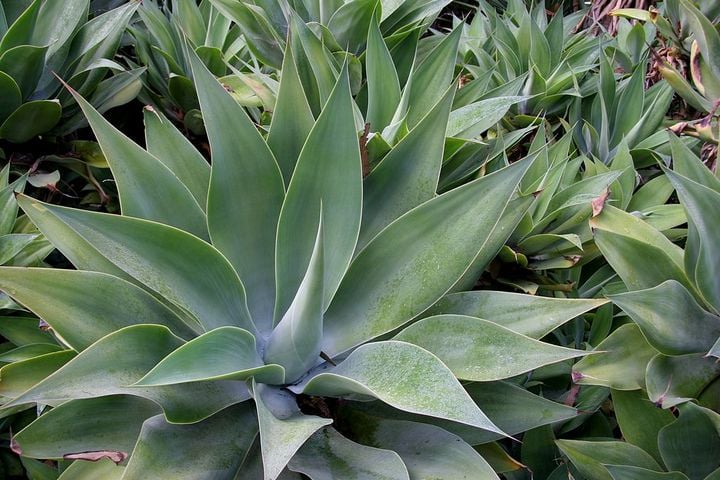
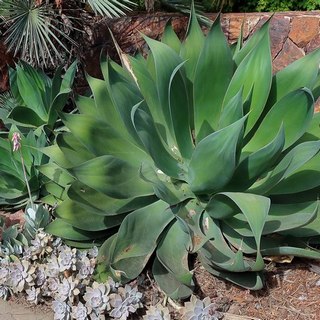
Foxtail agave (Agave attenuata) is a unique, large agave with smooth gray-green leaves that taper to a flexible point. It’s unusual for an agave in that it’s “unarmed” — it won’t poke, stab, or otherwise harm you.
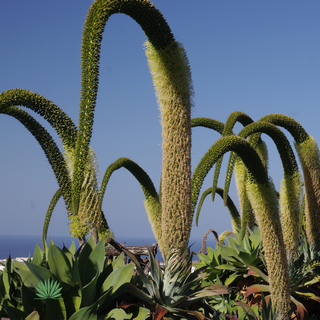
But what really sets this plant apart is its weird flower stalks, which shoot up 10 to 15 feet and then droop. Considering how elegant this plant is when not in bloom, it’s jarring to see its surreal flower stalk that looks like it is straight out of a Dr. Seuss book!
It’s very low maintenance, provided you’ve taken its limitations to heart.
Why I Like This Plant
- Looks stunning all year long
- A relatively “soft” agave
- Unusual arching flower stalks
- Very low-maintenance
Things to Watch Out For
Foxtail is less resilient than some other agaves. It’s better suited to grow in coastal Southern California than in the harsh desert, but it can be done.
It prefers part or dappled shade to full sun, and should be protected from both extreme heat and cold. For these reasons, it makes an excellent container plant that can be moved as needed with the change of seasons.
Like other agaves, foxtail can cause contact dermatitis in some people.
Optimal Growing Conditions
If you’re thinking of adding a foxtail agave to your garden, you need to find a suitable place that will keep your plant healthy and looking good… while minimizing maintenance for you.
Here are the key factors to keep in mind.
Temperature
Foxtail agave is not tolerant of desert extremes and should not be grown where the temperature exceeds 110℉ and or drops below 25℉.
It should ideally be grown in USDA Hardiness Zones 10 – 11, but is often grown in Zone 9, as long as it’s protected from below-freezing temperatures. Plants will show damage when the temperature dips below 28℉, and may not survive below 25℉.
Sun Exposure
Foxtail agave will grow in full sun along the California coast, but not in the desert southwest. Here, it should be grown in part to full shade to avoid sun scald.
Size and Growth Rate
Foxtail agave has a moderate growth rate and can ultimately reach a size of 5 feet tall and wide. It produces numerous offshoots, or pups, which can form substantial colonies.
Foxtail agaves live about 10 years. Once a plant has reached the end of its life expectancy, it will send up one 10 to 15 foot flower stalk that signals the end of its life.
Soil
Foxtail agave tolerates most kinds of desert soil, provided it’s well-draining. In its native habitat, it grows in poor, rocky soil.
If you grow one in a container, be sure it has good drainage and use specifically formulated cactus soil.
Foxtail Agave:
The Essentials
| Common Name | Foxtail agave |
| Scientific Name | Agave attenuata |
| Origin | Mexico |
| USDA Zones | Zones 10 – 11 |
| Cold Hardiness | To 25℉ |
| Mature Size | 5′ high x 5’ wide |
| Growth Rate | Moderate |
| Sun Tolerance | Full, part shade |
| Water Needs | Low |
| Pests & Diseases | Agave weevils |
| Toxicity | Contact dermatitis |
How to Plant
To plant a toxtail agave, dig a hole the same depth as the root system and twice as wide. Carefully remove the plant from the container, put it in the hole and fill with the same native soil you just removed. Press the soil to remove any air pockets.
Never plant deeper than the depth of the root ball which can cause rot. Actually, it’s best to plant an inch or two above soil level to give the plant room to settle and leave room for mulch.
It’s generally recommended that you not add amendments to the soil. However, good drainage is critical. So if your soil drains slowly, amend with coarse sand or small gravel until you have a loose, well-drained mix.
When to Plant
The best time to plant agaves is in April or May. The warmer temperatures of spring encourage root development.
How to Care for Foxtail Agave
Whether you’ve recently planted a foxtail agave or have an existing plant in your yard, here’s how to take care of it to keep it healthy and looking its best.
How to Water
You’re probably used to giving a plant a good soaking immediately after transplanting, but that isn’t the best practice with agaves. Counterintuitively, it’s best not to water for one to two weeks after planting. Then use the following schedule as a guide.
| Spring & Fall | Every 3-5 weeks |
| Summer | Every 1-2 weeks |
| Winter | Only if no winter rains |
Note that in the summer, foxtail agave needs water every week or two to keep it from getting stressed. This is more frequently than many other agaves. You’ll know your plant needs water if the leaves start to shrivel. Your plant should revive when given water.
If you do need to water during the winter, wait until there are no freezing temperatures in the forecast.
If you’re growing your agave in a container, use this watering schedule as a guide.
| Spring & Fall | Every 7-10 days |
| Summer | Every 5-7 days |
| Winter | Every 10-14 days |
Frequent watering will make your agave grow larger and faster. This might sound like a good thing, but it causes your plant to reach the end of its life sooner.
Should You Fertilize?
There is no need to fertilize foxtail agave, it gets all the nutrients it needs from the desert soil. But if you grow one in a pot, fertilize it lightly a few times a year when it’s actively growing.
Pruning & Propagating
Removing dead or damaged lower leaves is the only pruning you need to do.
If you want more plants, foxtail agaves are easy to propagate. All you have to do is dig up the offsets, making sure that some root remains intact, and plant them elsewhere in your yard or in pots.
Pests
The agave snout weevil is an insect that can attack and kill any agave. While large agaves like century plant (Agave americana) and Weber’s agave (Agave weberi) are most at risk, Agave attenuata is on the list of agaves considered to be susceptible.
Learn how to recognize this pest and what steps you should take if you have an infected plant in our article Agave Weevil: Little Bug, Big Problem.
Foxtail Agave Cultivars
Foxtail agave (Agave attenuata) comes in several cultivars and hybrids. Here are a few you may come across when plant shopping:
- ‘Blue Flame’ agave (Agave x ‘Blue Flame’) — hybrid cross with coastal agave (Agave shawii)
- ‘Blue Glow’ agave (Agave x ‘Blue Glow’) — hybrid cross with ocahui (Agave ocahui)
- Blue foxtail agave (Agave attentuata ‘Nova’) — bluer leaves, flower stalk stays erect
- Variegated foxtail agave (Agave attenuata ‘Variegata’) — yellow stripes along margins
If it’s too hot, cold, or sunny to grow foxtail agave in your yard, consider ‘Blue Flame‘ instead. It looks much like foxtail, but it tolerates temperature extremes from 115℉ to 20℉ and can handle full sun.
Plant Lover Facts
Foxtail agave also goes by the common names swan’s name agave, lion’s tail agave, and spineless century plant.
It has a small native range in southwestern Mexico, where it grows on rocky outcrops at elevations of 6,000 to 8,000 feet. It is considered rare in the wild.
Did you enjoy this article?
Sign up for our weekly newsletter
where you’ll find more great info on creating &
maintaining a beautiful, carefree desert landscape.
Author Bio
Deane Alban is the creator of Southwest Gardener. She is a science writer with a bachelor’s degree in botany from the University of South Florida. Gardening is her lifelong passion. She’s been gardening in Tucson for over 15 years.
