
Desert gardening can be challenging. Looking for an advantage? Grow native plants! Here are the top reasons growing natives can make gardening more enjoyable and less of a struggle.
There’s been a growing interest in native plants in recent years, and there are many good reasons for that. Native plants are often healthier, happier, and more resilient with much less maintenance. In the desert, they are almost always low water use, which is important, especially as water becomes more scarce and the cost of water rises.
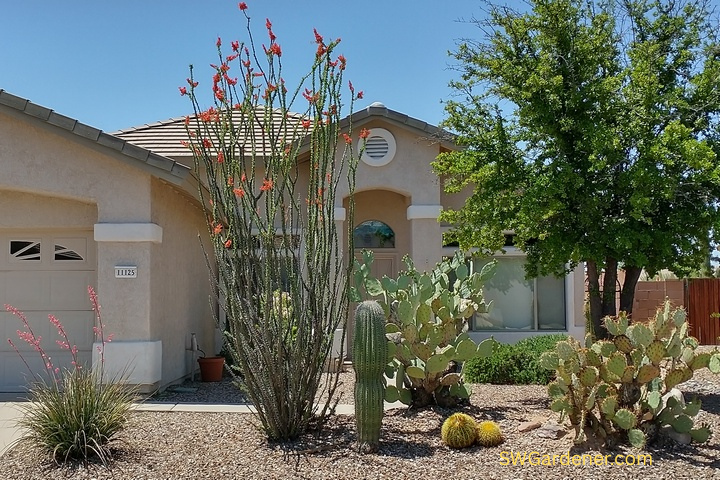
Going native doesn’t mean you can only grow cactus and agaves, although as the picture above illustrates, you can have an attractive yard of spikey plants, if that’s your preference. (This was my previous home, and I loved the virtually no maintenance front yard.)
If you want softer plants or more color, there are hundreds of beautiful flowering trees, shrubs, vines, and wildflowers to choose from. If you want to see green, there are native plants with beautiful foliage in every shade of green, from silver to emerald
What Makes a Desert Plant “Native”?
Native plants are those that have evolved in a certain region, ecosystem, or habitat without human influence. They may also be called “indigenous” plants. In the US, only plants that naturally occurred in this country before European settlement are considered native.
The United States has an estimated 20,000 native plant species, and nearly 3,500 of them are native to the Sonoran Desert, the most biodiverse desert in the world.
And fortunately for gardeners, hundreds of these native plants make beautiful, low-maintenance landscape plants.
5 Reasons to Grow Desert Native Plants
Growing native plants can save you money, time, and disappointment while supporting your local ecosystem. But that’s not all. Let’s take a look at the many ways native plants can make gardening a joy rather than a struggle.
1. Native Plants Are Low Maintenance
Gardening in the desert can be challenging. Gardeners are often frustrated because the plants they used to grow “elsewhere” fail to thrive here. They get tired of wasting money on high water bills and plants that die.
Growing native plants makes gardening easier in several ways:
- Native plants evolved to survive harsh desert extremes — heat, cold, drought, and monsoon storms.
- The water needs of native plants vary, but most are low water use. Some can even survive on rainfall alone, once established.
- They are more resistant to various pests and diseases, reducing the need for pesticides or other treatments.
- Since they evolved to grow in our poor, alkaline desert soil, you don’t need fertilizer and you don’t have to add amendments when planting.
All this means you can successfully grow native plants while saving time and money.
Note: Be aware that not all “desert” natives are low water use, since some originate in riparian areas. For example, Gregg’s mist, Arizona milkweed, Arizona grape ivy, and Arizona ash are natives but need a moderate, rather than low, amount of water.
Pro Tip!
Just because a plant is native doesn’t mean
it will grow anywhere without care.
Consider the sun, water, soil, and temperature
requirements of any plant before planting.
2. Native Plants Thrive in Poor Desert Soil
Many non-native plants struggle in desert soil, which is low in organic matter and has a high pH, which hinders the absorption of some nutrients.
In the desert southwest, there are two mineral deficiencies that non-native landscape plants sometimes experience — nitrogen (N) and iron (Fe). But natives have developed amazing workarounds.
Many native plants (specifically members of the Fabaceae family) have bacteria on their roots that take nitrogen from the air and turn it into a form that plants can use. Plants that can do this include mesquites, acacias, palo verdes, ironwood, Texas ebony, Texas mountain laurel, fairy dusters, daleas, desert senna, and the various birds of paradise.
Others have developed the ability to absorb iron from our alkaline soil. Non-native plants such as citrus, garden, hibiscus, bottlebrush, and roses can’t do this and often develop iron chlorosis.
3. Native Plants Support Wildlife
There is no better way to attract and support wildlife than to grow native plants. And wildlife needs our help. It’s no secret that bird populations are declining precipitously, but native plants can help by providing the food and shelter they need.
To survive, birds need native plants and the insects that have co-evolved with them. 96% of North American bird species feed insects to their young. No insects = no birds.
Native plants are often larval hosts for moths and butterflies, and caterpillars are premium bird food.
Native flowering plants provide nectar and pollen that important pollinators need. Butterflies, moths, bees, and hummingbirds bring life, beauty, and joy to desert gardens.
Flowers That Deceive
Just because a plant has pretty flowers doesn’t mean it supports wildlife. Some non-natives, like oleander, offer zero benefits to wildlife. It’s a “deceit pollinator.” It produces attractive flowers to entice birds and insects to visit, but there’s no nectar. So pollinators do the plant’s bidding by spreading pollen, while wasting their energy and getting nothing in return.
4. Desert Native Plants Are Amazing!
Many people are drawn here for our climate, scenery, and beautiful plants, so why not roll with it!
We undoubtedly have some of the coolest plants on the planet. That’s why people around the world admire, grow, and collect cactus and other succulents.
Who hasn’t fallen in love with our magnificent saguaros, beautiful spring wildflowers, or stunning cactus flowers?
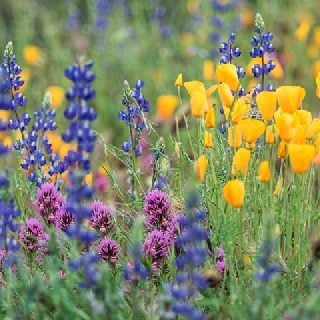

I think desert dwellers are fortunate to be able to grow such captivating plants. I hope you do, too!
5. Planting Natives Can Avoid Future Disasters
Invasive species, by definition, are non-natives that harm the environment. Planting natives eliminates the chance that you are inadvertently planting tomorrow’s invasive species.
Many of our worst invasive plants have been intentionally introduced, such as the highly invasive buffelgrass (Cenchrus ciliaris). Its botanical cousin, fountain grass (Cenchrus setaceus) was introduced as an ornamental plant in the 1940s and soon started invading the Santa Catalina Mountains. (It’s now on the Arizona Noxious Weed list and can no longer be sold in Arizona nurseries.)
I’m chagrined that when I lived in Maryland, I grew Bradford pear, vinca, English ivy, nandina, Japanese honeysuckle, day lily, and purple fountain grass. All were popular mainstays of East Coast gardens at the time. Now, all are considered invasive species. 🥺
Avoid invasive plants!
These plants grow unchecked & don’t belong in our ecosystem.
Many garden centers still sell plants known to be invasive.
Learn which plants to avoid here.
Desert Native Plant FAQs
Still have questions? Let’s answer some of the commonly asked questions about growing native plants.
How Do I Know Which Plants are Native?
Many local nurseries carry some native plants, but you may have to know what you are looking for to find them, unless they have a designated “native plant” section.
You can find lists of native plants online at Spadefoot Nursery, Desert Survivors, and the Arizona Native Plant Society.
Additionally, check out Southwest Gardener’s Native Plant Library, where you’ll find comprehensive plant profiles of over 120 popular native landscape plants.
Where Do I Find Native Plants?
Shopping at a nursery that specializes in native plants makes it easy to find native plants. We are fortunate to have a few great sources of native plants in Tucson (and beyond).
- Spadefoot Nursery
- Desert Survivors
- Native Seeds/SEARCH (seeds only)
- Borderlands Nursery & Seed (Patagonia)
If you live elsewhere, you can look for native plant nurseries near you in this directory compiled by Crime Pays But Botany Doesn’t. Heads up, it’s not pretty. But I love the name! 😄
Do I Have to Plant All Natives?
There is no need to be a purist, especially if you have a well-established garden. You don’t have to remove your favorite non-native plants!
A goal proposed by many experts is to have 70% native plants in your yard. This is the number that has been determined to make a difference in supporting local ecosystems. It’s OK if it takes time to get there.
Are Near Natives as Good as Natives?
You might be wondering how close to home a plant has to be to be considered native. For example, if you live in Arizona, do plants from Texas count as native?
In a word, “Yes“!
First, we should be considering ecosystems, since plants don’t care about state or country boundaries.
If you live in the desert southwest, you can consider plants that have natural ranges within the Sonoran, Mojave, or Chihuahuan Deserts as sufficiently native.
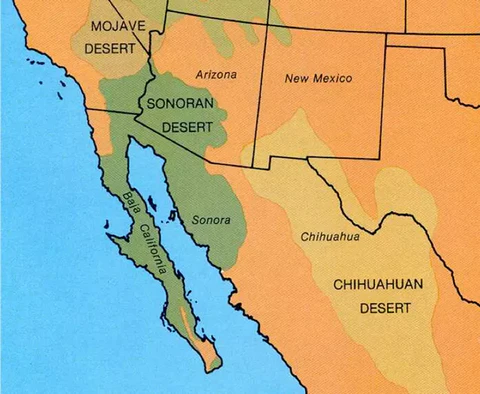
These deserts share a lot of the same plants and animals, whose distribution is constantly changing. By planting near natives, you’re helping wildlife that may have wandered a bit out of its original habitat, which happens frequently.
Did you enjoy this article?
Sign up for our weekly newsletter
where you’ll find more great info on creating &
maintaining a beautiful, carefree desert landscape.
Author Bio
Deane Alban is the creator of Southwest Gardener. She is a science writer with a bachelor’s degree in botany from the University of South Florida. Gardening is her lifelong passion. She’s been gardening in Tucson for over 15 years.

Photo Credits
Stan Shebs, CC BY-SA 3.0, Wikimedia Commons