
Brittlebush is an iconic desert shrub that’s practically foolproof, even in the most difficult spots in the garden, yet is rarely used as a landscape plant. Here’s everything you need to know about growing this underutilized southwest desert native.

Brittlebush (Encelia farinosa) is ubiquitous in the Sonoran Desert. It’s so common that you may question whether it’s a landscape plant or a weed! It is rarely used as a landscape plant, in part because it’s so common throughout its natural habitat (Arizona, California, Nevada, Utah, and Mexico).
But I think that’s a shame because it’s beautiful, and its resilience makes it a fantastic, carefree addition to any garden.
It has gray-green leaves that look silver in the right light. It’s covered with lemon-yellow, daisy-like flowers much of the year. It brightens up a dull or neglected corner that’s in need of a burst of year-long color.
Brittlebush is happy in full sun and poor soil, and needs almost no supplemental water. In its native habitat, it can survive on as little as 2″ of annual rainfall.
You’ll find them growing in the most inhospitable places — in median strips, along roadsides, and in disturbed areas. (And in my yard. 😉)
It’s a great plant for supporting wildlife. Its flowers attract birds, bees, and butterflies. Birds love to hang out in its branches and eat its seeds. If you have a desert tortoise, they like to eat the flowers.
Why I Like This Plant
- Cheerful, sunny yellow flowers
- Blooms intermittently all year
- Nearly silver, shimmery leaves
- Extremely low maintenance
- No thorns, low litter
- Supports wildlife
Things to Watch Out For
Brittlebush can cause contact dermatitis in some people.
Once established, it readily reseeds. You may welcome new, free plants, or you may find this trait to be a nuisance, depending on your situation. You can minimize reseeding by deadheading spent flowers.
Brittlebush’s appearance has been described as informal, casual, or natural, so it may not be the look you (or your HOA) is going for if you want a formal, more manicured look.
Optimal Growing Conditions
If you’re thinking of adding a brittlebush to your garden, you need to find a suitable place that will keep your plant healthy and looking good… while minimizing maintenance for you.
Here are the key factors to keep in mind.
Temperature
Brittlebush should be grown in USDA Hardiness Zones 9 to 11. It thrives in the hottest conditions and is cold-hardy down to 0℉.
It’s considered evergreen, but can be semi-deciduous in response to extreme drought or cold. When the temperature drops to 20℉, it may lose its leaves but will rebound in the spring.
Sun Exposure
It thrives in full sun and even the reflected heat from garden walls and buildings. When grown in part shade, plants have greener leaves and fewer flowers, and can get leggy.
Size and Growth Rate
It’s a fast grower. They typically reach a size of 4 feet tall and wide, but can get much bigger if regularly watered or never pruned.
Brittlebush flowers most heavily in the spring and the fall, but I have flowers on mine intermittently throughout the year.

Soil
Brittlebush is not particular about soil. It grows well in any native soil — rocky, sandy, alkaline, clay — provided it’s well-draining.
Brittlebush:
The Essentials
| Common Name | Brittlebush |
| Scientific Name | Encelia farinosa |
| Origin | Sonoran, Mojave Deserts |
| Plant Type | Evergreen shrub |
| USDA Zones | Zones 9 – 11 |
| Cold Hardiness | To 0℉ |
| Flower Color | Yellow |
| Flower Season | Intermittently all year |
| Mature Size | 4’ high x 4’ wide |
| Growth Rate | Fast |
| Sun Tolerance | Full, reflected sun |
| Water Needs | Very low |
| Pests & Diseases | Root rot |
| Garden Friendly | No thorns, non-toxic |
| Cautions | Contact dermatitis |
| Wildlife | Attracts birds, bees, butterflies |
Growing Brittlebush: Seeds, Volunteers, & Transplants
There are 3 ways to grow brittlebush. You can start from seed or transplants, or nurture existing volunteers.
Starting From Seed
Even though brittlebush is a shrub, it’s often included on lists of desert wildflowers that can be grown from seed. Brittlebush grows fast, so once a sprout emerges, you’ll have a decent-sized, flowering plant within a few months.
Brittlebush seeds are easy to come by. Native Seeds/SEARCH, a not-for-profit organization that specializes in seeds of the desert southwest, carries them, and so do most Ace Hardware stores. (Look for The Native Seed Company display.)
Learn how to grow wildflowers from seed:
The Easy Way to Grow Desert Wildflowers
Nurture Volunteers
And since brittlebush readily volunteers, if you know what to look for, you may find you already have some seedlings growing in your yard.
The seedlings are easy to spot. They have fuzzy, light gray, triangular-shaped leaves and grow fast. When very young, they can easily be mistaken for desert marigold, another wildflower you may want to encourage.
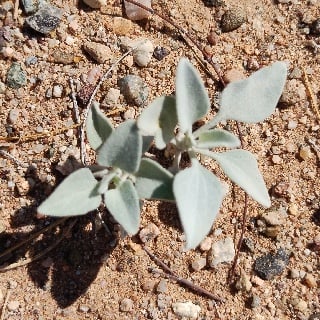
If you find one growing in a good spot, there really isn’t much “nurturing” to do. Just leave it alone, and it should thrive.
Now you may be wondering if you can move volunteers. It’s iffy. Try to disturb the roots as little as possible, water well immediately, and then hope for the best. I haven’t had any luck with this, but there’s no harm in trying.
How to Plant Transplants
If you decide to start with a nursery plant, dig a hole three times as wide as the root ball but no deeper. Amending the soil is not recommended. Counterintuitively, backfilling with the same native soil you just dug up helps your plant develop a stronger root system.
Try to disturb the roots as little as possible. Wildflowers generally don’t like being transplanted. (For this reason, I prefer to grow brittlebush from seed. It’s more cost-effective, too.)
And never dig up wild brittlebush! They have deep tap roots and rarely survive transplanting.
The best time to plant brittlebush is in the fall. This gives it three seasons to grow roots and get established before the following summer.
The second best time is in spring, the earlier the better. This still gives your plant time to get established before the intense heat of June arrives.
How to Care for Brittlebush
Brittlebush is one plant that truly thrives on neglect, so there’s not much care involved.
If you started your plant from seed or it’s a volunteer, give it enough water to mimic normal rainfall.
If you bought your plant from a nursery, water every two to four days for the first 3 weeks after planting. Then water once a month in the summer and not at all in the winter. Too much water will make a plant leggy, prone to root rot, and actually shorten its lifespan.
There is no need to fertilize brittlebush. It’s adapted to grow in native desert soil.
It’s generally recommended that you give brittlebush a hard pruning in late spring to rejuvenate it and a light pruning in fall to shape it. But it’s not necessary if you are content with its natural form and size.
I’ve seen plants that are never pruned that look healthy and beautiful, albeit quite large.
Plant Lover Facts
Brittlebush (sometimes spelled brittle bush) gets its name from its brittle stems. It is also called incienso, Spanish for incense. Brittlebush resin has a frankincense-like odor and can be used as incense.
Brittlebush has a long history of traditional use. It was used medicinally to treat toothache and chest pain. The sap was used as glue, varnish, waterproofing, and chewing gum.
Brittlebush is extremely useful for restoration projects since it is easily grown from seed and stops erosion.
There’s evidence that it is allelopathic, i.e., produces chemicals that inhibit the growth of neighboring plants, allowing it to dominate its range. However, I’ve never noticed that it negatively affected nearby plants in my garden.
Did you enjoy this article?
Sign up for our weekly newsletter
where you’ll find more great info on creating &
maintaining a beautiful, carefree desert landscape.
Author Bio
Deane Alban is the creator of Southwest Gardener. She is a science writer with a bachelor’s degree in botany from the University of South Florida. Gardening is her lifelong passion. She’s been gardening in Tucson for over 15 years.
