
Blue grama is a charming, compact grass with unique seed heads. While it’s usually grown as an ornamental grass, it can also be grown as a low traffic lawn. Learn more about this North American native in this complete growing guide.
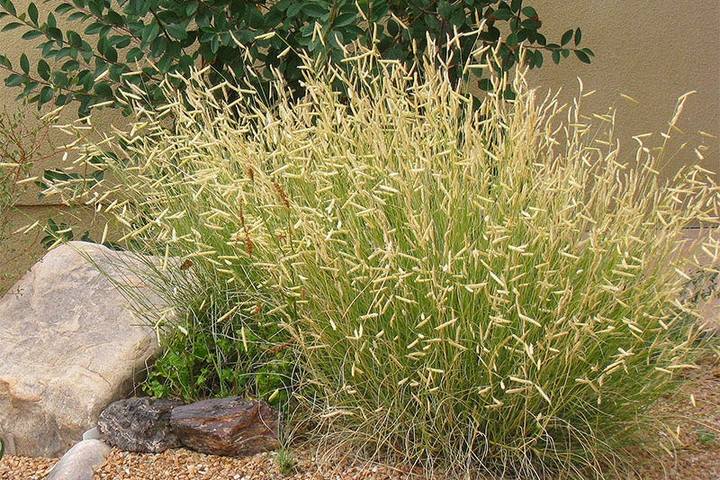
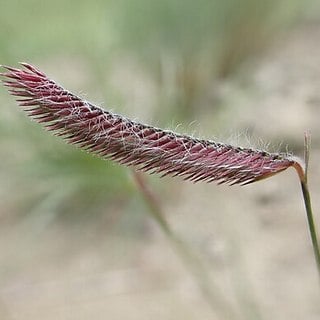
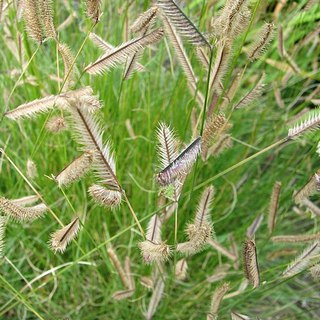
Blue grama (Bouteloua gracilis) is a delightful, compact ornamental grass that grows only 2 feet tall and wide. Its distinctive seed heads begin as purple, turning to tan as they ripen. They grow horizontally like small pennants and wave in the breeze. They have been described as resembling small combs or eyelashes.
Blue grama has a huge native range that includes the desert southwest. Its range extends from the southern half of Canada through Central and Western US, and into Mexico.
It’s extremely resilient and makes a tough, low-maintenance landscape plant. In its native habitat, it can survive on as little as 7″ of annual rainfall.
Blue grama is a particularly versatile ornamental grass.
It has an extensive root system, making it an excellent grass to plant on slopes or to prevent erosion. Roots extend 1 to 1.5 feet wide and can go 3 to 6 feet deep.
Blue grama is a good grass to grow among wildflowers, since it stays low and doesn’t overwhelm them.
And when planted densely, it can form a low-traffic lawn grass by keeping it mowed to a height of 2 to 3 inches.
Blue grama is great for attracting wildlife. Birds and small mammals eat its seeds and use the foliage to build nests and provide shelter. It’s a host plant for many species of butterflies and moths.
Why I Like This Plant
- Attractive compact grass
- Versatile — works well in many situations
- Low water use, low maintenance
- No thorns, non-toxic
- Attracts birds, butterflies, moths
What to Watch Out For
Mule deer, rabbits, and rodents feed on the foliage and seeds, so this may not be a good choice if you’d rather not lure these visitors to your yard.
Optimal Growing Conditions
If you’re thinking of adding blue grama to your garden, you need to find a suitable place that will keep your plant healthy and looking good… while minimizing maintenance for you.
Here are the key factors to keep in mind.
Temperature
Blue grama should be grown in USDA Hardiness Zones 3 – 11. It handles both desert heat and extreme cold. It can survive temperatures as cold as -30°F! But you can expect plants to go dormant in the winter regardless of the temperature.
Sun Exposure
Blue grama performs best in full sun or part shade. Avoid planting in full shade or where it receives the reflected heat from buildings and walls.
Size and Growth Rate
Blue grama grows fast and reaches a manageable size of 2 feet tall and wide.
Soil
Blue grama prefers slightly alkaline soil and grows in just about any desert soil type — sandy, rocky, loam, or clay — provided it’s well-draining.
Blue Grama:
The Essentials
| Common Name | Blue grama |
| Scientific Name | Bouteloua gracilis |
| Origin | Canada, US, Mexico |
| Plant Type | Bunch grass |
| USDA Zones | Zones 3 – 11 |
| Cold Hardy | To -30℉ |
| Flower Color | Purple |
| Flower Season | Summer, fall |
| Mature Size | 2’ high x 2’ wide |
| Growth Rate | Fast |
| Sun Tolerance | Full, part sun |
| Water Needs | Low |
| Pests & Diseases | None |
| Garden Friendly | No thorns, non-toxic, not invasive |
| Wildlife | Attracts mammals, birds, moths, butterflies |
How to Plant
The rule of thumb when planting any ornamental grass is to dig a hole three times as wide as the root ball but no deeper.
Amending the soil is not recommended. Counterintuitively, backfilling with the same native soil you just dug up helps your plant develop a stronger root system.
When to Plant
The best time to plant blue grama is in the fall. This gives your grass three seasons to grow roots and get established before the following summer.
The second best time is in spring, the earlier the better. This still gives your plant time to get established before the intense heat of June arrives.
You can also grow blue grama from seed. This makes sense if you want to cover a large area or grow it as a lawn. The best time to sow seeds is in the spring.
How to Care for Blue Grama
Whether you’ve recently planted blue grama or have an existing plant in your yard, here’s how to take care of it to keep it healthy and looking its best.
How to Water New Plants
As a southwest native, blue grama needs very little water once established, but it does need regular watering after being planted.
Here is the recommended watering schedule for new ornamental grasses.
| Weeks 1 & 2 | Every 3 – 4 days |
| Weeks 3 & 4 | Every 6 – 7 days |
| Weeks 5 & 6 | Every 7 – 10 days |
| Weeks 7 & 8 | Every 10 – 14 days |
How to Water Established Plants
Once your blue grama is established, water it deeply every week or two during the summer. These plants look their best with occasional watering during the summer. Plants will go dormant when facing drought.
Since plants go dormant in the winter, they only need water once a month, which is typically provided by winter rains.
If you are growing it as a lawn, be mindful that you’ll need to water more frequently, since the roots will not be shaded.
It may reseed if there is adequate water.
Should You Fertilize?
There is no need to fertilize blue grama. It gets all the nutrients it needs from native soil.
How to Prune
Blue grama should be pruned hard once in late winter or early spring. Cut it down to 2 to 3 inches above the ground.
You can cut it straight across, but slightly irregular cuts look more natural and mimic the grazing that would occur when growing in grasslands. This lets light penetrate the crown and makes way for new spring growth.
If you are growing a large patch of it, you can mow it as you would a lawn.
Blue Grama Cultivar
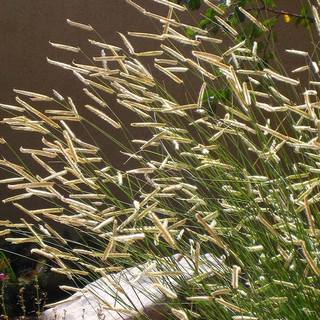
Bouteloua gracilis ‘Blonde Ambition’ is a patented cultivar discovered by David Salman, the founder of High Country Gardens. He found it growing in his Santa Fe garden and was taken with its showy chartreuse seed heads that ripened to the color of blonde hair.
‘Blonde Ambition‘ is larger (3′ by 3’) and more robust than the parent plant. And it’s so popular that it’s easier to find in nurseries, as well.
One downside of this plant is that it reseeds, but the seedlings are not true. Unfortunately, cultivar seedlings do not retain the desirable features of their parent.
Plant Lover Facts
Blue grama (Bouteloua gracilis) also goes by the name mosquito grass — not because it keeps away mosquitoes but because some people think the seed heads look like mosquito larvae. Eww.
The curious name grama comes from the Latin gramen, which means grass.
Native Americans used it medicinally, as a food source, to make brushes and brooms, and to feed livestock.
In the short-grass prairie, blue grama is a major source of food for the American bison.
Blue grama is the state grass of Colorado.
Did you enjoy this article?
Sign up for our weekly newsletter
where you’ll find more great info on creating &
maintaining a beautiful, carefree desert landscape.
Author Bio
Deane Alban is the creator of Southwest Gardener. She is a science writer with a bachelor’s degree in botany from the University of South Florida. Gardening is her lifelong passion. She’s been gardening in Tucson for over 15 years.

Photo Credits
Matt Lavin, CC BY-SA 2.0, via Wikimedia Commons
Agnieszka Kwiecień, CC BY-SA 4.0, via Wikimedia Commons