
Aloe mites are a microscopic pest found almost exclusively on aloes. They rarely kill a plant, but they can make it look weird and distorted. Learn the symptoms, what to do if your plants are infected, mite-resistant aloes, and steps you can take to prevent infestations.
Aloe is a genus of plants commonly grown in the desert southwest as landscape plants or as outdoor patio plants. They come in a variety of sizes, forms, and leaf and flower colors. They flower in the winter, adding color when little else is blooming.
Aloes require minimal care and are generally not bothered by pests and diseases. However, they are susceptible to a pest called the aloe mite (Aceria aloinis).
Fortunately, this pest is not rampant in desert landscapes, but it’s not unheard of either. Let’s take a look at the signs of an infestation, what you can do if your plants are infected, and how to prevent future problems.
Signs of Aloe Mites
Mites are arachnids that are more closely related to spiders than to insects. Aloe mites are microscopic, so you won’t see them on your plants, only the damage they incur.
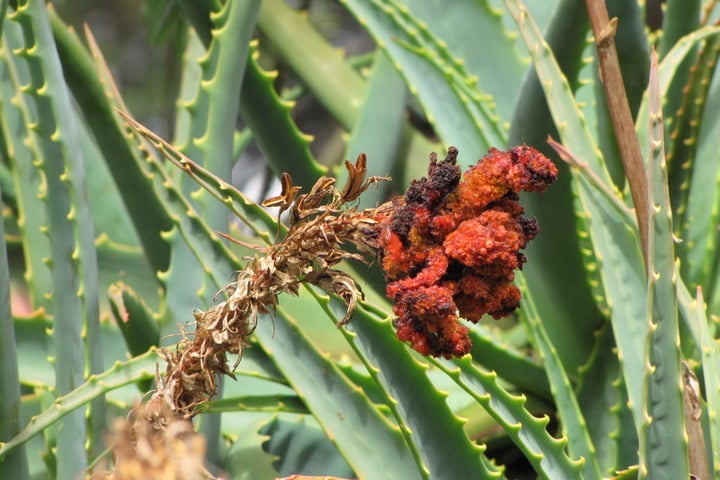
The telltale sign of an infestation is the appearance of warty, nobby growths called galls. Disfiguring abnormalities can occur on leaves, flowers, or stems.
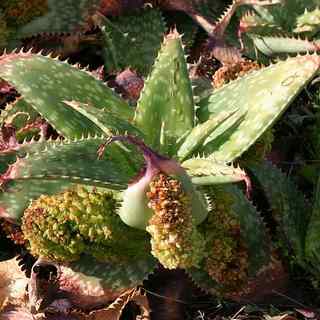
When an aloe mite feeds on your plant, it injects a chemical into its tissues that causes the plant tissues to grow abnormally. The gall forms a protective bubble where the mites can live and lay their eggs undisturbed.
You might be wondering how your aloe got mites. The mites don’t fly, but are so light that they can be dispersed by wind. They’re often spread from infected garden tools – either your own or your landscaper’s. They can also be distributed by birds or other animals that visit your aloes.
How to Treat Aloes for Mites
If you see galls or malformed leaves or flowers on an aloe, you can be pretty sure it’s infected by aloe mites. Here’s what you can do.
Prune Away “The Weird”
As soon as you notice any weird or irregular growths, cut away that area to prevent the infestation from getting worse or spreading to other plants. Then keep an eye on your plant and continue to remove any new abnormal growth as it appears.
If an aloe is heavily infested, remove it. If it’s in the ground, dig it up, wrap and trash it. If it’s in a pot, you can discard it or prune and then isolate it to see if it recovers.
Should You Spray?
There are a few sprays you can try with various levels of effectiveness and toxicity.
Insecticidal soap actually does a decent job of controlling mites, so there is no harm in giving it a try. But it won’t penetrate galls, so you must remove them manually first.
(Do not spray with “dish soap” which is actually a harsh detergent. It might kill mites, but it will also remove your aloe’s protective cuticle, making it more susceptible to damaging pests.)
Or you can try a natural product that acts as a miticide, such as neem oil.
I’ve heard of gardeners having limited success with Sevin, formaldehyde, or Blue Death(!) powder, but I don’t recommend using these toxic solutions unless you have an irreplaceable aloe collection. Besides being toxic and expensive, they generally don’t work any better than natural treatments since they can’t penetrate the galls.
No matter what spray you use, soak the plant thoroughly to make sure it reaches all the mites’ hiding places. And it’s a good idea to also spray any nearby unaffected aloes as a preventive measure.
How to Prevent Future Infestations
Before buying or otherwise acquiring a new aloe, inspect it for abnormalities that could be a sign of mite damage. If anything looks suspicious, take a pass on that plant. Aloe mites mainly infect aloes, but they’ve also been found on succulents of the Gasteria and Haworthia genera, so inspect those, too.
If you have an extensive collection of aloes that you treasure, quarantine any new plants to make sure they are mite-free.
When pruning infected aloes, disinfect your tools between each cut and when moving from plant to plant. You can learn the most effective ways to disinfect your tools here.
Lastly, keep your existing aloes healthy. Pests and diseases of all kinds cause more damage in unhealthy, stressed plants.
Resistant Alternatives
Whether you’ve had trouble with aloe mites or are just concerned and want to head off the problem, you can stick with species known to be resistant.
The top of this list is ‘Blue Elf’ aloe. This wonderful, compact hybrid is more cold hardy and heat resistant than many other aloes and has a particularly long bloom period. (Hummingbirds love these!)

The ‘Safari’ series aloes — ‘Safari Sunrise’, ‘Safari Rose’, and ‘Safari Orange’ — are other lovely hybrids known to be mite-resistant.
If you have an ongoing battle with aloes mites, consider replacing your aloes with agaves. Agaves look similar, have similar care requirements, and are not affected by aloe mites. Learn more about the differences between agaves and aloes here.
Did you enjoy this article?
Sign up for our weekly newsletter
where you’ll find more great info on creating &
maintaining a beautiful, carefree desert landscape.
Author Bio
Deane Alban is the creator of Southwest Gardener. She is a science writer with a bachelor’s degree in botany from the University of South Florida. Gardening is her lifelong passion. She’s been gardening in Tucson for over 15 years.
